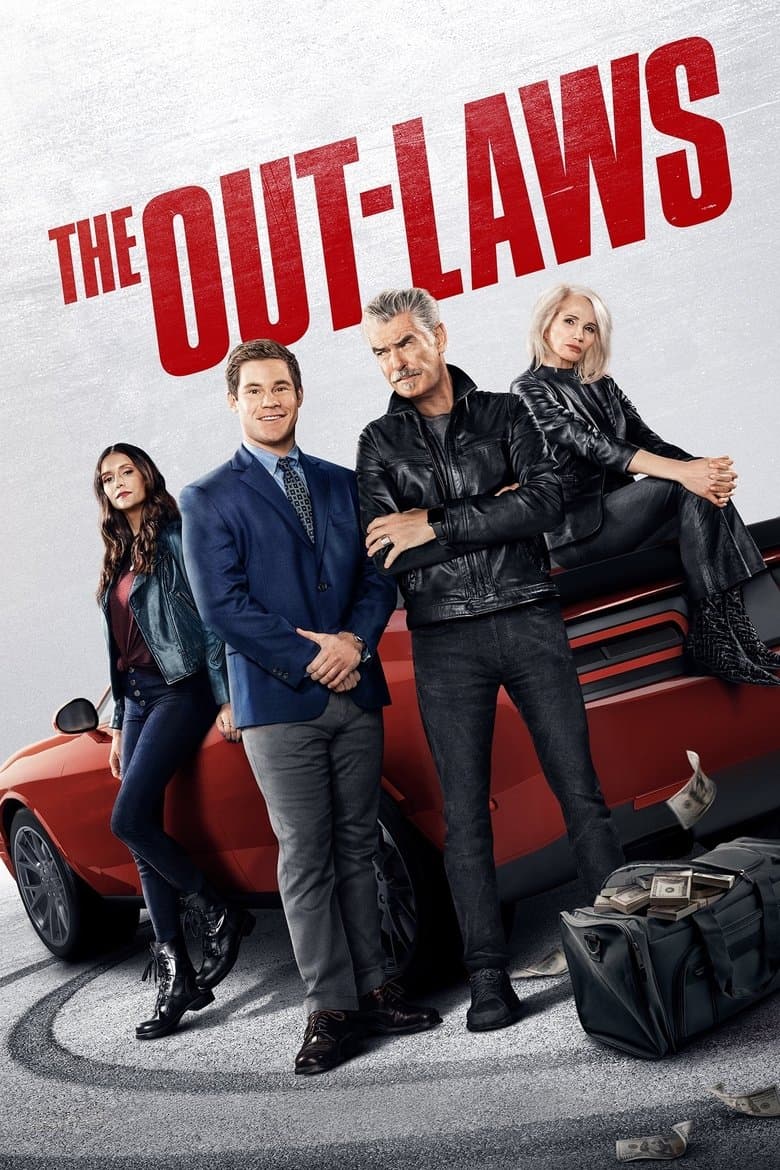
Owen Browning is a careful bank manager in a modern American town who plans to marry Parker during a busy wedding week. His life changes when the Ghost Bandits rob his bank and Parker’s parents arrive after years away. Owen suspects Billy and Lilly are the robbers, but nobody believes him. When their former crime partner Rehan kidnaps Parker, Owen joins the outlaws to save her. The movie mixes a wedding comedy with bank robberies, gunfights, rude jokes, and a fast, silly tone.
The movie treats marriage, trust, family loyalty, and second chances as its main ideas. Owen grows from a nervous rule-follower into a partner who risks his job and safety to rescue Parker. Billy and Lilly remain criminals, but they show love for their daughter and accept prison after helping her wedding happen. One brief kiss between Owen and Billy is played as a crude family joke within that family story.
Community feedback
Was our 3% Woke rating accurate?
Breakdown
These are the editorial factors and ratings behind our score for The Out-Laws.
Woke representation / casting
Not present. The film uses a mixed supporting cast in a modern American setting, but it does not make identity part of the characters’ goals or the plot. The main casting has no stated diversity-first message.
0%
Woke political dialogue
Not present. The dialogue centers on marriage, crime, family, and crude jokes. A quick joke about defunding the police does not become a political message.
0%
Identity-driven story themes
Not present. Owen’s growth comes from protecting Parker and joining her criminal parents. The story focuses on trust, family loyalty, and rescue, not identity politics or social activism.
0%
Western institutional / cultural critique
Not present. Banks, the FBI, and the police appear as parts of the heist plot. The movie does not build a message against capitalism, family life, masculinity, religion, or Western institutions.
0%
Woke character or canon changes
Not relevant. This is an original Netflix film with no established characters or real historical figures being changed.
0%
Anti-woke backlash and complaints
A few small right-leaning posts framed the film as “not woke at all” or culture-war-friendly. These posts praised the film rather than claiming that it pushes woke or DEI content. No sustained anti-woke complaint, boycott, review-bombing drive, or organized campaign was reported. The reaction evidence is fringe and does not show a real controversy.
5%
Creator track record context
Tyler Spindel is mainly known for mainstream comedy. The stored summaries give the writers and most producers low woke scores and no high-confidence activist record. Mary Vernieu has spoken about diverse role models, and Isaac Horne worked on The Problem with Apu. No title-specific activist framing was found in the interviews.
10%
Production
Movie · 2023
Emma has a wonderful husband and two kids in the suburbs of New Jersey – she also has a secret life as an assassin for hire – a secret that her husband David discovers when the…

Movie · 2025
A realtor is pulled back into the life he left behind after his former partner-in-crime resurfaces with an ominous message.

Movie · 2024
Fresh off an almost career-ending accident, stuntman Colt Seavers has to track down a missing movie star, solve a conspiracy and try to win back the love of his life while still…
Movie · 2022
Two strangers believe in love but never seem to be able to find its true meaning. In a wild twist of events, fate puts each in the other's path on one stormy New Year's Eve.

Movie · 2018
Titu is going to marry a perfect woman named Sweety. Titu's best-friend Sonu doubts Sweety's character and tries to break the marriage while Sweety tries to do opposite and which…
Movie · 2026
Shivam returns to the crime world, where his path forward demands redemption, love, and sacrifice. As relationships deepen and conflicts intensify, every choice tests his resolve…

Movie · 2018
When teenager Elle's first kiss leads to a forbidden romance with the hottest boy in high school, she risks her relationship with her best friend.
Movie · 2025
In a brutal war between devils, hunters, and secret enemies, a mysterious girl named Reze has stepped into Denji's world, and he faces his deadliest battle yet, fueled by love in…
