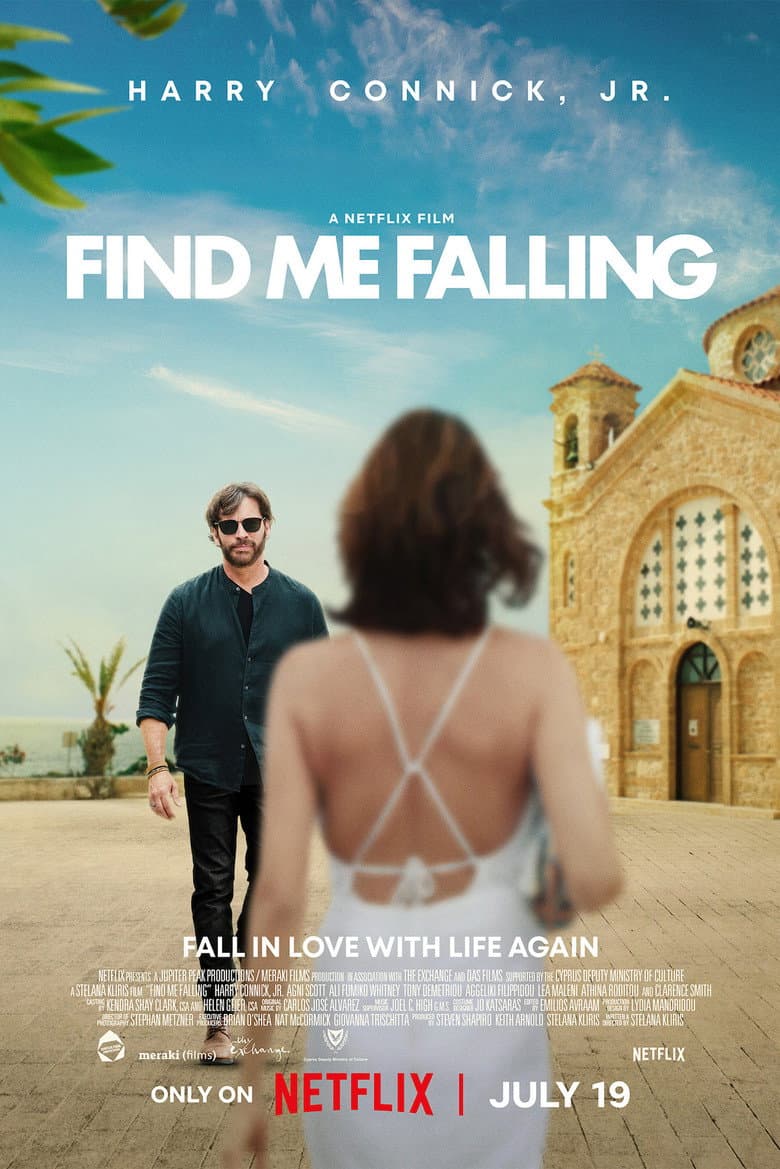
John Allman is an aging American rock star whose latest album has failed. He buys a cliffside house on Cyprus because he wants to hide from music and from people. He soon learns that the cliff is a place where troubled strangers come to die, and a local police chief asks him to call when someone appears. John also meets Sia, the woman he loved years ago, and her talented daughter Melina. The film mixes a gentle romance with dark jokes, family secrets, music, and scenes about suicide.
The main audience-visible identity element is the film’s Cypriot community, which includes an American rock star, local Greek-speaking families, a female doctor, and a young singer. Melina is presented as born and raised on Cyprus, but Ali Fumiko Whitney plays her with a clear American accent, and the film gives only a short answer for that choice. Sia also says she refused to give up her own dreams to follow John’s career, while Melina leaves for New York to build a singing career. These ideas add mild female independence and cultural representation, but the story mainly supports family, forgiveness, love, and human connection.
Community feedback
Was our 26% Woke rating accurate?
Breakdown
These are the editorial factors and ratings behind our score for Find Me Falling.
Woke representation / casting
The film casts Asian American actress Ali Fumiko Whitney as Melina, who is presented as born and raised in Cyprus. Melina speaks with a clear American accent, and the story gives only a short answer for it. That choice creates a noticeable mismatch in a prominent local role. Most other important local roles are played by Cypriot or Greek actors, so the mismatch is limited.
28%
Woke political dialogue
Not present. The dialogue has no recurring lines about DEI, modern identity politics, or activist causes. The main talks concern love, family, music, work, and helping people in danger.
0%
Identity-driven story themes
Sia says she would not give up her dreams to follow John’s career. She raises Melina without him after deciding that John would not stay and care for a family. Melina pursues singing and later starts a career in New York. The film treats these as personal family choices, not as a wider political message.
18%
Western institutional / cultural critique
Not present. The film does not attack men, marriage, family, religion, or Western institutions. The local police, church, and families are shown as part of normal community life.
0%
Woke character or canon changes
Not relevant. The movie is an original story about a rock star, a Cypriot family, and a cliffside home.
0%
Anti-woke backlash and complaints
Not present. The X search found only two tiny accounts praising the film as non-woke. Other comments focused on accents, acting, and plot problems rather than DEI or identity politics.
0%
Creator track record context
Stelana Kliris has a limited public record of activist or identity-driven work, while her main work centers on Cyprus, relationships, and culture. Tonia Mishiali has a stronger feminist record and has spoken about women’s roles and gender equality. The other stored producers and casting directors have little such record. Kliris described this film as nonpolitical and nonhistoric, which keeps the context moderate.
35%
Production

Movie · 2024
A mild-mannered professor moonlighting as a fake hit man in police stings ignites a chain reaction of trouble when he falls for a potential client.

Movie · 2025
Two down-on-their-luck hourly workers team up to rob a posh London department store on Christmas Eve. Will they steal each other's hearts along the way?
Movie · 2025
Dawn thinks she's joining a dating show in Paris, France, only to land in Paris, Texas. She has an exit plan — until sparks fly with the cowboy bachelor.
Movie · 2024
After discovering their significant others are siblings, two resentful exes must spend Christmas under one roof — while hiding their romantic history.
Movie · 2024
Archie has been in love with his best friend Amelia for as long as he can remember. Just when he builds up the courage to declare his feelings, she falls head over heels for Billy…
Movie · 2019
Two young people arrive in New York to spend a weekend, but once they arrive they're met with bad weather and a series of adventures.

Movie · 2019
Standing on the precipice of adulthood, a group of friends navigate new relationships, while reexamining others, during their final summer before college.
Movie · 2016
A week in the life of Paterson, a poet bus driver, and his wife Laura, a very creative artist, who live in Paterson, New Jersey, hometown of many famous poets and artists.
