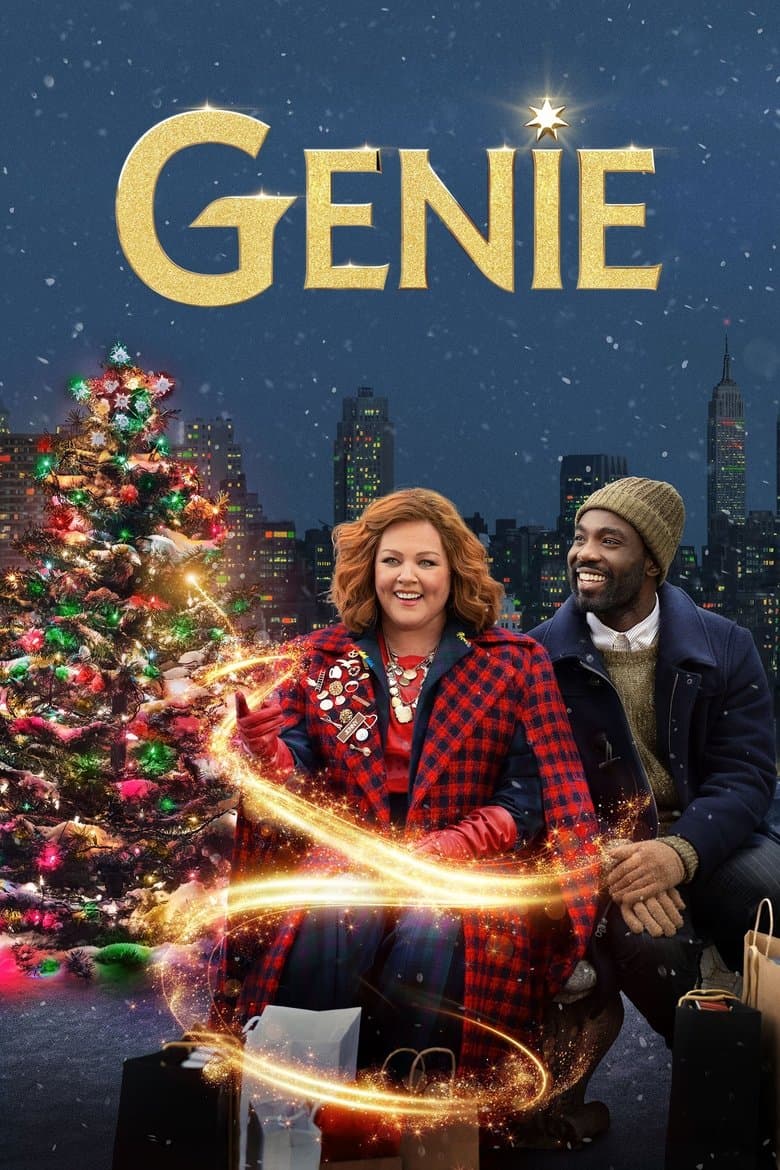
Genie is a Christmas fantasy comedy set in New York City. Bernard Bottle is an overworked auction-house employee who misses his young daughter’s birthday and loses both his job and his wife’s trust. He finds a jewelry box and releases Flora, a genie who has been trapped for 2,000 years. Bernard asks Flora to help him bring his family back, while she learns about modern life, pizza, movies, and friendship. The tone is gentle, silly, and warm, with a simple lesson about choosing family over work.
The clearest audience-visible identity change comes from the remake’s casting. The 1991 TV film had a black male genie played by Lenny Henry, while this version makes the genie Flora a white woman played by Melissa McCarthy. Bernard, Julie, and Eve are a black family in present-day New York, and their family life drives the story. Flora also gets a small story about freedom after centuries of serving greedy men, while Bernard learns to put his family before his job.
Community feedback
Was our 30% Woke rating accurate?
Breakdown
These are the editorial factors and ratings behind our score for Genie.
Woke representation / casting
The remake makes two prominent identity changes from the 1991 film. The original black male genie Josephus becomes Flora, a white woman played by Melissa McCarthy. The original white English Bernard becomes a Black Englishman, while his wife and daughter are also Black in the modern New York setting. The family casting fits the setting, but the two lead changes are highly visible and not needed by the plot.
30%
Woke political dialogue
Not present. The story includes Christmas and brief references to Jesus as part of the fantasy setup. It does not build scenes around elections, activism, or current political fights.
0%
Identity-driven story themes
Flora’s backstory says that greedy men have used her powers for centuries to get wealth and women. Flora later chooses freedom and a life of her own instead of remaining tied to Bernard. This creates a small female-empowerment thread, but Bernard’s family problem remains the main story.
13%
Western institutional / cultural critique
Not present. The boss is cruel and work takes Bernard away from his family. The film treats that as a personal and family problem. It does not attack capitalism, patriarchy, Christianity, or a wider Western institution.
0%
Woke character or canon changes
The remake changes two central identities from the 1991 source: Bernard changes from white to Black, and Josephus changes from a black man to Flora, a white woman. The film does not explain these choices as a diversity or political goal. The visible changes matter to viewers comparing both versions, but their purpose is unclear, so the score stays low.
15%
Anti-woke backlash and complaints
One independent review called the remake “fake-woke” and objected to its race and gender changes. The review also described the new version as a whitewashing of parts of the older story. Reddit threads mainly criticized the humor, acting, and remake quality, so the anti-woke backlash appears narrow.
16%
Creator track record context
Cached context rates Richard Curtis at 28/100 and Sam Boyd at 39/100. Curtis has a mild record tied to charity, poverty, climate, and later diversity comments. Boyd has discussed seeking a wide range of racial, gender, and sexual-orientation views in his work. The producers have mostly low or modest cached scores and no strong activist record.
31%
Production

Movie · 2017
A continuation of the documentary spoof of what Thor and his roommate Darryl were up to during the events of "Captain America: Civil War".
Movie · 2024
Four tales unfold in Wes Anderson's anthology of short films adapted from Roald Dahl's beloved stories, "The Wonderful Story of Henry Sugar", "The Swan", "The Rat Catcher", and…
Movie · 2021
A tailor gains special powers after being struck by lightning but must take down an unexpected foe if he is to become the superhero his hometown in Kerala needs.
Movie · 2021
A social butterfly who dies during her birthday week is given a second chance to right her wrongs on Earth.

Movie · 2019
Kat is an aspiring singer-songwriter who dreams of making it big. However, her dreams are stalled by her reality: a conniving and cruel stepfamily and a demoralizing job working…
Movie · 2024
Maddie's dream guy is days away from marrying her best friend when a wish for true love made on an ancient stone in Ireland magically alters her fate.
Movie · 2024
After discovering she can see everyone's imaginary friends, a girl embarks on a magical adventure to reconnect forgotten imaginary friends with their kids.
Movie · 2021
When Flora rescues a squirrel she names Ulysses, she is amazed to discover he possesses unique superhero powers, which take them on an adventure of humorous complications that…
