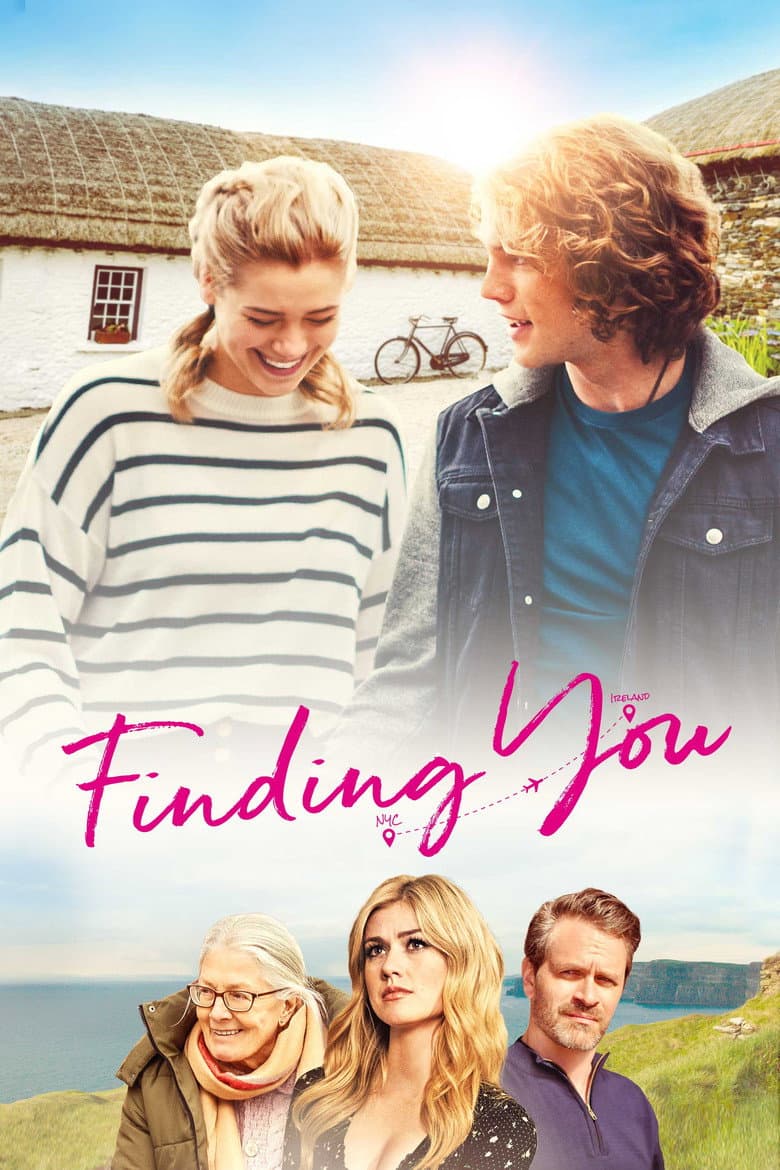
Finley Sinclair is an American college student and skilled violinist who fails an audition for a top music school. She travels to a small Irish coastal town for a semester abroad, hoping to follow the path of her late brother and repair her confidence. There she meets Beckett Rush, a famous young actor who is hiding from the pressure around his fantasy film series. Their gentle romance grows as they visit Irish landmarks, share music, and face trouble from Beckett’s father, his fame, and an old family wound in the town. The tone is clean, warm, and sometimes sad, with comedy, music, faith, and beautiful scenery.
The film does not build its story around race, sexual identity, or party politics. Its main messages ask viewers to look past first impressions, forgive old wrongs, and choose a real life over fame and money. Finley pushes Beckett to make his own choices, while Beckett helps Finley trust her music and try again after rejection. A side story reveals that an older woman took blame for protecting her sister from a violent marriage, and Finley helps the sisters meet before it is too late. The film also uses a cross and a short Bible message to suggest that Finley was not alone, but faith remains a small part of a wider romance and growing-up story.
Community feedback
Was our 2% Woke rating accurate?
Breakdown
These are the editorial factors and ratings behind our score for Finding You.
Woke representation / casting
Not present. The main cast is mostly white American and Irish performers in a present-day romance set in Ireland. The film does not show a repeated diversity-first casting pattern in its main roles.
0%
Woke political dialogue
Not present. The characters do not have recurring political or activist talks. The story focuses on love, grief, faith, fame, and personal choices.
0%
Identity-driven story themes
Not present. The central story follows a man and woman dealing with romance, rejection, grief, and family problems. It does not use race, sexual identity, or modern identity politics as a main theme.
0%
Western institutional / cultural critique
Not present. The film shows a controlling father, an abusive past marriage, and the costs of fame. These are personal conflicts, not a modern activist attack on Western culture, men, family, or institutions.
0%
Woke character or canon changes
Not relevant. The film is adapted from Jenny B. Jones's novel There You'll Find Me. The movie changes the title and leaves out the novel's eating-disorder plot, but it does not rewrite the story around identity politics.
0%
Anti-woke backlash and complaints
Not present. Audience and news coverage centered on the film's romance, faith, family-friendly content, scenery, and mixed quality. No notable anti-woke, DEI, race-swap, or identity-politics backlash was found.
0%
Creator track record context
Brian Baugh's earlier work includes socially relevant stories, but his public profile has no documented DEI activist persona. Jenny B. Jones's work centers on Christian romance, faith, family, and charity. Venus Kanani has a representation-first casting pattern, but this film's cast does not show a strong identity focus. The other cached producers and Thyrza Ging have low or no documented activist profiles.
12%
Production

Movie · 2019
A family dog – with a near-human soul and a philosopher's mind – evaluates his life through the lessons learned by his human owner, a race-car driver.

Movie · 2020
The true-life story of Christian music star Jeremy Camp and his journey of love and loss that looks to prove there is always hope.

Movie · 2023
Mia and Kyle, two misfit American teens, travel to Spain in search of Mia's birth mother. As the pair road trip through the picturesque cities of Andalusia and fall in love, they…
Movie · 2020
A widow with three children hires a handyman to fix her house during a major storm. When not doing home repairs, he shares his philosophy of believing in the power of the universe…

Movie · 2018
Years after leaving his fiancée at the altar to pursue fame and fortune, country music star Liam Page returns home hoping to win her back.
Movie · 2022
The summer before college, Auden meets the mysterious Eli, a fellow insomniac. While the seaside town of Colby sleeps, the two embark on nightly quests to help Auden experience…

Movie · 2016
Set against the backdrop of a beautiful garden in the heart of London, this contemporary fairy tale revolves around the unlikely friendship between a reclusive young woman and a…
Movie · 2016
Pop superstar Jordan Jaye has a big dream he just wants to live like a regular teenager. When he's chased down by some excited female fans, he finds a perfect hideout and a…
