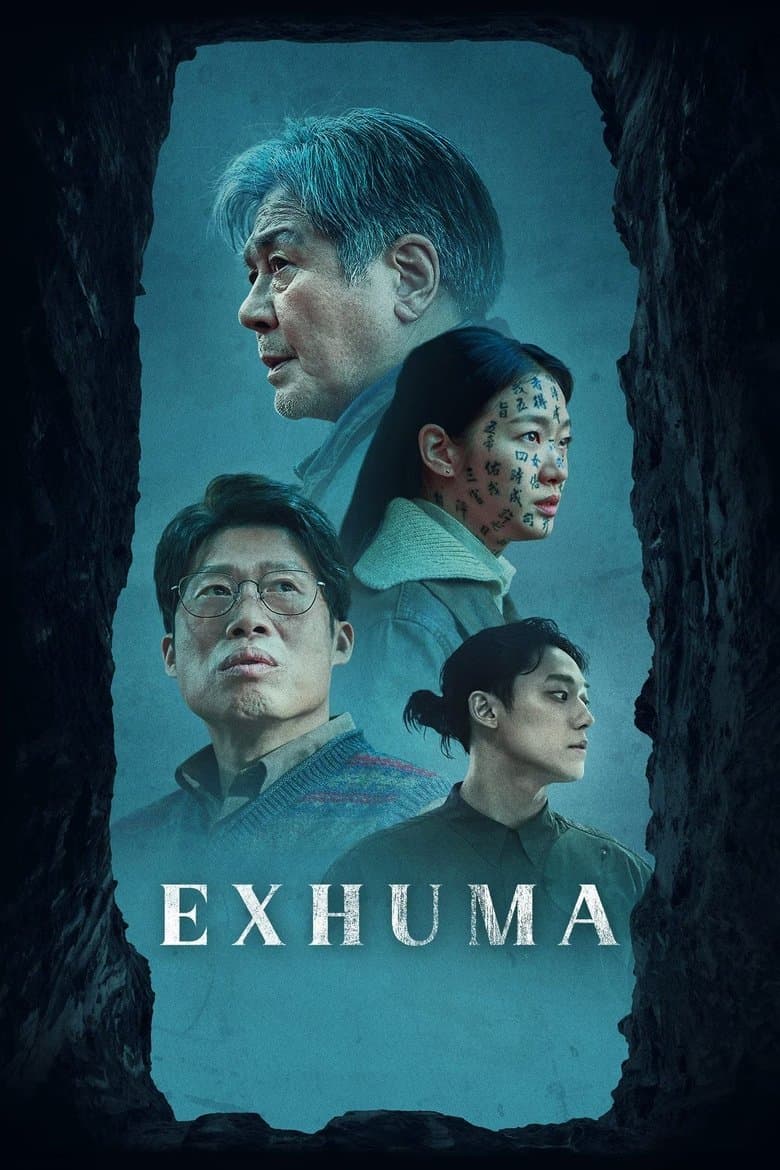
Exhuma follows Hwa-rim, a young shaman who helps a rich Korean family living in Los Angeles. Their newborn suffers from a strange illness, so Hwa-rim and her partner Bong-gil return to Korea to examine the family grave. They bring in Kim Sang-deok, a feng shui expert, and Yeong-geun, an undertaker, but moving the grave releases a far older danger. The film mixes ghost horror, Korean rituals, family secrets, and a dark history lesson.
Most of the film’s identity message comes from its later story about Japanese rule over Korea. The buried evil becomes a symbol of foreign control, Korean collaborators, and painful history that still troubles the country. Hwa-rim’s line that she is Korean and the team’s fight to remove the buried threat make national identity important. The female shaman is highly skilled, but she works with three capable men, and her skill comes from her job and training.
Community feedback
Was our 35% Woke rating accurate?
Breakdown
These are the editorial factors and ratings behind our score for Exhuma.
Woke representation / casting
Not present. The main cast is Korean, which fits the South Korean setting, and the female shaman’s job explains her central role. The film does not use a mixed identity lineup or a diversity-first casting message.
0%
Woke political dialogue
Hwa-rim says “I am Korean” after being mistaken for Japanese. Other short lines connect the case to Korea’s painful past. The film does not build its dialogue around current DEI, gender, or activist ideas.
18%
Identity-driven story themes
Exhuma makes Korea’s painful history an important part of its second half and ending. The hidden coffin and iron spike turn Japanese imperial rule into the main supernatural enemy. The film also connects the Park family’s curse to a Korean ancestor who served Japan. This is a clear anti-colonial and national identity message, but it is rooted in Korean history rather than current Western identity politics.
38%
Western institutional / cultural critique
Not present. The film does not attack Western institutions, Christianity, family life, or traditional gender roles. Its conflict concerns spirits, a wealthy family’s curse, and Japan’s rule over Korea.
0%
Woke character or canon changes
Not relevant. The film is an original story with no established characters or real historical figures being recast. Its historical references support the plot but do not change a known character’s identity.
0%
Anti-woke backlash and complaints
One reported conservative complaint called Exhuma a leftist film and said its success came from “leftists,” while objecting to its anti-Japanese message. The speaker had not seen the film, and news coverage described the claim as disputed. The X research pass found no anti-woke posts about the title. Other disputes concerned animal use and Chinese writing on faces, not woke content.
15%
Creator track record context
Director Jang Jae-hyun has made several occult films about religion, belief, and Korea’s painful past. He has described Exhuma as a way to face Japanese imperial history and has linked its ending to hope for Korean reunification. His record shows a repeated historical and anti-colonial interest, but no broad DEI campaign or sustained activist public persona. Producers Kim Young-min and Charlie Shin have no strong recorded identity-driven agenda.
40%
Production

Movie · 2019
A rebellious teenage boy, struggling with his parents' imminent divorce, encounters a terrifying evil after his next-door neighbor becomes possessed by an ancient witch that…

Movie · 2023
Jess, a newly separated mother and nurse, moves into her old family farmhouse with Tyler, her teenage daughter, and Owen, her eight-year-old son.
Movie · 2016
A stranger arrives in a little village and soon after a mysterious sickness starts spreading. A policeman is drawn into the incident and is forced to solve the mystery in order to…

Movie · 2021
Paranormal investigators Ed and Lorraine Warren encounter what would become one of the most sensational cases from their files.

Movie · 2019
A lone fisherman on his daily run finds himself lost in a thick fog which proves impossible to navigate. The worst is yet to come when his encounter with a seemingly abandoned…

Movie · 2023
Between the events of 'Saw' and 'Saw II', a sick and desperate John Kramer travels to Mexico for a risky and experimental medical procedure in hopes of a miracle cure for his…

Movie · 2017
Though Kevin has evidenced 23 personalities to his trusted psychiatrist, Dr. Fletcher, there remains one still submerged who is set to materialize and dominate all the others.

Movie · 2025
Plagued by a violent recurring nightmare, college student Stefanie heads home to track down the one person who might be able to break the cycle and save her family from the grisly…
