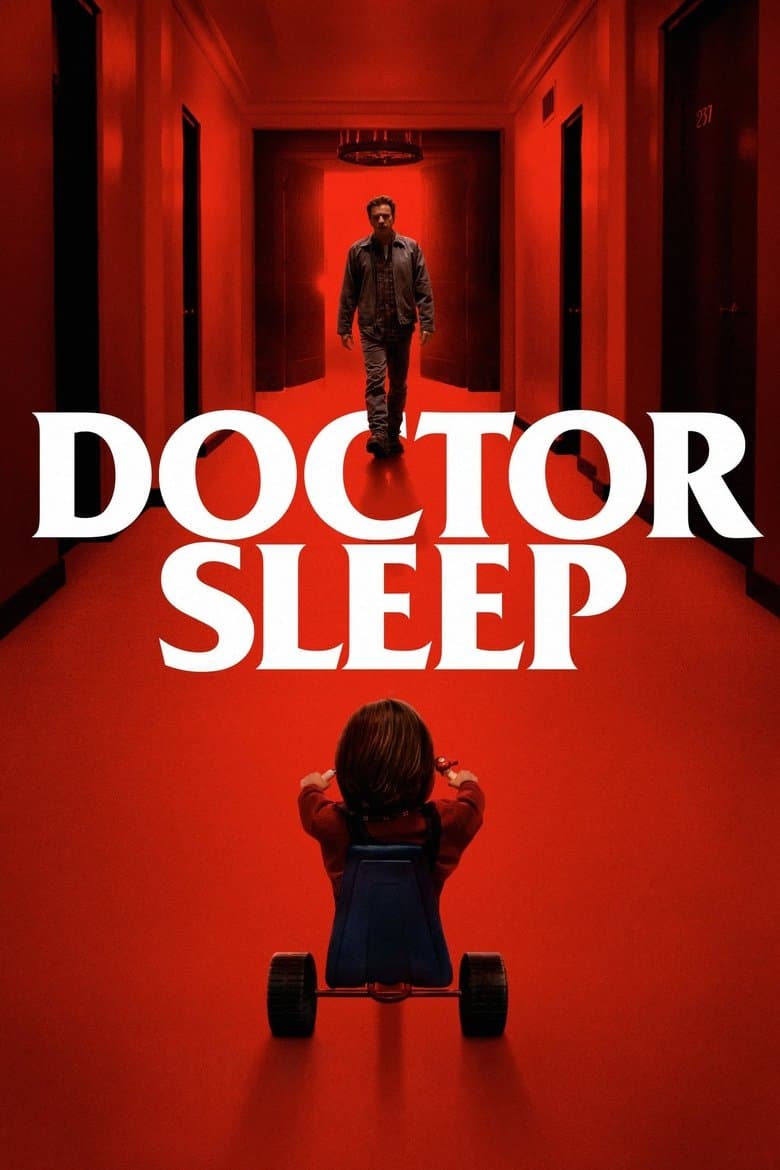
Adult Dan Torrance still lives with the trauma of the Overlook Hotel and numbs his psychic shine with alcohol. He finds sobriety in a New Hampshire town and works as a hospice orderly who eases dying patients. A telepathic teen named Abra Stone has a much stronger shine and pulls him into a fight against the True Knot. That cult of psychic vampires is led by Rose the Hat and tortures children for steam. The story centers on childhood trauma, addiction, recovery, and facing inherited evil, and it ends in a sacrificial showdown at the Overlook.
The film changes Abra Stone from a white blonde girl in the novel into a black co-lead with a black father and a white mother. Supporting roles such as Billy Freeman, Crow Daddy, and several True Knot members also use more diverse casting than the book. Those race changes are clear on screen even though the movie was not sold as a diversity project. The plot itself has little to no activist political dialogue or modern identity politics. Fan complaints about forced diversity were real but limited and mostly stayed in niche online spaces.
Community feedback
Was our 39% Woke rating accurate?
Breakdown
These are the editorial factors and ratings behind our score for Doctor Sleep.
Woke representation / casting
Abra Stone is played by black actress Kyliegh Curran with a black father and white mother, while the novel makes her a blue-eyed blonde white girl. Supporting roles such as Billy Freeman, Crow Daddy, and True Knot members also diversify characters the book treats as largely white. Modern settings make mixed families believable, and the film was not sold as a diversity project. Still, the Abra race-swap and several source-character race flips form a clear casting pattern the audience can see.
42%
Woke political dialogue
Not present. Dialogue tracks addiction, AA recovery, psychic horror, and the True Knot’s predation with no standout activist speeches about race, gender ideology, or identity politics.
0%
Identity-driven story themes
Not present. The story is built on trauma, alcoholism, recovery, mentorship, and supernatural survival rather than modern identity politics.
0%
Western institutional / cultural critique
Not present. Institutions shown are personal, such as AA, hospice care, and family damage, not framed as systemic attacks on Western culture.
0%
Woke character or canon changes
The main identity-driven change is Abra’s race and family presentation versus the novel, plus race flips for Billy Freeman, Crow Daddy, and several True Knot members. Those track as representation-first shifts from source characters. Other big adaptation changes, such as the Kubrick Overlook setup, ending shifts, and dropped blood relation between Dan and Abra, are ordinary adaptation choices rather than DEI rewrites.
45%
Anti-woke backlash and complaints
There was no large mainstream “too woke” news cycle. Scattered fans complained about Abra’s race-swap and forced diversity in forums, Reddit, and Facebook threads. The pushback was real but limited and mostly niche.
22%
Creator track record context
Flanagan’s work centers on grief, addiction, and family trauma with only mild sociopolitical interest. King is liberal in public life but does not build his fiction on DEI or queer-activist storytelling. Producers and casting leads show no clear activism pattern, so the overall track record stays low to moderate.
24%
Production
Movie · 2021
Cristina, a journalist of Mexican origin, travels to her ancestral home in Veracruz to investigate a story of sorcery and healing.
Movie · 2024
A gothic tale of obsession between a haunted young woman and the terrifying vampire infatuated with her, causing untold horror in its wake.
Movie · 2019
On the outskirts of a kingdom, a quiet but fierce medieval warrior protects the realm from monsters and the occult.
Movie · 2019
A driving instructor must use her other-worldly gifts to save a lonely man’s daughter from a rock star looking to use her for Satanic purposes.
Movie · 2025
Following the death of their father, a brother and sister are sent to live with a foster mother, only to learn that she is hiding a terrifying secret.
Movie · 2026
After breaking the mysterious "One Wish Willow" to win his crush's heart, a hopeless romantic finds himself getting exactly what he asked for but soon discovers that some desires…
Movie · 2016
Lorraine and Ed Warren travel to north London to help a single mother raising four children alone in a house plagued by malicious spirits.
Movie · 2025
A father and daughter accidentally hit and kill a unicorn while en route to a weekend retreat, where his billionaire boss seeks to exploit the creature’s miraculous curative…
