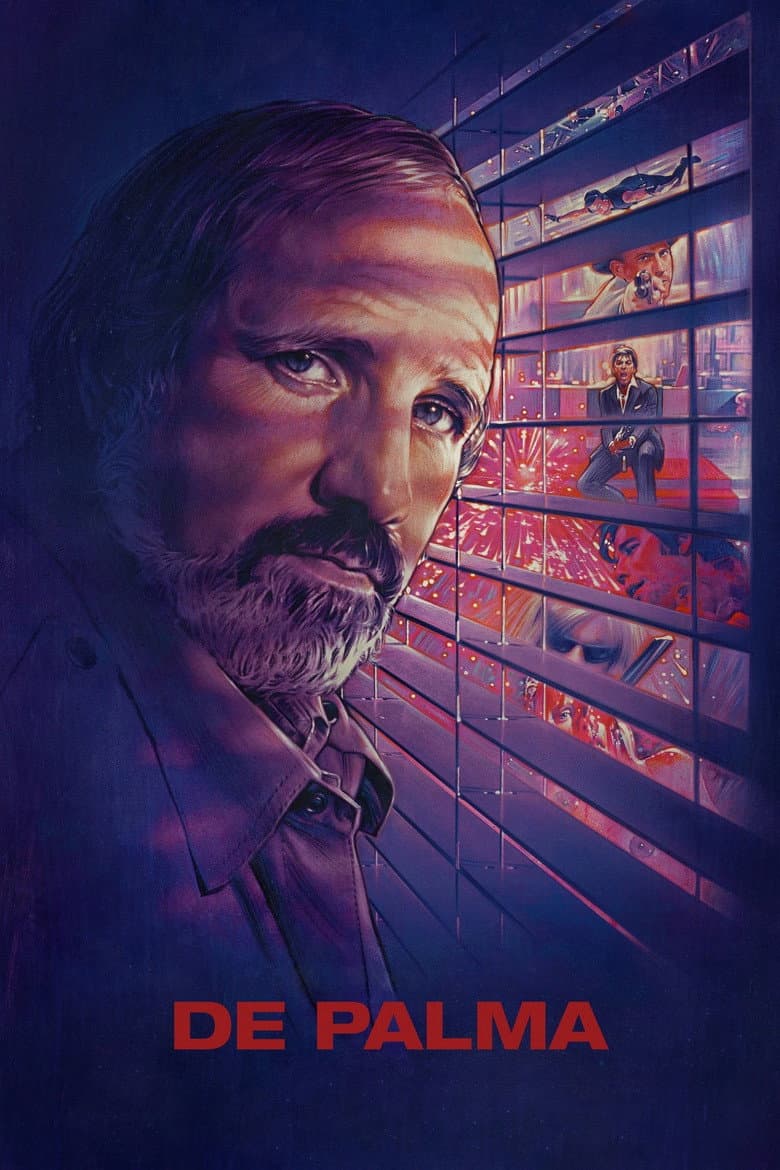
Brian De Palma sits before the camera and tells the story of his long career as a movie director. The documentary moves through his films in order, from his early years in New York and Philadelphia to his work in Hollywood and Europe. His main struggle is the fight between his bold visual ideas and the studios, censors, critics, actors, and poor results that often stood in his way. The tone is calm, funny, honest, and sometimes uncomfortable.
The film gives a short but clear look at the political and identity ideas inside some of De Palma’s older movies. De Palma says Be black Baby was meant to create a race awakening and show white viewers the Black experience, while Greetings and Hi, Mom! attack war and the establishment. He also explains the transgender killer in Dressed to Kill and talks about why he likes watching women on screen, which brings up the old charge that his films are unkind to women. These subjects appear as parts of a career lesson, while the main focus stays on camera tricks, suspense, actors, censors, and the changing movie business.
Community feedback
Was our 22% Woke rating accurate?
Breakdown
These are the editorial factors and ratings behind our score for De Palma.
Woke representation / casting
Not present. The documentary centers on Brian De Palma and two male filmmakers who interview him. Its film clips are taken from existing movies and are not presented as a diversity message.
0%
Woke political dialogue
The documentary includes a short section on Be black Baby. De Palma says the work was meant to create a race awakening and show viewers the Black experience in 1960s America. The film also covers anti-war and anti-establishment ideas from Greetings and Hi, Mom! These lines appear in a history of his early movies and do not drive the whole documentary.
24%
Identity-driven story themes
The documentary spends a clear section on the transgender killer in Dressed to Kill. De Palma explains that the story came from the idea of a man living in a woman’s body and becoming violent when aroused. The film also returns to his habit of placing women in danger and following them with the camera. These are real gender themes, but the documentary studies them as parts of his old thrillers rather than making a current activist case.
28%
Western institutional / cultural critique
Not present. The documentary shows De Palma criticizing Hollywood studios, censors, and businessmen who control movies. That criticism targets the film business and does not become a modern activist attack on Western culture, family, religion, or gender roles.
0%
Woke character or canon changes
Not relevant. The film is a career documentary about a real filmmaker. It does not change an established character, source story, or historical figure.
0%
Anti-woke backlash and complaints
Not present. Mainstream reviews mostly praise the documentary and discuss its film lessons. The separate X check found no anti-woke reaction, and no other source found a complaint that this title pushes DEI or identity politics.
0%
Creator track record context
Baumbach’s earlier films focus on family and personal failure. Paltrow’s June Zero looks at history through overlooked people, and Bachor has made some socially aware short work. The creators do not show a strong public pattern of identity activism. The context is mild, so this factor stays low.
10%
Production
Movie · 2016
After being denied access to the Church of Scientology's headquarters, documentarian Louis Theroux teams up with ex-Scientology official Marty Rathbun to stage re-enactments of…

Movie · 2019
An Iraqi journalist joins an army of uneasy allies and unforgettable characters in the epic battle to liberate the city of Mosul from the Islamic State.

Movie · 2017
Documentary about the arena-packing Swedish DJ, chronicling his explosive rise to fame and surprising decision to retire from live performances in 2016.
Movie · 2022
In the aftermath of George Floyd’s death, the media concocted a narrative that justified a summer of worldwide riots and helped contribute to the rise of Black Lives Matter who…

Movie · 2023
The remarkable coming-of-age story of Stephen Curry—one of the most influential, dynamic, and unexpected players in basketball history—and his rise from an undersized college…
Movie · 2022
In candid conversations with actor Jonah Hill, leading psychiatrist Phil Stutz explores his early life experiences and unique, visual model of therapy.
Movie · 2016
Derren Brown investigates the power of social compliance by persuading an unwitting member of the public into believing that they have pushed someone to their death.
Movie · 2025
Those who knew iconic funnyman John Candy best share his story, in their own words, through never-before-seen archival footage, imagery, and interviews.
