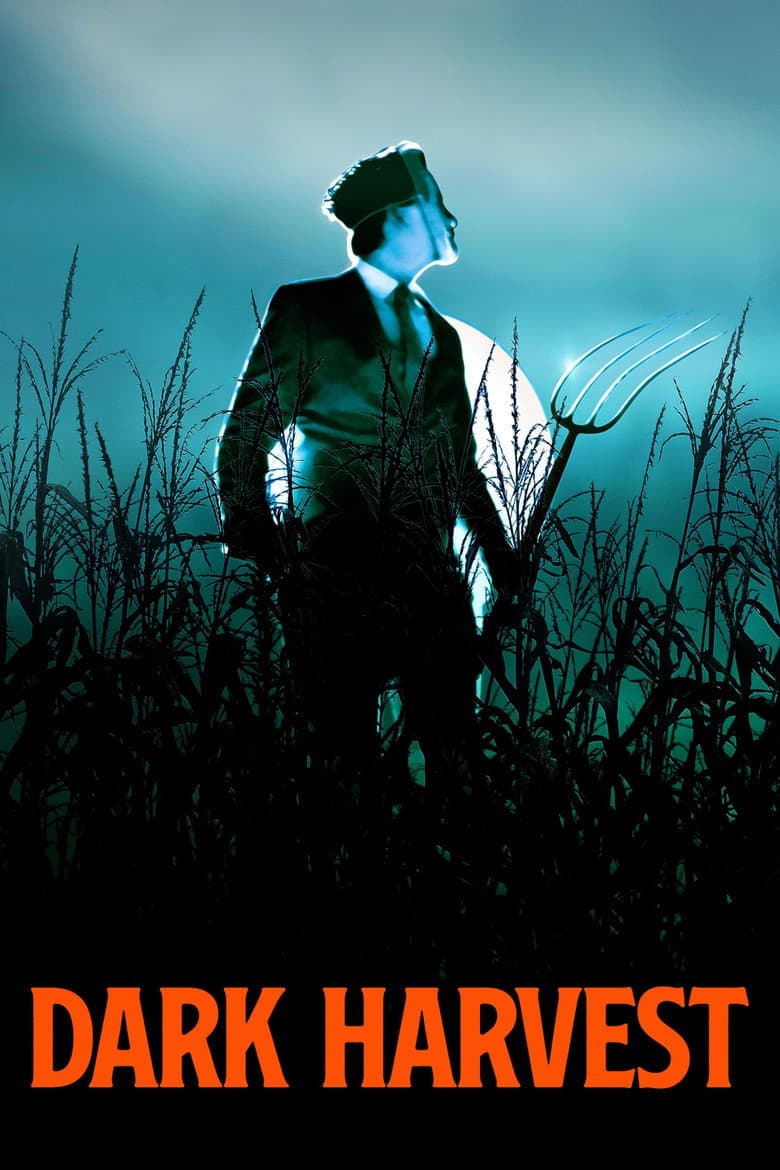
Dark Harvest follows Richie Shepherd, a teenager trapped in Bastion, Illinois, in 1963. Every Halloween, the town starves its teenage boys and sends them into a bloody hunt for Sawtooth Jack, a pumpkin-headed creature from the cornfields. Richie wants to win the Run because his older brother Jim won the year before and then vanished. The story mixes family grief, violent action, small-town fear, and a grim Halloween mood.
The film gives Kelly Haines, a black teenage girl, a major role beside Richie. The town bars girls from the Run, treats Kelly as an outsider, and reacts with racist anger when she and Richie become a couple. Kelly still joins the hunt and helps Richie uncover the truth behind the town’s reward system. The adults use tradition, the police, and the Harvest Guild to make young people fight and die so the town can keep its way of life. The story presents that system as cruel, tied to racism, male-only rules, blind tradition, and the sacrifice of the young.
Community feedback
Was our 50% Woke rating accurate?
Breakdown
These are the editorial factors and ratings behind our score for Dark Harvest.
Woke representation / casting
The film gives major co-lead status to Kelly Haines, a black teen girl in a mostly white 1963 town. Kelly is shut out of the boys-only Run because of her sex and race, then joins Richie and helps fight Sawtooth Jack. Her interracial romance with Richie is shown in public and draws disgust from the town. The film has one clear identity pattern in its leads, but it does not present a large or varied diversity lineup.
32%
Woke political dialogue
Not present. The film uses racial slurs, old town rules, and a war-like ritual, but it does not give modern political speeches or activist arguments.
0%
Identity-driven story themes
Kelly’s race and sex affect her place in the town throughout the movie. The town’s white residents use slurs against her and react with disgust when she kisses Richie. Kelly joins the boys’ hunt even though girls are banned, and she helps Richie challenge the ritual. The story ties these identity conflicts to its larger attack on inherited rules and the sacrifice of young people.
45%
Western institutional / cultural critique
The town’s adult leaders protect a cruel tradition through the Harvest Guild, the police, and the church. The boys are starved and pushed into violent competition while the adults praise the winner’s car and social rise. The male-only Run and the town’s treatment of Kelly make traditional gender rules part of the problem. The ending calls for the system to be burned down.
48%
Woke character or canon changes
The movie changes Kelly from the novel’s less-defined girl into a black co-lead with a stronger personality. That change makes racism and an interracial romance part of the screen story. The film also changes the book’s Pete into Richie, the brother of a past winner, but that change serves the family plot rather than identity politics. The racial change is clear, but the creators do not explain its purpose in the available interviews.
30%
Anti-woke backlash and complaints
One post in the anti-woke subreddit KotakuInAction said the movie became woke about 15 minutes in and complained about cringy woke themes. A search-indexed IMDb user review said Kelly seemed included to tick a political-correctness box. These complaints focus on the Black co-lead, racist storyline, and social themes rather than on ordinary plot problems. The reaction is small and fringe.
12%
Creator track record context
The cached notes give Michael Gilio a low score of 15, Norman Partridge 0, and David Slade 1. The notes also show low scores for the casting director and producers, with no strong record of activist or DEI campaigns. Slade’s title interview gives a Vietnam War reading, but the film does not come from a broad creator campaign.
6%
Production
Movie · 2023
A powerful biotech company has breakthrough technology allowing them to clone history’s most influential people with just a few fragments of DNA.
Movie · 2018
A timid and socially alienated 17-year-old high school student's life is turned upside down when she switches places with her sinister mirror image.
Movie · 2025
A collection of Halloween-themed videotapes unleashes a series of twisted, blood-soaked tales, turning trick-or-treat into a struggle for survival.
Movie · 2021
An Icelandic couple live with their herd of sheep on a beautiful but remote farm. When they discover a mysterious newborn on their land, they decide to keep it and raise it as…
Movie · 2018
Laurie Strode comes to her final confrontation with Michael Myers, the masked figure who has haunted her since she narrowly escaped his killing spree on Halloween night four…
Movie · 2024
A gothic tale of obsession between a haunted young woman and the terrifying vampire infatuated with her, causing untold horror in its wake.
Movie · 2024
After raising an unnervingly talented spider in secret, 12-year-old Charlotte must face the truth about her pet and fight for her family's survival.
Movie · 2026
College student Lucy and her friends spend their vacation at her family's home in Hawaii, which includes her pet chimpanzee, Ben.
