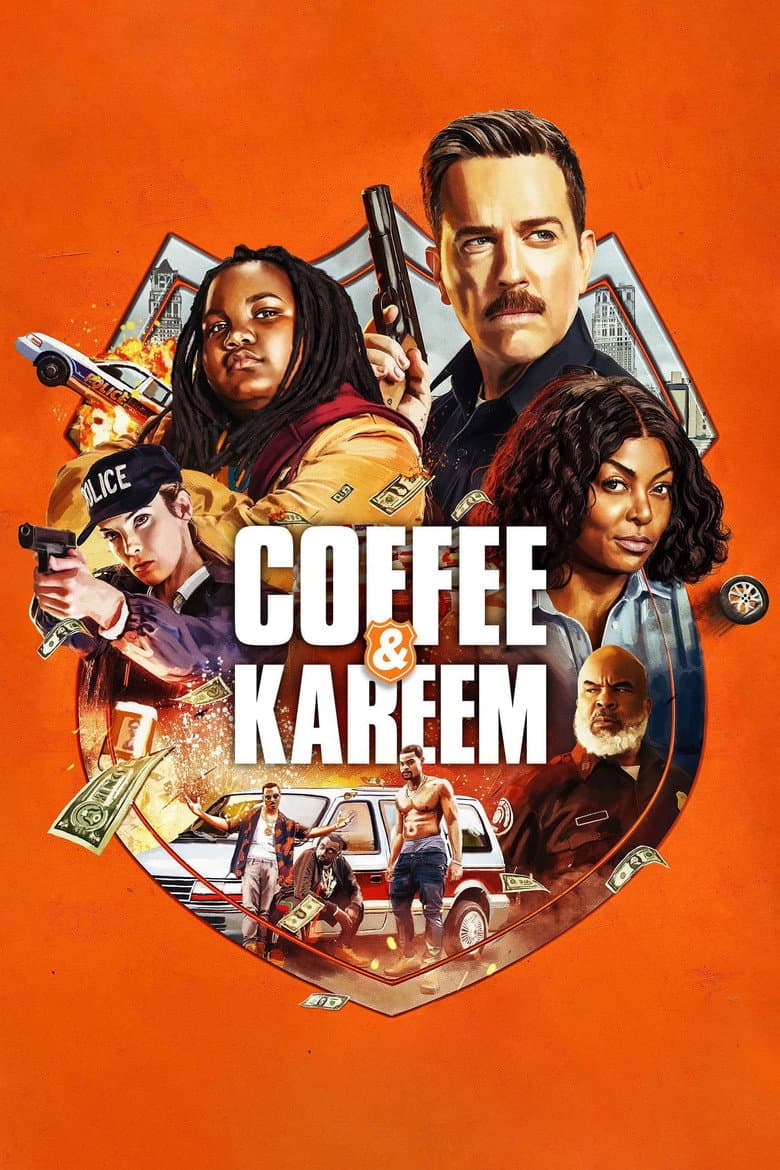
Coffee is a nervous Detroit police officer who wants a real future with Vanessa, a single mother. Vanessa’s 12-year-old son Kareem hates Coffee because he sees him as a broke white cop who could damage his street image and replace his dead father. Kareem hires a drug dealer to scare Coffee, but the plan exposes a murder and a network of dirty police officers. Coffee and Kareem then run across Detroit while trying to save Vanessa, clear Coffee’s name, and learn to trust each other. The tone is very violent, loud, and crude, with adult jokes coming from a child.
Race is visible from the start because the central family is black while Vanessa dates a white police officer. Kareem and Coffee trade repeated jokes about white cops, racism, and the uneasy place of a white man in a black family. The film also uses gay insults, sexual claims, and police brutality as shock jokes, but it does not build a clear activist lesson around them. The story finally treats the family bond and Coffee’s choice to protect Vanessa and Kareem as more important than their racial conflict, so the identity material shapes the comedy and setup without taking over the whole story.
Community feedback
Was our 32% Woke rating accurate?
Breakdown
These are the editorial factors and ratings behind our score for Coffee & Kareem.
Woke representation / casting
The film places a white cop beside a black boy and his Black mother, with a mixed black and white police and crime cast. The movie repeatedly makes the interracial couple and the white cop’s place in the family part of the jokes. Modern Detroit makes this mix believable, and the director’s stated wish to show people from different racial backgrounds adds a small identity signal.
15%
Woke political dialogue
The film has repeated lines about race, white cops, and racism. Coffee defends himself by saying his girlfriend is black, while Watts taunts him as a racist white cop. Kareem also treats his mother dating a white officer as a threat to his image. The film uses these subjects as crude banter instead of arguing for a clear political program.
29%
Identity-driven story themes
The main conflict begins because Kareem rejects his mother’s white boyfriend. The film returns to racial difference during the chase, at the police station, and in arguments about Coffee’s place in the family. The story ends with Kareem accepting Coffee as a possible stepfather. The identity material shapes the family story, but it does not become a wider activist message.
31%
Western institutional / cultural critique
The movie shows corrupt police officers running a drug trade and killing another officer. The story also jokes about racist policing, police brutality, and a white officer dealing with a black child. Coffee is still shown as a good cop, and the ending exposes the bad officers instead of condemning all policing. The critique is brief and mixed with vulgar comedy.
27%
Woke character or canon changes
Not relevant. The movie is an original buddy-cop story. It does not change a known character, canon, or real historical event.
0%
Anti-woke backlash and complaints
Not present. Public complaints focused on profanity, weak comedy, racial jokes, gay jokes, violence, and child-inappropriate scenes. No meaningful anti-woke or anti-DEI campaign was found.
0%
Creator track record context
The director and writer have little public history of activist or identity-driven work. Ed Helms and Mike Falbo have some representation-related work, including Rutherford Falls, and Helms has done voting and anti-corruption outreach. Casting director Mary Vernieu has spoken about diverse role models. Most other listed producers have no clear public activist record, so the context stays mild.
18%
Production
Movie · 2024
Forty years after his unforgettable first case in Beverly Hills, Detroit cop Axel Foley returns to do what he does best: solve crimes and cause chaos.
Movie · 2016
A private eye investigates the apparent suicide of a fading porn star in 1970s Los Angeles and uncovers a conspiracy.
Movie · 2016
Friends hatch a plot to retrieve a stolen cat by posing as drug dealers for a street gang.
Movie · 2021
A mysterious woman recruits bank teller Ludwig Dieter to lead a group of aspiring thieves on a top-secret heist during the early stages of the zombie apocalypse.
Movie · 2022
Creatively unfulfilled and facing financial ruin, Nick Cage must accept a $1 million offer to attend the birthday of a dangerous superfan.
Movie · 2018
Mermer family, who has been managing a restaurant called “Anatolian flavors” in Haydarpasa train station for generations, consist of 8 members.
Movie · 2017
The adventures of two California Highway Patrol motorcycle officers as they make their rounds on the freeways of Los Angeles.
Movie · 2020
A pair of debt collectors are thrust into an explosively dangerous situation, chasing down various lowlifes while also evading a vengeful kingpin.
