Movie review
March 26, 2018 · 90 min · NR · Kids · Fantasy · Animation · Comedy · Adventure · Romance · Family
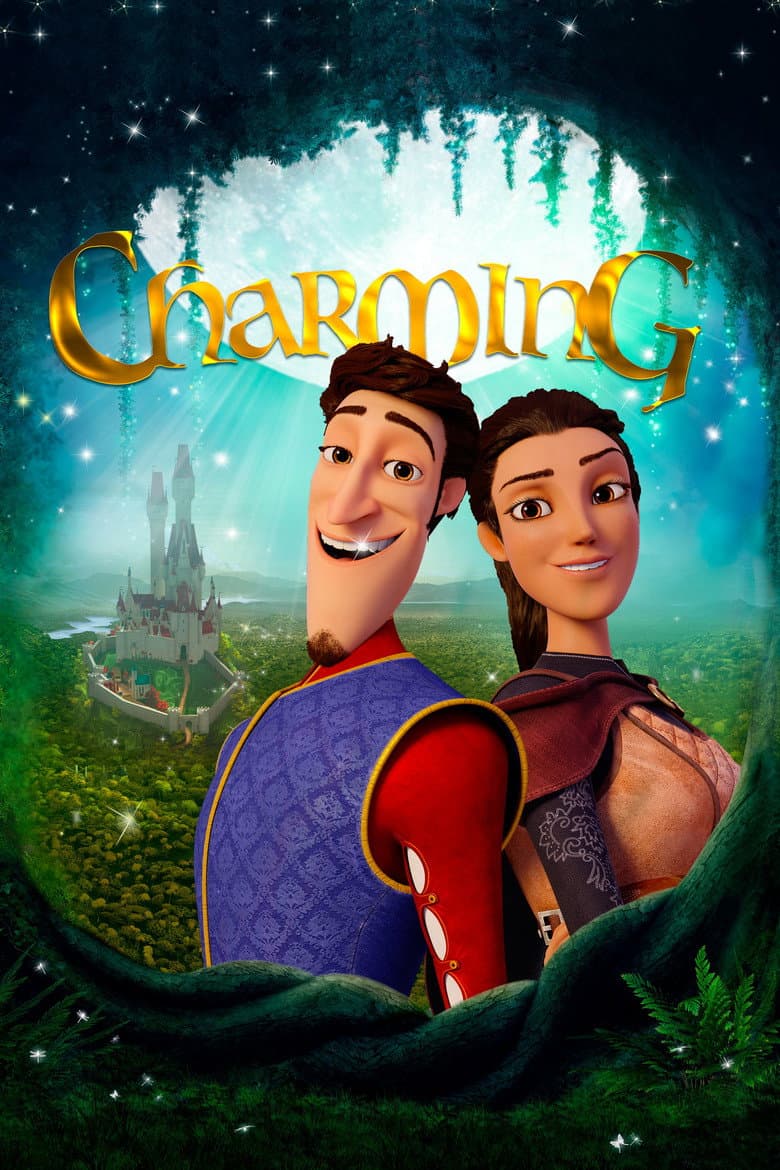
Charming is a bright animated fairy-tale comedy about Prince Philippe, the famous Prince Charming. A spell makes every woman fall in love with him, so he is engaged to Snow White, Cinderella, and Sleeping Beauty at the same time. Before his twenty-first birthday, he must find real love or the spell will erase love from his kingdom. A thief named Lenore joins him on a dangerous journey through forests, castles, monsters, and silly musical scenes.
Lenore is the strongest fighter and the guide who helps Philippe survive the quest. Philippe starts as a sheltered prince who depends on other people, while Lenore values freedom and does not trust love. The princesses chase Philippe, propose to him, and sing that he is their trophy boy. These jokes reverse the old rescue roles and make female skill more important than male heroics. The ending still chooses true love and marriage, so the story’s ideas about strong women stay inside a light romance.
Community feedback
Was our 47% Woke rating accurate?
Breakdown
These are the editorial factors and ratings behind our score for Charming.
Woke representation / casting
Prince Philippe is presented as a Latin prince, and Wilmer Valderrama called him the first Latin Prince Charming in interviews. The film also uses Demi Lovato, who has Mexican ancestry, as the main heroine. The fairy-tale world does not give either identity a story reason, so the casting partly reads as visible representation. The pattern is limited because most other characters have no clear ethnic identity and diversity is not the film’s whole design.
40%
Woke political dialogue
The princesses sing a repeated song calling Philippe a trophy boy and say they want to lock him down. Lenore challenges his old male-hero role and jokes that his sword is only an accessory. These lines push a comic reversal of usual gender roles. The movie does not give speeches about politics, race, or DEI.
38%
Identity-driven story themes
Lenore is the most skilled fighter and the guide for the whole quest. Philippe says other men have carried him through life, and Lenore teaches him to use his sword and bow. The princesses chase him, propose to him, and call him a trophy boy. The film treats these reversals as jokes but makes them a repeated part of the journey. The ending still chooses love and marriage, so the message stays inside a light fairy tale.
55%
Western institutional / cultural critique
The story makes the old damsel-in-distress pattern look silly. Lenore calls out Philippe’s dependence on other people and trains him to fight. The princesses chase and claim the prince instead of waiting to be rescued. These jokes question old gender roles, but the film does not attack Christianity, family life, capitalism, or a wider Western institution.
30%
Woke character or canon changes
Not relevant. The film is an original parody built from familiar fairy-tale figures. It does not change a known character’s race, sex, or identity in a way that drives the story.
0%
Anti-woke backlash and complaints
Not present. The supplied X pass found no anti-woke reaction or specific complaints. News and reviews focused on weak writing, animation, gender jokes, and stereotypes rather than claims that the film pushed DEI or left-wing politics.
0%
Creator track record context
Venokur’s known work is family animation, and his public profile does not show a repeat activist pattern. The film’s main identity-related creative choice is its repeated gender-role parody around Lenore and Philippe. The producers and casting director also have mainly commercial animation backgrounds.
6%
Production
Movie · 2021
Determined teen Din is longing to reconnect with his childhood best friend when he meets a wish-granting dragon who shows him the magic of possibilities.
Movie · 2017
When Chloe discovers that her new home's garden gnomes are not what they seem, she must decide between the pursuit of a desired high school life and taking up the fight against…
Movie · 2024
After receiving an unexpected call from her wayfinding ancestors, Moana journeys alongside Maui and a new crew to the far seas of Oceania and into dangerous, long-lost waters for…
Movie · 2019
A young girl named June with a big imagination makes an incredible discovery -- the amusement park of her dreams has come to life.
Movie · 2017
A small but brave donkey and his animal friends become the unsung heroes of the greatest story ever told: the first Christmas.
Movie · 2022
Puss in Boots discovers that his passion for adventure has taken its toll: He has burned through eight of his nine lives, leaving him with only one life left.

Movie · 2019
Marla is forced to abandon her carefully structured life to embark on an epic journey to find her younger brother Charlie who has disappeared into the vast and wondrous animated…
Movie · 2016
After the monstrous Bergens invade Troll Village, Princess Poppy, the happiest Troll ever born, and overly-cautious, curmudgeonly outcast Branch set off on a journey to rescue her…
