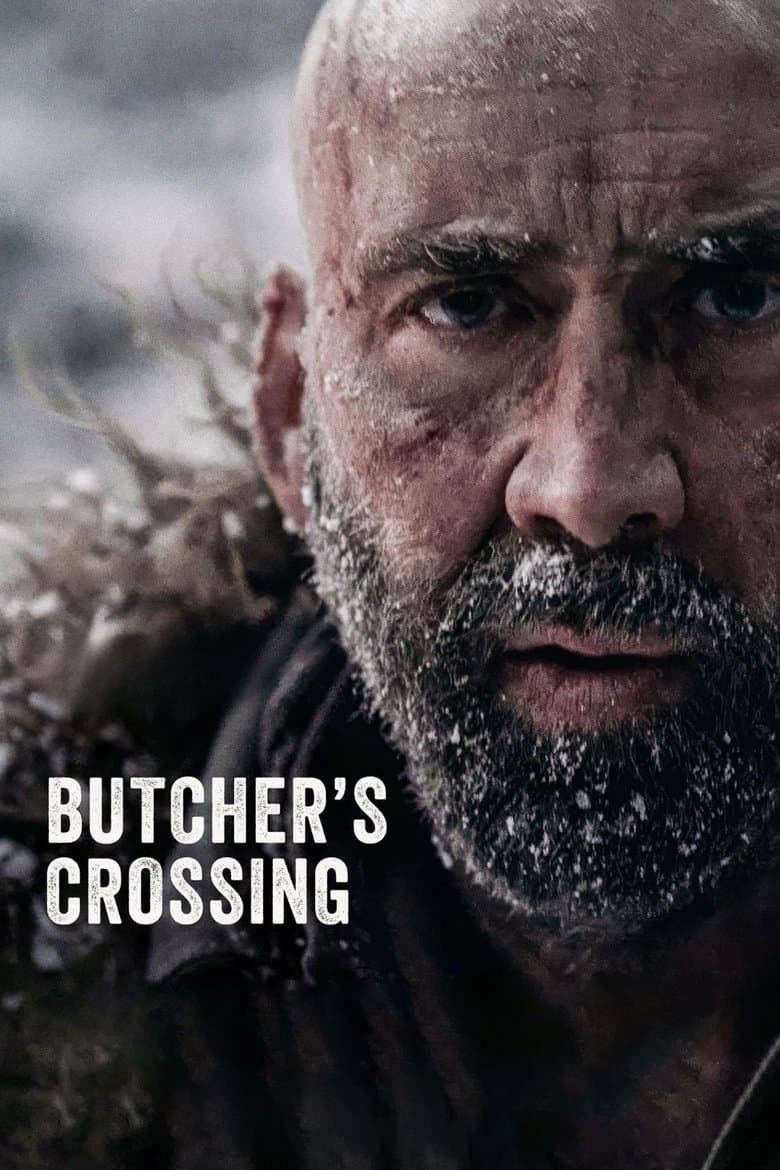
In 1874, Will Andrews leaves Harvard and travels to the frontier town of Butcher’s Crossing, Kansas. He wants to learn about life by joining Miller, a proud buffalo hunter, and he uses his own money to fund a trip into the Colorado mountains. The group includes the rough skinner Fred and the Bible-carrying wagon driver Charlie. Miller’s hunt grows into a long slaughter when he refuses to leave a huge herd behind, and a hard winter traps the men in the mountains. The film is grim, violent, and bleak, with survival, madness, and loss of innocence replacing the usual heroic Western adventure.
The film’s main message is about the damage caused by greed and the careless killing of animals. Miller treats the buffalo hunt as proof of his skill and manhood, but his pride destroys the group and changes Will forever. The closing message connects the hunt to the near loss of the buffalo and presents the old Western dream as a path toward waste and ruin. The story stays centered on one brutal expedition, the power of nature, and the struggle to find meaning after a young man’s idealism has been broken.
Community feedback
Was our 11% Woke rating accurate?
Breakdown
These are the editorial factors and ratings behind our score for Butcher's Crossing.
Woke representation / casting
Not present. The main cast is made up of white men with one white woman, which fits the small 1870s hunting party and frontier town. The film’s Blackfeet reference appears in a closing message rather than as a major on-screen identity role.
0%
Woke political dialogue
Not present. The dialogue stays with hunting, money, survival, faith, and the wilderness. The movie has no modern political speeches about race, gender, sexuality, or current activist causes.
0%
Identity-driven story themes
Not present. The story’s main themes are greed, obsession, survival, and animal slaughter. The film does not build its conflict around race, gender identity, sexuality, or identity politics.
0%
Western institutional / cultural critique
The film repeatedly links Miller’s pride in being a hard man with the wasteful killing of buffalo. The other men question his refusal to stop, and his hunger for money helps break the group. The closing text condemns the historical destruction of the buffalo and makes the old Western dream look less heroic. The criticism stays tied to the 1870s story and does not become a modern attack on family, religion, or current politics.
19%
Woke character or canon changes
Not relevant. The movie adapts John Williams’s novel and keeps the central story about Will, Miller, Charlie, Fred, and Francine. No identity-driven recasting or canon change appears in the movie.
0%
Anti-woke backlash and complaints
A fringe forum commenter called the film’s outlook woke because it presents buffalo hunters and western expansion as destructive. The complaint treated the conservation message as an attack on the old heroic Western story. Larger reviews and audience posts mostly discuss Nicolas Cage, pacing, violence, or the novel. The evidence does not show a broad anti-woke campaign.
6%
Creator track record context
Not present. The supplied creator notes give the writers scores from 0 to 11 and the producers scores from 8 to 13, with no high-confidence DEI, identity-politics, or activist record. Title-related interviews focus on adapting the novel and on bison, nature, survival, and human purpose.
0%
Production
Movie · 2018
In the prehistoric past, Keda, a young and inexperienced hunter, struggles to return home after being separated from his tribe when bison hunting goes awry.
Movie · 2021
On a post-apocalyptic Earth, a robot, built to protect the life of his dying creator's beloved dog, learns about life, love, friendship, and what it means to be human.
Movie · 2018
A man stranded in the Arctic is finally about to receive his long awaited rescue. However, after a tragic accident, his opportunity is lost and he must then decide whether to…
Movie · 2016
A father and son go on the run after the dad learns his child possesses special powers.
Movie · 2022
In 1909, two explorers fight to survive after they're left behind while on a Danish expedition in ice-covered Greenland.
Movie · 2024
Over the course of ten days and 435 miles, an unbreakable bond is forged between pro adventure racer Michael Light and a scrappy street dog companion dubbed Arthur.
Movie · 2017
In 1981, an enthusiastic young adventurer follows his dreams into the Bolivian Amazon jungle with two friends and a guide with a mysterious past.
Movie · 2019
Decades after serving in WWII and assassinating Adolf Hitler, a legendary American war veteran must now hunt down the fabled Bigfoot.
