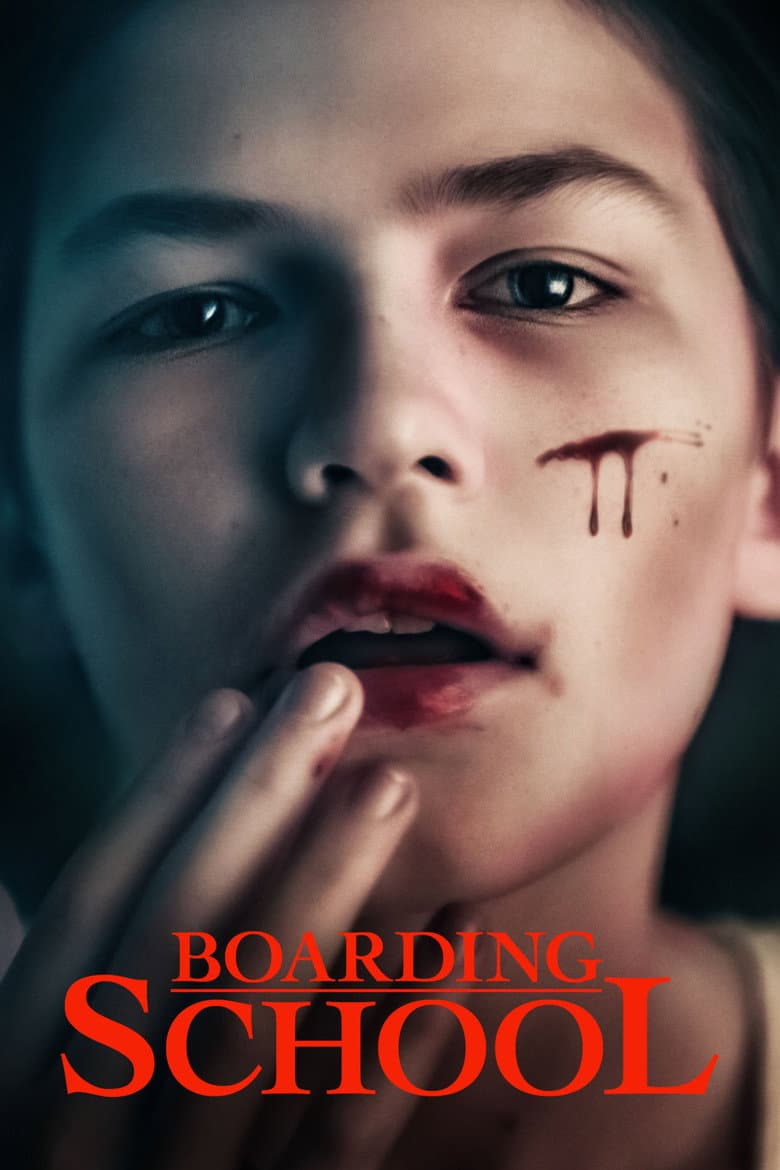
Jacob Felsen is a troubled 12-year-old boy living in New York in the 1990s. His night terrors, bullying, and private habit of wearing his dead grandmother’s dress lead his family to send him to a remote boarding school. The old mansion holds six other troubled children and two cruel teachers. The film uses a dark, strange, and bloody horror tone as Jacob tries to survive and uncover the truth.
Jacob’s struggle with being seen as feminine is a clear part of the story. Other children mock his dress and the way he moves, while Jacob keeps fighting shame and fear. The film makes him stronger when he accepts this side of himself, and he wears the dress during the final rescue. The story also joins this identity struggle to his Jewish family’s Holocaust trauma and to the idea that outsiders can survive.
Community feedback
Was our 46% Woke rating accurate?
Breakdown
These are the editorial factors and ratings behind our score for Boarding School.
Woke representation / casting
The film centers a group of children marked by burns, Tourette’s, and unusual mental or behavior problems. The school gathers several children with different visible conditions in the same small group. The story uses these differences as part of the horror setup, not as a broad diversity message.
14%
Woke political dialogue
Christine repeatedly calls Jacob a girl and mocks him for wearing his grandmother’s clothes. Jacob argues that he does not walk like a girl, and other students ask why he is in a dress. These lines make gender roles visible, but the film does not give a modern political speech or a direct DEI message.
22%
Identity-driven story themes
Jacob’s fear of being seen as feminine runs through the story. His family sends him away after finding him in his grandmother’s dress, and the school bullying keeps the issue alive. The film makes him stronger when he accepts this side of himself and uses the dress during the final rescue. The story links that change to his Jewish family’s Holocaust trauma and to surviving as an outsider.
62%
Western institutional / cultural critique
The school teaches Bible lessons while Dr. Sherman beats children and calls them unclean. The film makes this religious school a source of fear and abuse. It does not extend that attack to modern churches, family life, or Western culture as a whole.
14%
Woke character or canon changes
Not relevant. The film is an original story and does not change an established character, canon, or real historical figure.
0%
Anti-woke backlash and complaints
Not present. The separate X search found no anti-woke complaints, boycotts, or review bombing, and broader audience comments focus on the film’s strange plot and gender ideas rather than calling it woke or DEI.
0%
Creator track record context
Boaz Yakin has a mixed record that includes racial integration themes in Remember the Titans and gender-fluid themes in Aviva. Trudie Styler has a record of environmental and humanitarian work, while most other producers have low or unclear activist signals. The director’s framing of this film adds a moderate identity-focused signal, but the wider team does not show a strong DEI pattern.
32%
Production
Movie · 2017
A group of college friends reunite for a trip to the forest, but encounter a menacing presence in the woods that's stalking them.
Movie · 2022
While quarantining at her family's lake house during the pandemic, Parker and her best friend are threatened by an unexpected visitor.
Movie · 2017
Law enforcement finds itself chasing the ghost of a man dead for over a decade, embroiled in a diabolical new game that's only just begun.
Movie · 2020
On the trail of a missing girl, an ex-cop comes across a secretive group attempting to summon a terrifying supernatural entity.
Movie · 2025
A woman's obsessive search for her missing sister leads her into a terrifying mystery at the hands of an unknown evil.

Movie · 2019
Newcomer Evan joins a group of teens on a getaway in Joshua Tree. While exchanging ghost stories around the campfire, Evan reads aloud a mysterious chant from an internet site.
Movie · 2024
After the brutal murder of her twin sister, Darcy goes after those responsible by using haunted items as her tools for revenge.
Movie · 2025
Plagued by a violent recurring nightmare, college student Stefanie heads home to track down the one person who might be able to break the cycle and save her family from the grisly…
