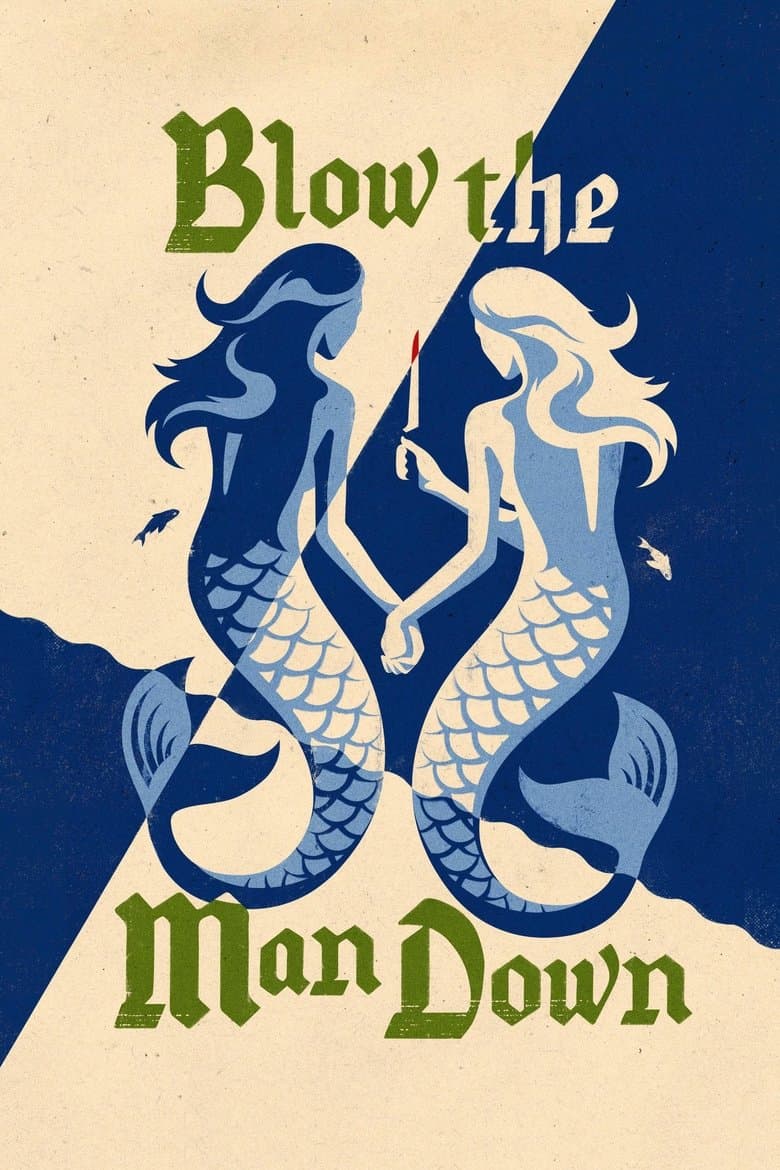
Blow the Man Down follows sisters Mary Beth and Priscilla Connolly after their mother dies in Easter Cove, a small fishing village in Maine. Mary Beth kills a dangerous man during a struggle after she sees signs that he may have hurt another woman. The sisters hide the body, but the crime pulls them into the town's secrets, old debts, and a hidden sex business. The film mixes dark humor, mystery, family grief, and rough coastal life.
Women control much of Easter Cove, from the family fish shop to the town's secret deals, while most men stay at the edge of the story. The sisters and the older women protect one another, even when they lie, use violence, or make selfish choices. The film presents sisterhood and female power as its main way of surviving danger, and it turns a male fishing song into a final song sung by women. It also shows sexual abuse, sex work, and the cost of men using power over women, so its feminist message is central to the crime story.
Community feedback
Was our 67% Woke rating accurate?
Breakdown
These are the editorial factors and ratings behind our score for Blow the Man Down.
Woke representation / casting
The major roles are overwhelmingly women, and the women hold the town's business, secrets, and power. Older women, sisters, and a female brothel owner drive the major crime plots, while most men remain helpers, threats, or side figures. The film presents this cast as a deliberate female-centered version of a crime story. The pattern is identity-framed and repeated across nearly every major role.
58%
Woke political dialogue
Not present. The characters talk about murder, debt, sex work, family loyalty, and local secrets. The film has no clear modern identity, DEI, or activist speech.
0%
Identity-driven story themes
The sisters' bond and the power of the town's older women are the film's main themes. The women protect one another, run businesses, control secrets, and outmaneuver the men who threaten them. The closing sailor song becomes a statement led by women. The story links male sexual danger and the hidden sex trade to the need for women to build their own protection.
65%
Western institutional / cultural critique
The film shows a coastal town where men dominate the fishing work, but women control homes, businesses, and hidden deals. The older women built a secret system around a brothel because they feared the danger men brought to local women. The dangerous man at the center of the plot uses sexual violence, while the police do not solve the problem. The story turns traditional gender roles upside down and treats women's private network as safer than the men's world.
40%
Woke character or canon changes
Not relevant. The film is an original story set in the fictional town of Easter Cove. It does not change an established character, canon, or historical figure.
0%
Anti-woke backlash and complaints
A few small X posts treated the film's female power structure as a possible feminist or woke concern. One post praised the film for its lack of wokeness despite its many women, and another said its feminist focus worked because it avoided Mary Sue, race or gender swaps, and anti-male messaging. No large boycott, review-bombing campaign, or major news backlash was reported.
10%
Creator track record context
The directors have a strong record of supporting women in film and stories about female power. Their cached scores are 70 and 66, and both helped build a women-led film collective. The movie closely matches that pattern through its focus on sisterhood, older women, and female control of the town. Some producers also back identity-focused films, but several others have low or mild scores.
62%
Production
Movie · 2016
A brother and sister return to their family home in search of their world famous parents who have disappeared.

Movie · 2020
A once-celebrated kid detective, now 31, continues to solve the same trivial mysteries between hangovers and bouts of self-pity.
Movie · 2023
In this office satire, Orson, a straight-laced employee, retreats to a blissfully empty corner office to get away from his lackluster colleagues.
Movie · 2016
When a Hollywood star mysteriously disappears in the middle of filming, the studio sends their fixer to get him back.
Movie · 2016
In 1967, four undercover CIA agents were sent to NASA posing as a documentary film crew. What they discovered led to one of the biggest conspiracies in American history.
Movie · 2019
Agent Sai Srinivasa Athreya is a brilliant, underrated detective from Nellore who runs an agency called FBI which sees no business.
Movie · 2016
A pair of cops investigating a drug invasion stumble upon a mysterious bank vault.

Movie · 2018
After David Kim's 16-year-old daughter goes missing, a local investigation is opened and a detective is assigned to the case.
