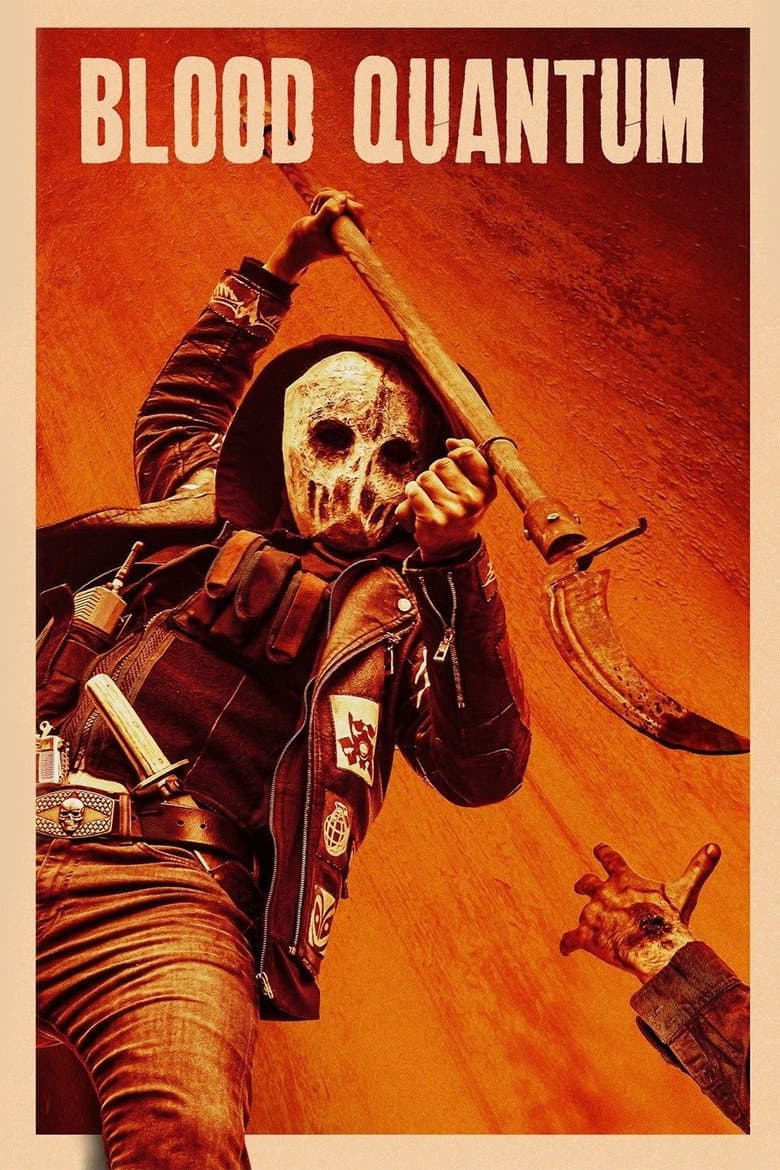
Blood Quantum follows Traylor, a troubled sheriff on the Mi’gmaq reserve of Red Crow. In 1981, dead animals and people begin coming back to life, while the reserve’s Indigenous residents remain safe from the plague. Traylor tries to protect his sons, his ex-wife, his son’s pregnant white girlfriend, and other survivors as the outside world falls apart. The film mixes harsh zombie violence with family fights, dark jokes, and a bleak but defiant tone.
The story makes Indigenous identity the key to survival and turns the usual plague story upside down. White outsiders seek shelter on the reserve, but their arrival brings danger and forces the community to argue about trust, borders, and who should be saved. The film connects the zombie outbreak to the history of disease, colonial violence, and the loss of Indigenous land. Its strongest woke element is a repeated racial and historical message, while the family drama and gore remain major parts of the movie.
Community feedback
Was our 79% Woke rating accurate?
Breakdown
These are the editorial factors and ratings behind our score for Blood Quantum.
Woke representation / casting
Not present. The main cast matches the Mi’gmaq reserve setting and the story’s immunity rule. The film does not show a mismatched or quota-style mix of prominent identities.
0%
Woke political dialogue
Several lines describe white men as unable to understand the Earth. One speech says the planet turns them into fertilizer, which links environmental anger to race. Characters also argue about white outsiders, survival, and whether there is only “us or them.” The film uses these lines more than once but does not stop often for long political speeches.
38%
Identity-driven story themes
Indigenous identity controls the film’s main rule because Mi’gmaq people survive the plague while most white outsiders die or become zombies. The reserve becomes a protected homeland, and the family must decide whether to admit people from outside. The story turns earlier disease and colonial violence against Indigenous people into a reversal where outsiders become the threat. The ending treats Indigenous survival, land, and control of the future as its central hope.
84%
Western institutional / cultural critique
The film shows the outside society as a source of disease, violence, and danger to the reserve. The zombie outbreak reverses the history of settlers bringing disease to Indigenous people. The story questions whether a community that was pushed aside should protect outsiders who now need its land and supplies. The film does not focus much on modern governments, Christianity, or gender roles, so the critique stays tied to colonial history and survival.
52%
Woke character or canon changes
Not relevant. This is an original zombie story, not an adaptation with established characters, so there are no identity-related canon changes.
0%
Anti-woke backlash and complaints
Two Reddit commenters objected to the film’s racial message. One called it a “white Canadians bad” movie, and another said it felt like “kill all white people.” Other commenters rejected that reading and defended the film. The reaction was small, and no organized anti-woke campaign was found.
14%
Creator track record context
Director Jeff Barnaby’s cached record centers on Indigenous representation, colonial history, and cultural self-rule. His earlier work and title-related interviews treat film as a way to protest past and present power. The cached producer records are mixed, with John Christou showing a stronger social-documentary pattern and most other producers showing little public activism. The director’s strong match with this film makes the creator context a major supporting signal.
74%
Production
Movie · 2024
Five years after surviving Art the Clown's Halloween massacre, Sienna and Jonathan are still struggling to rebuild their shattered lives.
Movie · 2016
Rebecca must unlock the terror behind her little brother's experiences that once tested her sanity, bringing her face to face with a supernatural spirit attached to their mother.
Movie · 2025
Following the death of their father, a brother and sister are sent to live with a foster mother, only to learn that she is hiding a terrifying secret.
Movie · 2024
A boy and his stepmother fear for their safety after an eerie creature resembling the boy's recently deceased father visits them.
Movie · 2020
Six friends hire a medium to hold a séance via Zoom during lockdown — but they get far more than they bargained for as things quickly go wrong.
Movie · 2024
A live broadcast of a late-night talk show in 1977 goes horribly wrong, unleashing evil into the nation's living rooms.
Movie · 2016
A stranger arrives in a little village and soon after a mysterious sickness starts spreading. A policeman is drawn into the incident and is forced to solve the mystery in order to…

Movie · 2022
Trapped on her family’s isolated farm, Pearl must tend to her ailing father under the bitter and overbearing watch of her devout mother.
