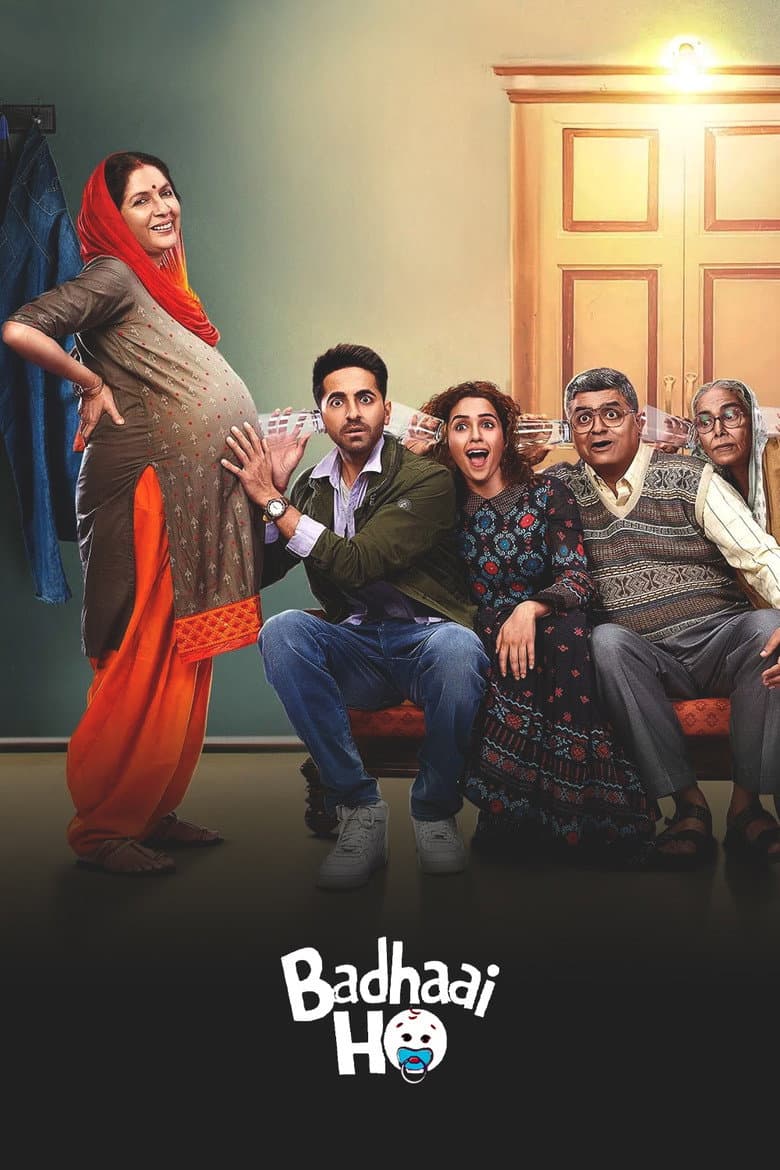
Badhaai Ho follows Nakul Kaushik, a young Delhi man whose comfortable life breaks apart when his middle-aged mother, Priyamvada, becomes pregnant. His father Jeetu welcomes the baby, but Nakul, his younger brother Gular, and their grandmother feel ashamed. Relatives, neighbors, and friends turn the pregnancy into gossip, and Nakul pulls away from Renee, his girlfriend. The film uses awkward jokes, family quarrels, and warm emotional scenes before the family comes together.
The main woke element is the film’s open defense of romance and sex between older married people. Renee challenges Nakul’s belief that parents should stop being intimate as they age, and Dadi pushes back when relatives say the pregnancy brings shame to the family. Priyamvada keeps the baby, and the story treats her choice and her marriage as worthy of respect. The message challenges strict ideas about age, motherhood, family honor, and what parents are allowed to be, but it does not center party politics, race, queer identity, or a wider activist campaign.
Community feedback
Was our 44% Woke rating accurate?
Breakdown
These are the editorial factors and ratings behind our score for Badhaai Ho.
Woke representation / casting
Not present. The principal cast presents a typical North Indian family, and the film does not make diversity or identity casting part of its story.
0%
Woke political dialogue
Renee challenges Nakul’s belief that married people stop having romance and sex in their forties and fifties. Dadi rejects relatives who treat the pregnancy as a family disgrace. These lines push back on older family rules about sex and respectability. The film does not use activist slogans or wider political speeches.
30%
Identity-driven story themes
The story treats older married people as having a real romantic and sexual life. Priyamvada keeps the baby, and the family slowly accepts her choice. Nakul’s main arc moves from shame and denial to respect for his parents as adults. The film uses this change to question strict ideas about age, motherhood, and family honor.
52%
Western institutional / cultural critique
The film makes family gossip and social honor look foolish when they shame an older couple. Renee also questions the idea that married people lose romance as they age. The story does not attack Western institutions, Christianity, capitalism, or men as a group. Its criticism stays inside a family comedy and ends with reconciliation.
28%
Woke character or canon changes
Not relevant. The movie is an original family story, so it does not change an established character, canon, or real historical event.
0%
Anti-woke backlash and complaints
Not present. Release coverage shows praise and family-entertainer approval, not claims that the film pushes DEI or activist politics. The supplied X research also found no anti-woke complaints.
0%
Creator track record context
Amit Sharma has a cached score of 0/100 and no clear activist record. Akshat Ghildial has a cached score of 58/100 because his wider work often covers gender expectations and queer identity. Aleya Sen and Vineet Jain have cached scores of 55/100 for socially aware stories, while the other credited creators score low. This creates a moderate background signal rather than a dominant activist profile.
30%
Production
Movie · 2020
Lonely college freshman Alex has closed himself off from his peers, who all appear to have this whole "college thing" figured out.

Movie · 2016
From Jane Austen’s novella, the beautiful and cunning Lady Susan Vernon visits the estate of her in-laws to wait out colorful rumors of her dalliances and to find husbands for…

Movie · 2023
The dramatic comedy is based on the true story of writer and pinball wizard Roger Sharpe, chronicling his journey to overturn New York City’s 35-year ban on pinball.

Movie · 2021
Troubled teen Will Hawkins has a run-in with the law that puts him at an important crossroad: go to juvenile detention or attend a Christian summer camp.

Movie · 2024
Fran likes to think about dying. It brings sensation to her quiet life. When she makes the new guy at work laugh, it leads to more: a date, a slice of pie, a conversation, a…

Movie · 2023
Two romantic burnouts, Jane and Will, are immediately drawn to each other at a mutual friend’s wedding. After a disastrous hookup in the coatroom, the two spend the next 24 hours…

Movie · 2024
After discovering their significant others are siblings, two resentful exes must spend Christmas under one roof — while hiding their romantic history.

Movie · 2016
The unconventional love story of an aspiring actress, her ambitious driver, and their eccentric boss, the legendary billionaire Howard Hughes.
