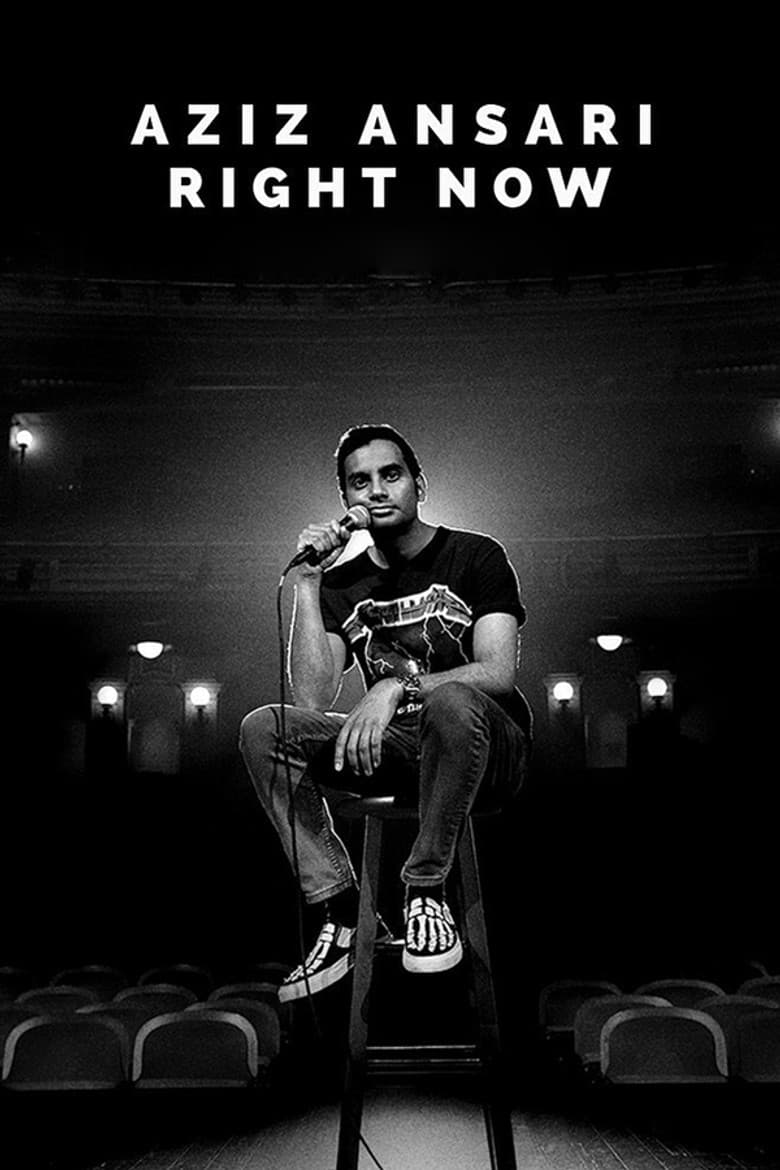
Aziz Ansari: Right Now is a 65-minute stand-up special filmed before live crowds at the Brooklyn Academy of Music in New York. Ansari returns to the stage after a sexual-misconduct report while he tries to rebuild his career. He also talks about his family, his grandmother’s Alzheimer’s disease, and his Danish girlfriend. He moves between quiet talks about loss and sharp jokes about dating, sex, race, fame, and online news. The mood is thoughtful and uneasy, but crowd work and silly punch lines keep the hour moving.
The special spends a large section on modern wokeness and racism. Ansari jokes about cultural appropriation and white guilt. He discusses his interracial relationship through ideas about white beauty and racial stereotypes. These topics return across several routines, but the special often mocks activism done for show. The deeper message is about growth, public judgment, family, and staying present.
Community feedback
Was our 48% Woke rating accurate?
Breakdown
These are the editorial factors and ratings behind our score for Aziz Ansari: Right Now.
Woke representation / casting
Not present. The special has one main performer and live audience members. It does not build a group of characters around race, gender, or other identities. Ansari’s interracial relationship is discussed in the jokes, but the special does not present a cast choice as a representation message.
0%
Woke political dialogue
Ansari repeatedly talks about racism, cultural appropriation, white guilt, online call-outs, and the fear of using the wrong word. He jokes about people trying to out-woke each other and about a made-up pizza controversy. He also discusses #MeToo, Apu, Crazy Rich Asians, white beauty, and support for minority artists. The material often attacks activism done for show, but identity and activist language fill a large part of the spoken material.
46%
Identity-driven story themes
The special uses Ansari’s Indian American identity and interracial relationship as repeated subjects. He talks about the lack of Indian voices in old television, racial insults, and the idea that dating a white woman supports white beauty. He also questions how people judge art, accusations, and past behavior through race and gender politics. These themes matter to several routines, but family, aging, and his return to the stage remain the main emotional story.
41%
Western institutional / cultural critique
The special criticizes old television for giving Indian people few speaking roles and criticizes social media for turning justice into a score game. It questions whether companies should drop artists after scandals and whether people can enjoy older art. It also mocks online pressure around race and gender. These points target media and internet culture, but the special does not make a broad attack on family, religion, capitalism, or Western institutions.
28%
Woke character or canon changes
Not relevant. The special talks about Apu, Crazy Rich Asians, and other public stories, but it does not change an established character, source story, or real historical event.
0%
Anti-woke backlash and complaints
A small Reddit discussion included a viewer who said the fake pizza poll let Ansari act more woke than the audience and preach to them. That complaint treats the special’s delivery as a woke posture, but it was isolated. The separate X research pass found no anti-woke reaction, campaign, boycott, or review-bombing.
10%
Creator track record context
Ansari’s creator history includes repeated stories about minority characters, feminism, and representation. His later stand-up also mocks extreme wokeness and internet activism done for show. Spike Jonze has a much quieter political record and little recent identity-driven work. The context gives a moderate creator track record signal, with Ansari carrying most of it.
45%
Production
Movie · 2020
Celebrities recall their most mind-bending trips via animations, reenactments and more in this comedic documentary exploring the story of psychedelics.
Movie · 2019
Stand-up comedian Kevin Hart talks about his family, travel and a year full of reckless behavior in front of a live sold-out crowd in London.
Movie · 2017
Offbeat documentarian Chris Smith provides a behind-the-scenes look at how Jim Carrey adopted the persona of idiosyncratic comedian Andy Kaufman on the set of Man on the Moon.
Movie · 2024
Matt Walsh goes deep undercover in the world of diversity, equity, and inclusion. Prepare to be shocked by how far race hustlers will go and how much further Matt Walsh will go to…
Movie · 2025
Those who knew iconic funnyman John Candy best share his story, in their own words, through never-before-seen archival footage, imagery, and interviews.
Movie · 2017
Jerry Seinfeld returns to the club that gave him his start in the 1970s, mixing iconic jokes with stories from his childhood and early days in comedy.
Movie · 2022
Follows the man who survived an assassination attempt by poisoning with a lethal nerve agent in August 2020. During his months-long recovery, he makes shocking discoveries about…
Movie · 2022
Through outrageous, never-before-seen footage, witness the making of the Jackass crew's last go at wild stunts.
