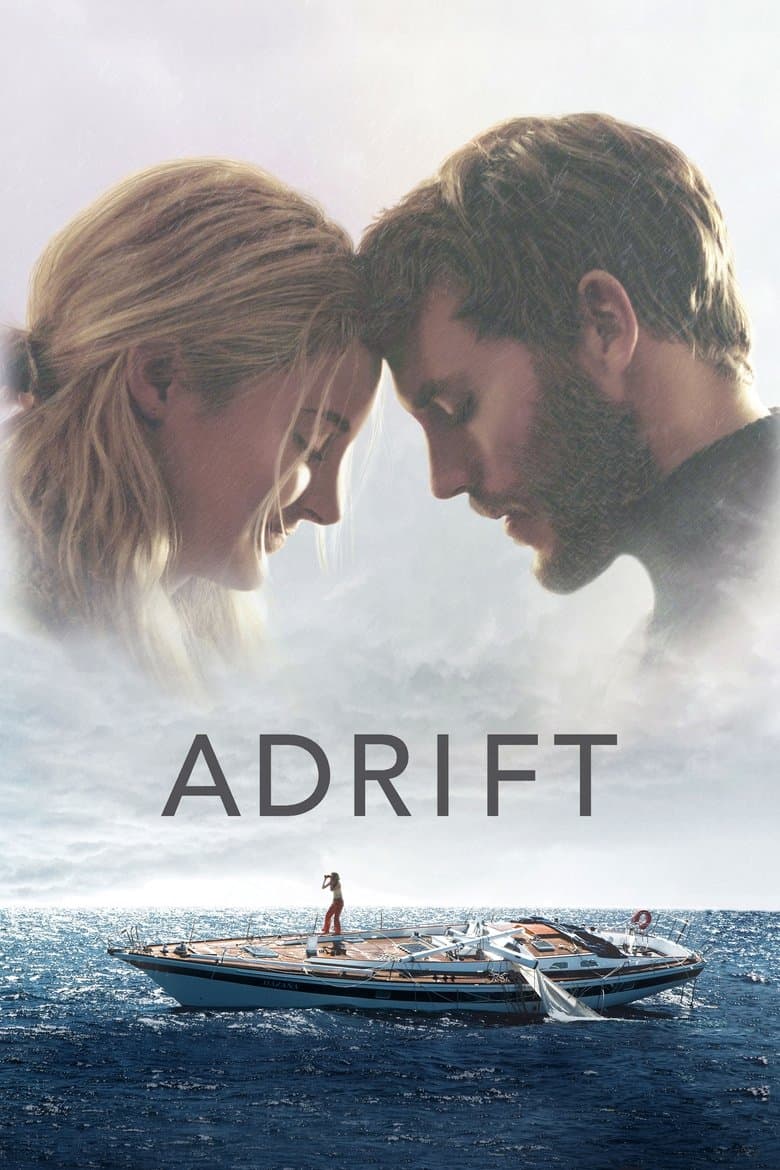
Adrift follows Tami Oldham, a young traveler who meets sailor Richard Sharp in Tahiti in 1983. The couple agrees to sail a yacht to San Diego, but a huge hurricane tears the boat apart and badly injures Richard. Tami wakes on the damaged boat and must repair it, find food and water, and steer toward Hawaii with little help. The film mixes a romance about love and loss with a tense survival story set on the open Pacific.
The film gives its main heroic work to a woman who must keep herself and Richard alive. Tami fixes the boat, manages the food, studies the course, and keeps going after Richard cannot help her. This is a clear female-survivor focus, but the story comes from the real life of Tami Oldham rather than from a made-up identity message. The film does not build its plot around race, sexuality, political ideas, or attacks on Western institutions. Its strongest themes are courage, grief, love, and survival.
Community feedback
Was our 19% Woke rating accurate?
Breakdown
These are the editorial factors and ratings behind our score for Adrift.
Woke representation / casting
Shailene Woodley plays the real Tami Oldham, and Sam Claflin plays her real British fiancé, Richard Sharp. The main casting matches the known couple and does not add a race or sexuality message. The film puts a woman at the center of a major survival story and shows her doing the saving after Richard is hurt. Kormákur also described the film as a true survival story with a woman as the hero, which gives the casting a small identity statement.
18%
Woke political dialogue
Not present. The film contains no political dialogue. It centers on romance and practical survival at sea after a natural disaster.
0%
Identity-driven story themes
The film makes Tami’s survival the main action after Richard is badly injured. The story shows her repairing the boat, finding food, and steering alone, so it gives a woman the heroic role in a classic survival story. Kormákur said he liked that the true story had a woman as the hero, and coverage also called it a woman-versus-nature story. The movie does not turn that struggle into a wider claim about patriarchy, race, sexuality, or current politics.
18%
Western institutional / cultural critique
Not present. The film presents no critique of Western institutions, patriarchy, or traditional social norms. It is a traditional love story between a man and a woman centered on human endurance.
0%
Woke character or canon changes
Not relevant. The film is a dramatized version of a true story. The real survivor consulted on the project and approved the creative choices, including the hallucination device used for emotional structure.
0%
Anti-woke backlash and complaints
Not present. No anti-woke or right-leaning complaints were found that treat the film as pushing woke, DEI, or identity politics messaging. Criticism focused on narrative structure and tonal choices.
0%
Creator track record context
Shailene Woodley produced the film and has a cached score of 34/100 because of environmental activism, the Standing Rock protest, sustainability work, and support for progressive causes. Kormákur and the writers have low cached scores and no broad record of identity activism. The film does not connect Woodley’s causes to the story about a couple and a hurricane. This gives the title a light creator track record context signal, not a strong one.
24%
Production
Movie · 2025
Two highly trained operatives grow close from a distance after being sent to guard opposite sides of a mysterious gorge.

Movie · 2016
Mia, an aspiring actress, serves lattes to movie stars in between auditions and Sebastian, a jazz musician, scrapes by playing cocktail party gigs in dingy bars, but as success…

Movie · 2018
German artist Kurt Barnert has escaped East Germany and now lives in West Germany, but is tormented by his childhood under the Nazis and the GDR regime.
Movie · 2023
Noah must leave her city, boyfriend, and friends to move into William Leister's mansion, the flashy and wealthy husband of her mother Rafaela.
Movie · 2017
Stranded on a mountain after a tragic plane crash, two strangers must work together to endure the extreme elements of the remote, snow-covered terrain.

Movie · 2025
In a brutal war between devils, hunters, and secret enemies, a mysterious girl named Reze has stepped into Denji's world, and he faces his deadliest battle yet, fueled by love in…

Movie · 2017
Two planes almost collide after a blinding flash of light paralyzes air traffic controller Dylan Branson for a few seconds.

Movie · 2016
A boy growing up in Dublin during the 1980s escapes his strained family life by starting a band to impress the mysterious girl he likes.
