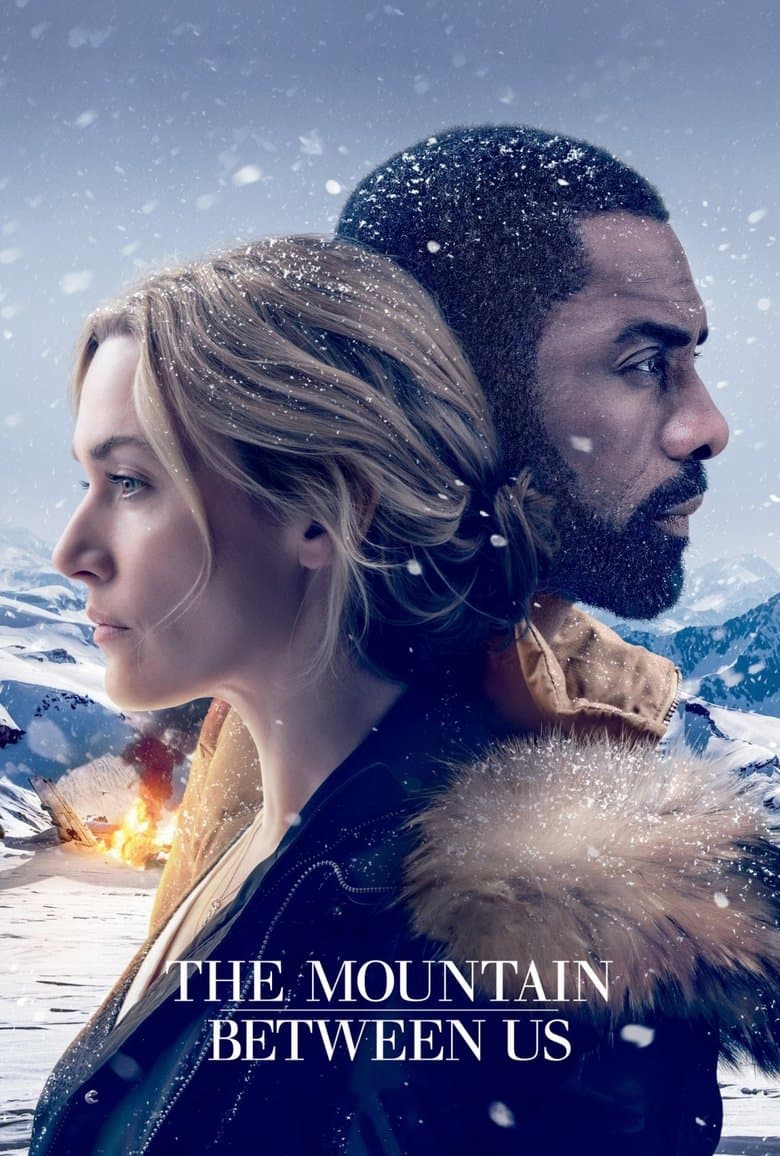
Dr. Ben Bass is a brain surgeon from Baltimore. News photographer Alex Martin is trying to reach her wedding when a storm cancels her flight. The strangers hire a small plane, but the pilot suffers a stroke and the plane crashes in Utah’s snowy High Uintas wilderness. Ben, Alex, and the pilot’s dog face hunger, cold, injuries, wild animals, and a long walk toward safety. The film combines survival danger with a sweet but sometimes cheesy romance.
The film shows a black British surgeon and a white news photographer falling in love, but race does not shape their arguments, choices, or final message. Alex briefly says that she photographs skinheads and Neo-Nazis for The Guardian, which adds a small political note. Their relationship grows through danger, medical care, trust, grief, and leaving old relationships behind. Ben faces pain from his wife’s death, while Alex learns that her planned marriage no longer fits her wishes. The story treats love, courage, and human connection as answers to isolation, so the visible woke content matters little.
Community feedback
Was our 20% Woke rating accurate?
Breakdown
These are the editorial factors and ratings behind our score for The Mountain Between Us.
Woke representation / casting
The film pairs black British surgeon Ben with white news photographer Alex as its only main couple. The source novel described the surgeon as white. Coverage about Idris Elba’s casting placed the change in Hollywood’s diversity debate. The film never makes race part of the plot or gives the casting an identity message, so the signal stays light.
22%
Woke political dialogue
Alex says that she is in Idaho to photograph skinheads and Neo-Nazis for The Guardian. The line gives the film a brief anti-extremist political note. The movie does not build a wider message about race, politics, or activism.
10%
Identity-driven story themes
Not present. The film does not contain identity-driven story themes.
0%
Western institutional / cultural critique
Not present. The film does not contain a critique of Western institutions or culture.
0%
Woke character or canon changes
Not relevant. The film does not make a relevant woke character or canon change.
0%
Anti-woke backlash and complaints
Not present. The film does not have notable anti-woke backlash or complaints.
0%
Creator track record context
Hany Abu-Assad has made films about Palestinian identity, conflict, and justice. Chris Weitz has worked on immigration documentaries and made public comments against conservative politics. Peter Chernin has donated to Democratic causes, while most other listed creators have little public activist history. This film does not carry those stronger themes beyond a brief anti-Nazi line.
30%
Production
Movie · 2025
18-year-old Noah moves from America to London, with her mother who's recently fallen in love with William, a wealthy British businessman.
Movie · 2019
England, early 20th century. The future writer and philologist John Ronald Reuel Tolkien (1892-1973) and three of his schoolmates create a strong bond between them as they share…
Movie · 2024
Aza confronts her potential for love, happiness, friendship, and hope while navigating an endless barrage of invasive, obsessive thoughts.
Movie · 2016
Canadian folk artist Maud Lewis falls in love with a fishmonger while working for him as a live-in housekeeper.

Movie · 2025
Two artistic souls find harmony through music despite their contrasting worlds. As feelings deepen, age and circumstances challenge their undeniable bond.
Movie · 2018
German artist Kurt Barnert has escaped East Germany and now lives in West Germany, but is tormented by his childhood under the Nazis and the GDR regime.
Movie · 2016
Set during the last days of the Ottoman Empire, a love triangle develops between Mikael, a brilliant medical student, the beautiful and sophisticated artist Ana, and Chris, a…
Movie · 2016
Meeting by chance when they return to their tiny California hometown, two former high-school sweethearts reflect on their shared past.
