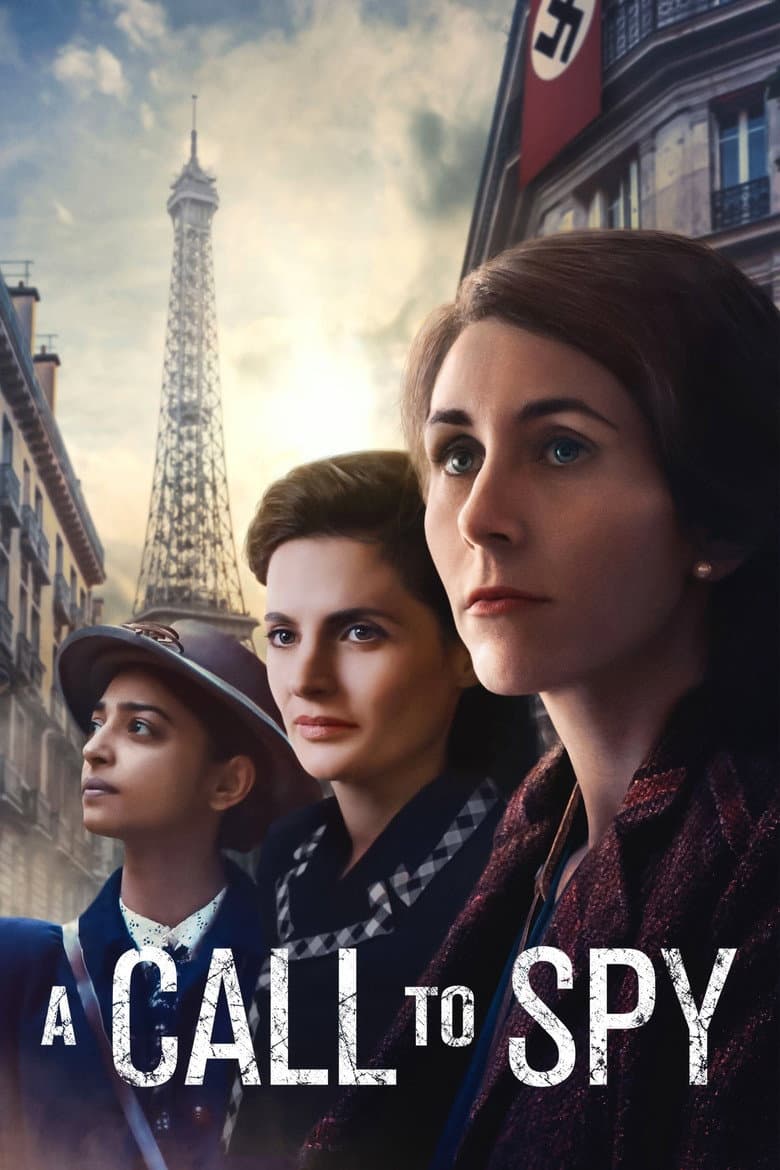
A Call to Spy is a serious World War II drama set in Britain and Nazi-occupied France. Vera Atkins builds a secret team for Churchill when Britain needs agents behind enemy lines. She recruits Virginia Hall, an American with a wooden leg, and Noor Inayat Khan, a British Indian radio operator who believes in peace. The women train, send messages, guide resistance fighters, and face capture as German forces hunt them. The tone is tense, sad, and respectful.
The film puts three women at the center of work that men first treat as unsuitable for them. Virginia proves that her disability and being a woman do not stop her from leading agents, while Noor joins a violent war without giving up her belief in peace. Vera, Virginia, and Noor are shown as a Jewish Romanian, an American, and an Indian Muslim who work toward one goal. The film stresses female courage, overlooked history, teamwork across backgrounds, and resistance to old gender rules. These ideas shape the whole story, but the film presents them through real wartime lives instead of a modern political campaign.
Community feedback
Was our 53% Woke rating accurate?
Breakdown
These are the editorial factors and ratings behind our score for A Call to Spy.
Woke representation / casting
The main cast visibly centers three women with different national, religious, and disability backgrounds. Those choices match the real people, so the film does not appear to force modern race or gender swaps. The title still presents this mix as a model of people from different backgrounds working together.
18%
Woke political dialogue
The film includes repeated lines about women entering work that men once controlled. Officers say women should not be in the field, while the women answer that they can do the work. Noor says an Indian hero could help bridge the gap between Indians and the British. These lines are clear identity and gender messaging, but they are tied to the wartime setting and do not become a modern political speech.
28%
Identity-driven story themes
The story repeatedly makes women the skilled center of the war effort. Virginia leads agents and sabotage missions, Noor keeps a vital radio link alive, and Vera builds the network that sends them out. The film treats their courage as proof that women were wrongly kept from important work. It also turns their different backgrounds into a lesson about working together against tyranny.
58%
Western institutional / cultural critique
The film shows male officials judging recruits by looks and saying women do not belong in the field. It shows Virginia being blocked from a diplomatic career because she is a woman and disabled. It also shows Vera hiding her Jewish background in a British office. These scenes criticize sexist and anti-Semitic institutions, but the criticism stays tied to real 1940s events rather than attacking modern Western life.
29%
Woke character or canon changes
Not relevant. The film compresses the timing of the real missions and creates a closer friendship between Virginia Hall and Noor Inayat Khan. It does not change their race, sex, sexuality, or main wartime roles.
0%
Anti-woke backlash and complaints
A few audience reviews objected to the opening “girl power” tone or the pattern of clever women against foolish men. Other viewers praised the real story and the courage of the women. The comments are isolated, and no organized anti-woke campaign or major controversy was found.
10%
Creator track record context
Sarah Megan Thomas has a repeated focus on complex women and on hiring more women behind the camera. Lydia Dean Pilcher has a lower but relevant record of culturally themed and women-centered projects. Title interviews describe the film as a way to bring together women from different national and religious backgrounds and to answer modern nationalism. The wider cached crew record adds some women-centered and LGBT-related work, but it does not show a strong partisan or activist group.
46%
Production
Movie · 2016
James, down on his luck and desperate for some quick cash, agrees to drive a small truck across country. He soon realizes that he's made a huge mistake and has inadvertently…
Movie · 2024
After a chance encounter, headstrong Kathy is drawn to Benny, member of Midwestern motorcycle club the Vandals.

Movie · 2016
Nate Foster, a young, idealistic FBI agent, goes undercover to take down a radical white supremacy terrorist group.

Movie · 2016
Based on the journal entries of Rachel Joy Scott, the first student killed in the Columbine High School shooting in 1999.
Movie · 2018
On the night she plans on taking her own life, 17-year-old 'Lisa McVey' is kidnapped and finds herself fighting to stay alive and is raped.
Movie · 2016
A naval officer is devastated to learn about his wife's extramarital affair with a rich businessman while he was away.
Movie · 2022
In the 1980s, a team of lawyers takes on the heads of Argentina's bloody military dictatorship in a battle against odds and a race against time.
Movie · 2019
A bullied teenage girl forms an unlikely friendship with a mysterious young man who protects her from her assailants, while she copes with the pressures of her final examinations.
