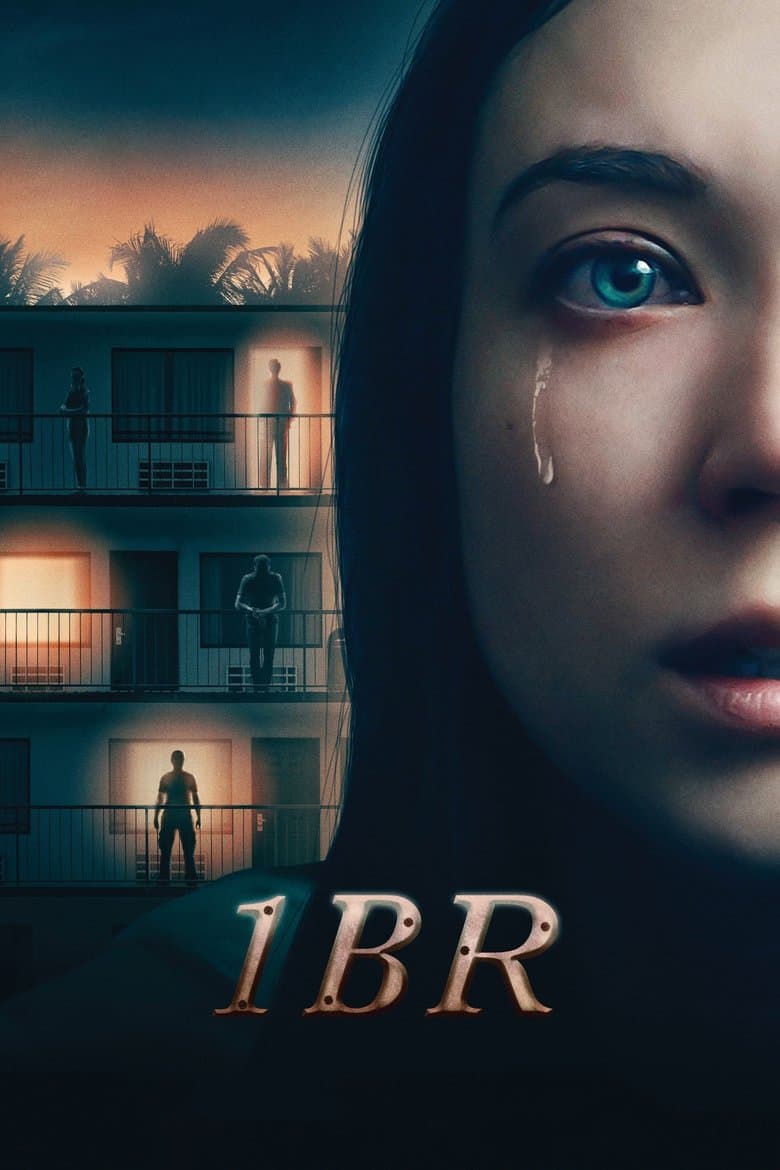
Sarah leaves a painful home life and moves to Los Angeles to chase a job in costume design. She finds a cheap one-bedroom apartment in Asilo Del Mar, where the tenants seem friendly, helpful, and close. Strange noises, threats, and the disappearance of her cat show that the building is not safe. Sarah learns that the neighbors run a cult that uses fear, torture, spying, and forced marriage to break new tenants. The film is a tense horror story about loneliness, control, and the danger of trusting a perfect community.
The main woke elements are limited and come from the story's treatment of gender and community. Men hold most of the power, Sarah's father doubts that she can live alone, and the cult assigns her to a man as a wife without her consent. The story presents those rules as cruel and lets Sarah reject them, which gives the film a mild message against male control. The apartment also shows a visibly mixed group, including Sarah's black friend Lisa and a same-sex couple, but the film does not build its plot around race, sexuality, or diversity politics.
Community feedback
Was our 28% Woke rating accurate?
Breakdown
These are the editorial factors and ratings behind our score for 1BR.
Woke representation / casting
The apartment includes a black woman, Lisa, as Sarah’s close friend and a same-sex couple among the tenants. The wider group shows several ages and backgrounds in a modern Los Angeles setting. The film does not present this mix as a diversity goal, and the main power roles are not built around identity signaling.
18%
Woke political dialogue
Not present. The cult talks about community, selflessness, acceptance, poverty, and surveillance. Those lines support the cult’s control and do not push modern identity, gender, DEI, or activist ideas.
0%
Identity-driven story themes
Sarah’s story centers on a woman trying to keep her own identity while a group demands total obedience. The cult treats women as members who must accept male rules, and it assigns Sarah to a husband without consent. The story presents this treatment as abusive and makes Sarah’s rejection of it part of her escape. The main target is cult control and forced conformity, so race, sexuality, and modern identity politics stay secondary.
34%
Western institutional / cultural critique
The film attacks a closed community that replaces privacy with spying and personal choice with group rules. The male leaders use claims about safety, family, and order to control Sarah and the other tenants. Sarah’s father also doubts that she can manage life alone, which adds a smaller male-control theme. The story does not make a broad attack on Christianity, capitalism, or Western institutions.
30%
Woke character or canon changes
Not relevant. 1BR is an original story, so it does not change established characters, canon, or real historical figures.
0%
Anti-woke backlash and complaints
Not present. The separate X pass found no anti-woke reaction and no specific complaints. Other public discussions focused on horror quality, the ending, pacing, story logic, or criticism of a black Best Friend trope, which does not count as anti-woke backlash.
0%
Creator track record context
The cached scores for the writer, producers, and casting director are all low, from 0 to 10. David Marmor’s interviews about 1BR discuss isolation, cults, and community, not DEI or identity politics. A few people have mild links to socially relevant or body-image projects, but there is no strong activist pattern.
5%
Production
Movie · 2018
A disgraced children's puppeteer returns to his childhood home and is forced to confront his wicked stepfather and the secrets that have tortured him his entire life.

Movie · 2017
In a small town in Maine, seven children known as The Losers Club come face to face with life problems, bullies and a monster that takes the shape of a clown called Pennywise.
Movie · 2020
After a tragic turn of events at the new home he's fixing up, Daniel hears a ghostly plea for help, spurring him to seek out a famous paranormal expert.

Movie · 2016
While surfing on a secluded beach, Nancy finds herself in the feeding grounds of a great white shark. Though stranded only 200 yards from shore, survival proves to be the ultimate…

Movie · 2016
A struggling painter is possessed by satanic forces after he and his young family move into their dream home in rural Texas.
Movie · 2016
Two high school filmmakers decide to create the illusion of a haunting on an unsuspecting neighbor.
Movie · 2024
In 1930s Oklahoma amid the region's horrific dust storms, a woman is convinced that a sinister presence is threatening her family.
Movie · 2020
When an outbreak hits, Aidan barricades himself inside his apartment and starts rationing food. His complex is overrun by infected Screamers, and with the world falling apart into…
