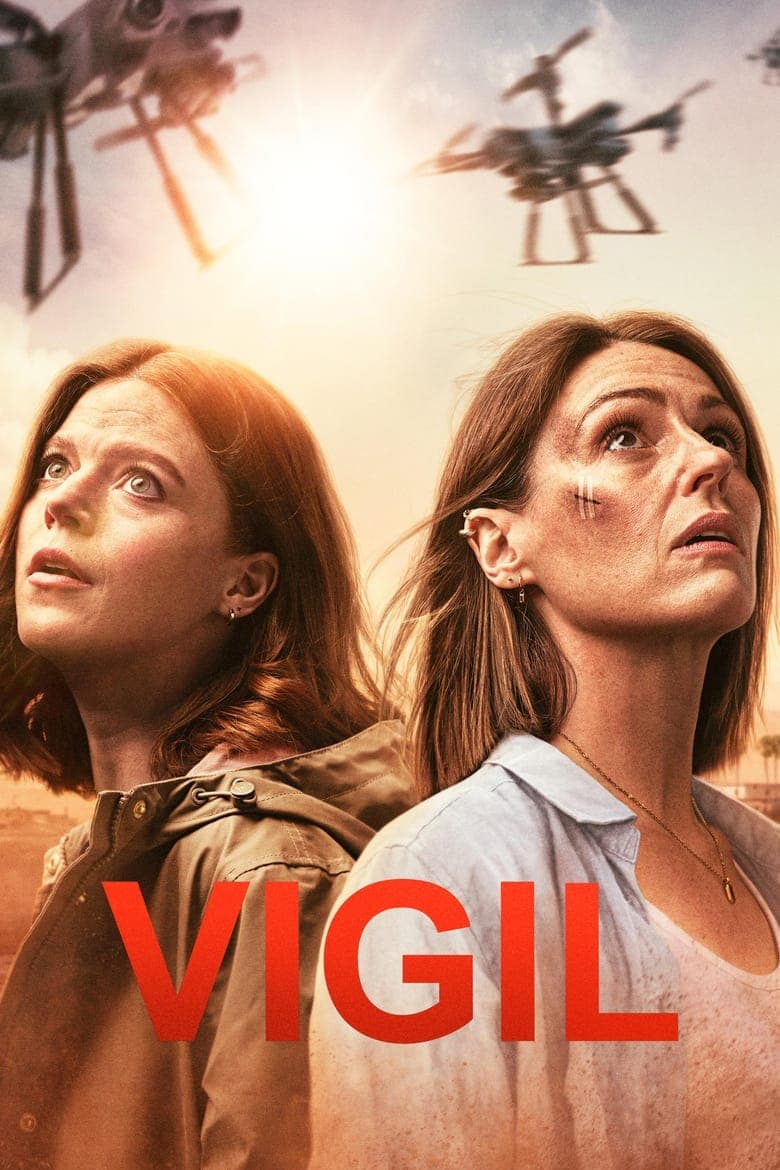
Started August 29, 2021 · Returning Series · Based on 2 seasons, 12 episodes through December 19, 2023 · TV-MA · 58 min
DCI Amy Silva is a Scottish police detective who carries guilt from a family tragedy. In season 1, she boards the nuclear submarine HMS Vigil after a crewman dies, while DS Kirsten Longacre follows the case from shore. The inquiry uncovers Russian spying, military cover-ups, a lost fishing boat, and a fight over Britain's nuclear weapons. In season 2, Amy and Kirsten investigate a deadly drone test at a Scottish air base that leads to the fictional Middle Eastern country of Wudyan. The show uses tight spaces and sudden danger, then grows into a wider military thriller.
Amy and Kirsten are the main heroes in both seasons, and their same-sex relationship grows into a family with Amy's daughter and a baby on the way. The show puts women in senior police and military jobs while male officials often hide facts or make bad choices. Season 1 gives repeated space to anti-nuclear activists and arguments against Britain's nuclear program. Season 2 presents British leaders and arms companies as willing to stage a terror attack, send troops into Wudyan, and profit from weapons sales. These identity and political themes matter, but the crime and military mystery remain the main focus.
Community feedback
Was our 52% Woke rating accurate?
Breakdown
These are the editorial factors and ratings behind our score for Vigil.
Woke representation / casting
Amy Silva and Kirsten Longacre are the two main investigators, and both hold senior police jobs. Eliza Russell also holds a major Air Force command role in season 2. A season-one interview frames the show as a traditionally male thriller led by two women. The modern Scottish setting makes these choices believable, so the visible gender focus is a mild signal rather than a strong mismatch.
15%
Woke political dialogue
Season 1 gives repeated attention to an anti-nuclear peace camp and a Scottish politician who wants nuclear weapons removed from Scotland. Amy and other characters debate secret military actions, civilian deaths, and the danger of the nuclear program. Season 2 links a staged attack to a plan for war and weapons sales in Wudyan. These ideas make the dialogue clearly political and anti-war, but they stay tied to the thriller's case instead of becoming long general speeches.
34%
Identity-driven story themes
Amy and Kirsten are a same-sex couple whose relationship grows from an old romance into a shared family. Season 2 makes their pregnancy, parenting, and work conflict part of the continuing story. The show also includes a gay military relationship and treats the couples as ordinary people rather than villains. The main cases remain murders, spying, and weapons plots, so the identity themes are important but not the whole premise.
45%
Western institutional / cultural critique
Both seasons show British military, intelligence, and political leaders hiding deaths and protecting secret weapons programs. Season 1 links the Navy and allied forces to cover-ups involving a fishing boat and deaths at a naval base. Season 2 says senior British figures stage a terror-looking attack so Britain can enter Wudyan's war and sell more weapons. The show therefore gives a recurring, audience-visible critique of Western power and the military industry.
46%
Woke character or canon changes
Not relevant. Vigil is an original story with invented characters and countries. It does not retell a real historical event or change an established canon figure.
0%
Anti-woke backlash and complaints
Right-leaning viewers on X called the BBC show woke, anti-UK, or anti-military after both seasons. Some posts called the women-saving-country angle, the same-sex couple, and the casting box-ticking diversity. Other posts attacked the season-two plot as anti-white or as defending terrorists and harming the military. GB News covered the finale backlash, but the reaction stayed at recurring viewer complaints with no clear boycott or organized review-bombing drive.
38%
Creator track record context
Tom Edge and most of the main writers and directors have no strong public activist record. Maryam Hamidi has supported non-token representation, and Simon Heath and Jake Lushington have backed new voices and wider casting. Those comments give a mild context signal, but the creative group has no strong shared pattern of identity-driven advocacy.
17%
Production
TV Show · 2022
Lucy wakes every night at exactly 3:33am. Nothing in her life has made sense for a long time. But the answers are out there, somewhere, at the end of a trail of brutal murders.
TV Show · 2019
Two detectives are dispatched to investigate the murder of a young girl on the outskirts of Dublin, but as the case of the missing children intensifies, both are forced to…
TV Show · 2017
A war veteran turned private detective operates out of a tiny office in London’s Denmark Street. Although wounded both physically and psychologically, his unique insight and…
TV Show · 2025
Two lifelong friends in Philadelphia pose as DEA agents to rob small-time drug dealers. It's a perfect grift—until they choose the wrong mark and become targets of a massive…

TV Show · 2018
The stranger-than-fiction account of a prison break in upstate New York in the summer of 2015, which spawned a massive manhunt for two convicted murderers who were aided in their…
TV Show · 2017
A financial adviser drags his family from Chicago to the Missouri Ozarks, where he must launder $500 million in five years to appease a drug boss.
TV Show · 2023
Candy and Pat Montgomery and Betty and Allan Gore — two churchgoing couples — enjoy their small town Texas life... until an extramarital affair leads somebody to pick up an axe.
TV Show · 2016
A 26-year-old woman learns to live again after 13 years in captivity.
