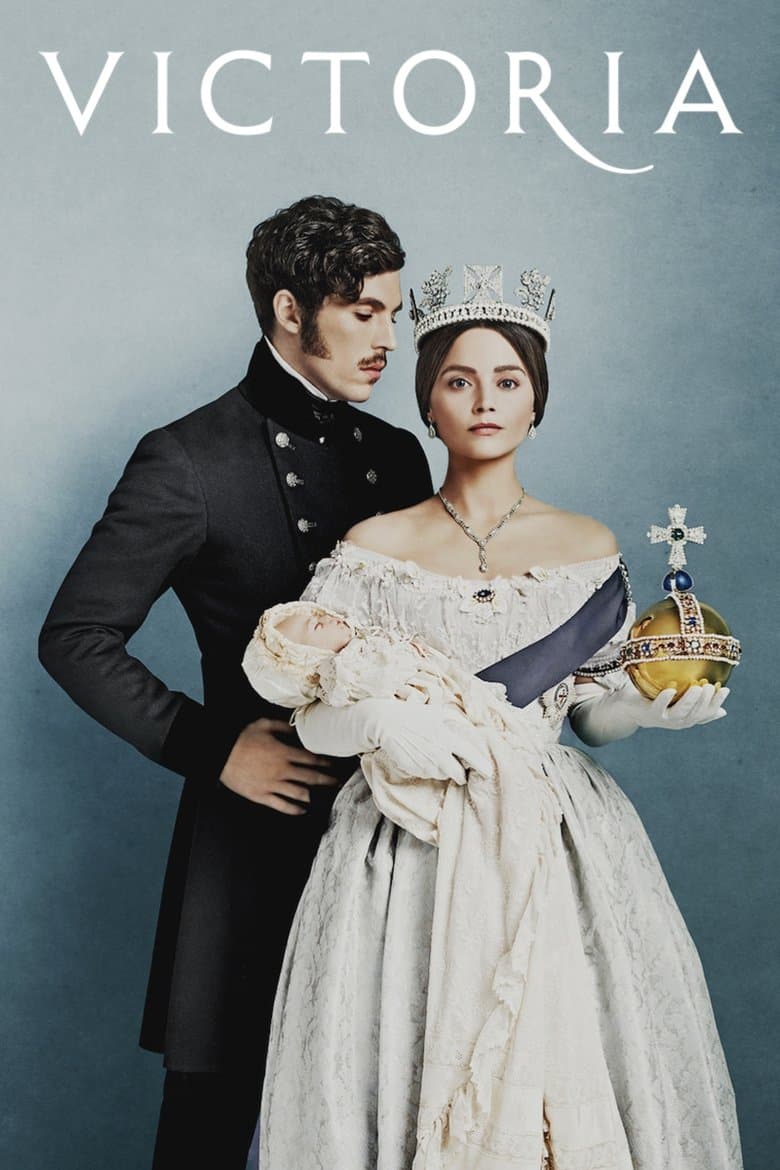
Started August 28, 2016 · Based on 3 seasons, 24 episodes · TV-PG · 45 min
Victoria follows an eighteen-year-old princess who suddenly becomes queen after her uncle dies in 1837. She must learn to rule Britain while facing ministers, palace enemies, family pressure, marriage, pregnancy, and public danger. Lord Melbourne first guides her, and Prince Albert later becomes her husband, partner, and rival. The three seasons mix royal romance, family drama, political events, and grand period scenes.
The show often presents Victoria as a young woman who must keep her power in a world where men expect to control her. It gives special attention to her wish to keep working after marriage and childbirth, and it treats her struggle as unfair rather than silly. Season two adds a clear gay romance between Lord Alfred Paget and Edward Drummond, even though the real men left no evidence of such a relationship. Season three adds a secret romance between a lady and a footman, while Victoria supports mercy and reform during the Chartist unrest and the Irish famine. These ideas are easy to notice, but royal duty, marriage, family, and romance still drive most of the show.
Community feedback
Was our 40% Woke rating accurate?
Breakdown
These are the editorial factors and ratings behind our score for Victoria.
Woke representation / casting
Not present in this title.
0%
Woke political dialogue
Not present in this title.
0%
Identity-driven story themes
Victoria’s growth is repeatedly framed as a young woman claiming power in a world where men expect to control her. The show makes her fight to keep doing her job after pregnancy and treats limits placed on her as unfair. Season two adds a sympathetic romance between Lord Alfred Paget and Edward Drummond, which gives queer identity a clear emotional subplot. The story still centers on monarchy, marriage, family, and duty, so this message is noticeable but not dominant.
45%
Western institutional / cultural critique
Several episodes show male courtiers and Albert pressing Victoria to accept limits because she is a woman, a wife, or a mother. The story treats those limits as unfair and often sides with Victoria’s right to rule and keep working. Season two also shows ministers arguing over the Irish famine while poor people suffer. The monarchy and family remain positive parts of the story, so the show does not attack Western institutions as a whole.
16%
Woke character or canon changes
Season two invents a same-sex romance between the real Lord Alfred Paget and Edward Drummond, and the show builds their kiss into a clear emotional plot. Historical coverage found no evidence that the two men had such a relationship. That change adds LGBTQ identity to real figures and is the main canon change with a woke angle. The Melbourne crush, the Chartist pardon, and other altered events mostly serve romance or drama, so they are not counted here.
40%
Anti-woke backlash and complaints
Several social media users objected to the season two kiss and said the show was forcing a gay relationship or trying to make viewers accept it. Many other viewers praised the couple, and later fans were upset when Drummond died. News coverage treated the complaints as a small reaction, not a large campaign against the show. I found no sustained boycott or major right-wing attack.
8%
Creator track record context
Daisy Goodwin has spoken about sexism in television and presents Victoria as a strong working mother. Her title interviews frame the LGBTQ subplot as an important creative choice. The other named directors, writers, and producers have no known activist or identity-driven pattern in the available context. The creator signal is mild.
18%
Production
TV Show · 2017
The early life of child genius Sheldon Cooper, later seen in The Big Bang Theory.
TV Show · 2019
The life of Christ through the eyes of those who encountered him.
TV Show · 2016
When they were twelve years old, Mark, Pru, Danny and Slade were out together in the park. Mark’s five-year-old brother, Jesse, was annoying them.
TV Show · 2024
John Taylor lives in quiet solitude, designing puzzles for a living, under the nom-de-plume of 'Ludwig'. When his identical twin, James, disappears off the face of the earth, John…
TV Show · 2025
Two outlaws must navigate the galaxy's dangerous underworld as they chart their destinies.
