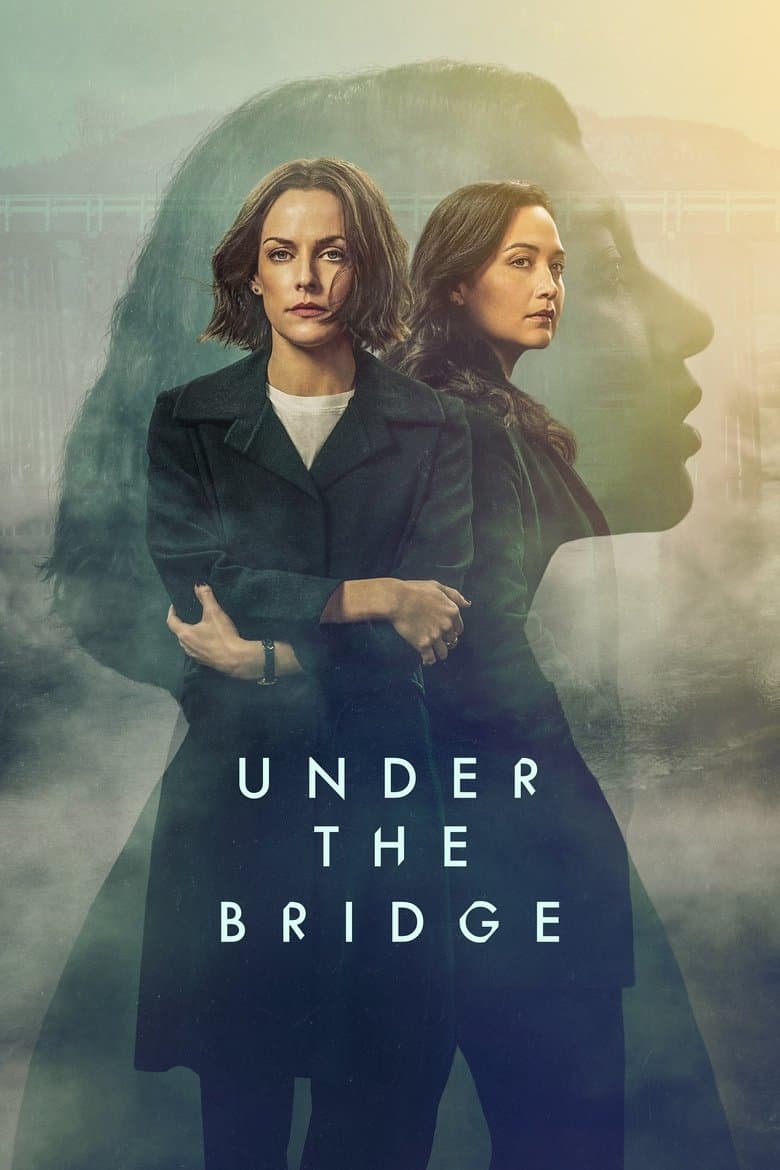
Started April 17, 2024 · Ended · Based on 1 season, 8 episodes through May 29, 2024 · TV-MA
Under the Bridge follows Rebecca Godfrey, a writer who returns to her hometown after fourteen-year-old Reena Virk disappears. Police officer Cam Bentland investigates the case while Rebecca studies the girls linked to the murder. The story moves through Saanich, British Columbia, in 1997. The tone is dark, sad, and focused on troubled young people.
The show gives strong attention to race, bullying, class, family pressure, and the treatment of outsiders. Reena faces insults because she is Indian, while Cam faces questions about her Indigenous background and adoption. Cam and Rebecca also have a queer past relationship that becomes part of the story. These themes are important, but the show presents them through a crime story rather than long political speeches.
Community feedback
Was our 85% Woke rating accurate?
Breakdown
These are the editorial factors and ratings behind our score for Under the Bridge.
Woke representation / casting
The cast gives major roles to an Indian teenage victim and an Indigenous female police officer. The show also includes a mixed group of teen girls from different racial and social backgrounds. The setting can support this range of people, so the score is not higher based on casting alone. The queer relationship between Cam and Rebecca adds a clear identity element to two important adult characters.
42%
Woke political dialogue
The characters discuss racism, bullying, immigrant treatment, and the failures of local police. The show connects Reena’s murder to prejudice and social exclusion. The dialogue usually stays inside the crime story instead of giving long modern political speeches. The political message is noticeable but not dominant.
24%
Identity-driven story themes
The story makes race and outsider status central to Reena’s experience. Reena struggles with her Indian identity while trying to fit in with white classmates. Cam investigates her Indigenous background, adoption, and place inside a white police family. The queer history between Cam and Rebecca adds another strong identity theme.
76%
Western institutional / cultural critique
The story shows police using pressure and shortcuts during the investigation. The story also shows how racism and class differences affect who receives sympathy and attention. Reena’s strict religious family is shown as loving but controlling. The show criticizes social prejudice and some institutions, but it does not attack all Western society or religion.
54%
Woke character or canon changes
The show changes the source material by adding Cam Bentland, a fictional Indigenous police officer. The show also gives Cam and Rebecca a queer romantic history that was created for the series. These changes place Indigenous identity and queer representation inside the main investigation. The changes are audience-visible and affect several major storylines.
63%
Anti-woke backlash and complaints
Some online viewers complained that the show invented a lesbian romance and added identity themes to the real case. Some viewers also disliked the focus on Cam and Rebecca instead of Reena. The complaints were scattered and mostly focused on the adaptation choices. No major anti-woke campaign or broad news controversy was found.
12%
Creator track record context
Quinn Shephard has a queer background and has explored social pressure, online activism, and identity in earlier work. Catherine Hardwicke has repeatedly discussed women’s place in Hollywood and social issues. Liz Tigelaar has a bisexual identity and a history of women-centered television stories. The wider creative team has a mixed record, so the context supports the show’s themes without proving a stronger message by itself.
58%
Production
TV Show · 2021
In a small Michigan town where the business of incarceration is the only thriving industry, the McClusky family are the power brokers between the police, criminals, inmates…
TV Show · 2019
Gypsy Blanchard struggles to deal with the toxic relationship with her overprotective mother, but her attempts to free herself lead to murder.

TV Show · 2016
17-year-old Joshua "J" Cody moves in with his freewheeling relatives in their Southern California beach town after his mother dies of a heroin overdose.
TV Show · 2022
New York mafia capo Dwight "The General" Manfredi is released from prison after 25 years and exiled by his boss to set up shop in Tulsa, Oklahoma.
TV Show · 2023
Candy and Pat Montgomery and Betty and Allan Gore — two churchgoing couples — enjoy their small town Texas life... until an extramarital affair leads somebody to pick up an axe.
TV Show · 2021
The remarkable story of how murderer Charles Sobhraj was captured. As the chief suspect in unsolved murders of young Western travellers across India, Thailand and Nepal’s ‘Hippie…
TV Show · 2016
A 26-year-old woman learns to live again after 13 years in captivity.
TV Show · 2016
Once a powerful lawyer, Billy McBride is now burned out and washed up, spending more time in a bar than a courtroom.
