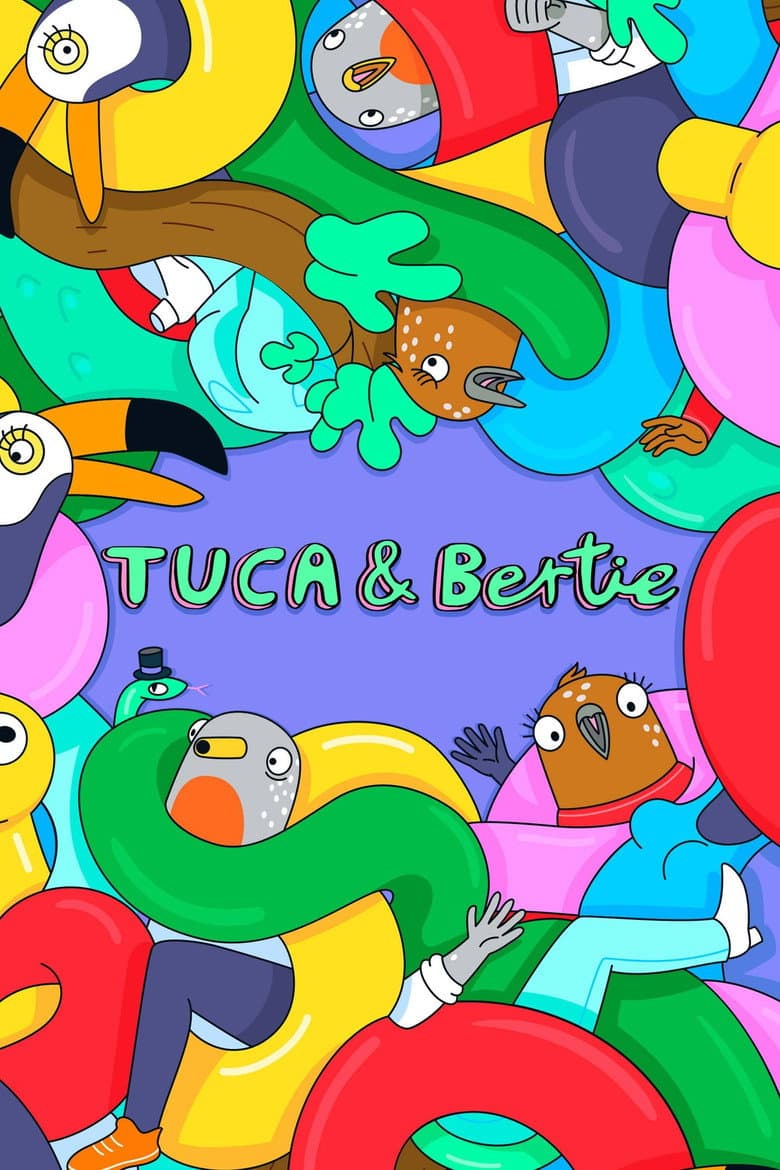
Started May 3, 2019 · Canceled · Based on 3 seasons, 30 episodes through August 29, 2022 · TV-14
Tuca is a loud, funny toucan who is trying to stay sober and keep her life together. Bertie is a shy song thrush who deals with anxiety, old trauma, work pressure, and a wish to become a baker. The friends live in the strange city of Bird Town, where talking plants, snakes, trees, and birds turn normal adult problems into wild jokes. Their friendship, love lives, jobs, family troubles, and mental health shape the three seasons.
The show puts women's experiences at the center through stories about harassment, sexual assault, body worries, sober living, and difficult relationships. Tuca dates a woman, and Bertie remembers a same-sex kiss and an intense friendship with a girl from high school. Season 3 adds Tuca's chronic pain and doctors who brush it off, along with arguments about feminism, housing, and city services. These ideas return across the run, but the show presents them through personal problems, surreal jokes, and the lasting bond between the two friends.
Community feedback
Was our 72% Woke rating accurate?
Breakdown
These are the editorial factors and ratings behind our score for Tuca & Bertie.
Woke representation / casting
Tiffany Haddish and Ali Wong lead the show as Tuca and Bertie. Steven Yeun voices Bertie's boyfriend, and the supporting cast includes many women and performers of color. The cast and crew publicly describe the series as centering women and bringing more queer and diverse voices to adult animation. The bird world removes a strict human ethnic setting, so the score reflects the repeated diversity framing and prominent casting.
43%
Woke political dialogue
Bertie joins a women's empowerment group and leads a workplace harassment meeting. The show uses direct language about personal boundaries, sexism, sexual assault, and women's rights. Season 2 discusses gentrification and cancel culture, while season 3 discusses health care, housing, NIMBYism, and different ideas of feminism. Comedy and personal stories remain stronger than political speeches.
45%
Identity-driven story themes
The show makes the lives of two women its main subject across all three seasons. Bertie faces workplace harassment, childhood sexual assault, anxiety, and a harmful mentor relationship. Tuca deals with sobriety, chronic pain, a same-sex relationship, and pressure to shrink herself for a partner. The stories often support therapy, boundaries, female friendship, and women speaking up.
68%
Western institutional / cultural critique
Bird Town workplaces often protect men or ignore women, as HR dismisses Bertie's harassment and Pastry Pete uses his power over her. Season 2 attacks rent increases and gentrification through the moss landlord and shows city leaders failing to protect flood barriers. Season 3 shows doctors brushing off Tuca's chronic pain and adds a debate about feminism. The show questions traditional couple roles but does not attack Christianity.
52%
Woke character or canon changes
Not relevant. The show expands Lisa Hanawalt's own bird characters into a television story. No established franchise, historical figure, or real event is changed in an identity-driven way.
0%
Anti-woke backlash and complaints
A few online viewers called the show woke, feminist, or pandering. Those complaints focused on its women-centered stories, period jokes, and sexual politics. Mainstream coverage focused on fan support after the cancellation. The anti-woke reaction was scattered rather than a major public controversy.
16%
Creator track record context
Lisa Hanawalt has a feminist and female-centered body of work. Samantha Irby has a strong queer, Black, and feminist focus, while Nick Adams often writes about race and social issues. Raphael Bob-Waksberg repeatedly explores sexism, sexual abuse, and toxic masculinity. Other cached creators have weaker or unclear activist records, so the team context is mixed.
55%
Production

TV Show · 2019
Considered a genius due to having the highest grades in the country, Miyuki Shirogane leads the prestigious Shuchiin Academy's student council as its president, working alongside…

TV Show · 2020
A surreal take on transitioning from 20-something to 30-something centering on a married couple juggling such everyday challenges as parenthood, friendship, ham theft, stripper…
TV Show · 2018
An eager young rookie joins the ragtag small-town police force led by his dad as they bumble, squabble and snort their way through a big drug case.
TV Show · 2021
A secret life is the one thing they have in common. At school, Hori is a prim and perfect social butterfly, but the truth is she's a brash homebody.
TV Show · 2020

TV Show · 2018
Puberty Syndrome—a rumored, mysterious syndrome that only affects those in their puberty. For example, a bunny girl suddenly appeared in front of Sakuta Azusagawa.
TV Show · 2022
A bullied teen receives mysterious help from someone online: a stranger soon revealed to be her recently deceased father, David, whose consciousness has been uploaded to the Cloud…
TV Show · 2022
A spy, an assassin and a telepath come together to pose as a family, each for their own reasons, while hiding their true identities from each other.
