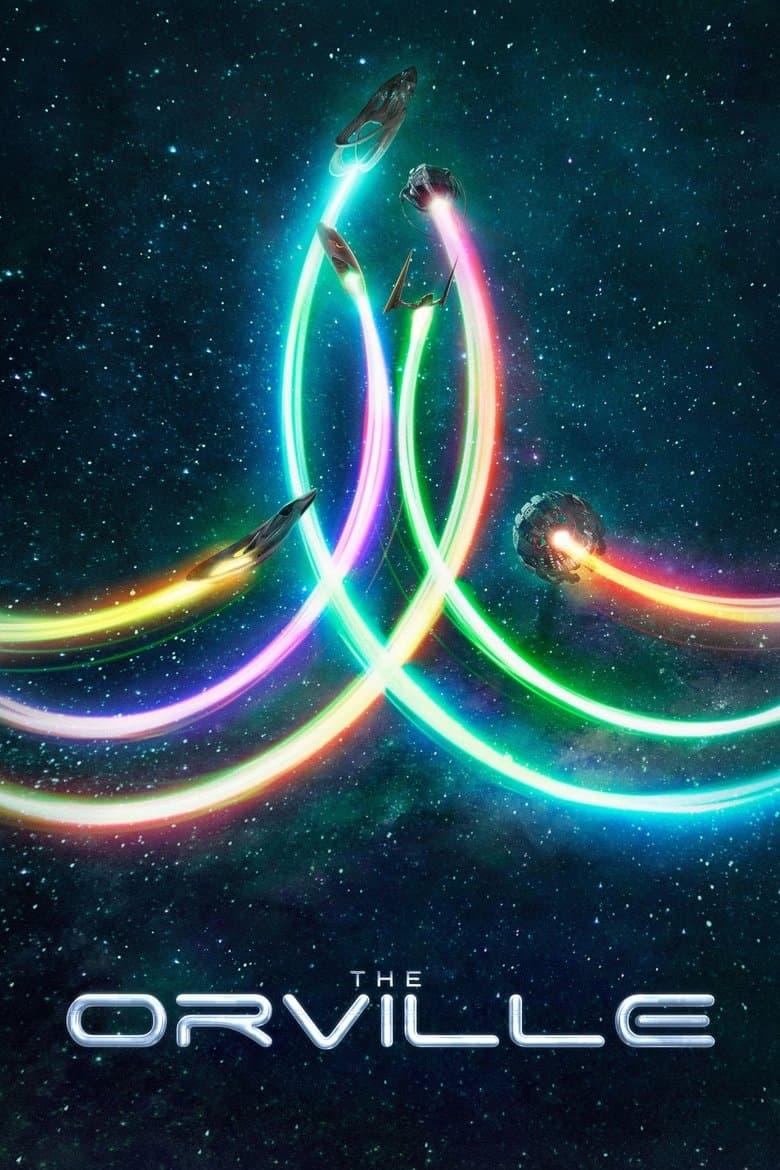
Started September 10, 2017 · Returning Series · Based on 3 seasons, 36 episodes through August 4, 2022 · TV-14
The Orville is a science fiction comedy-drama that follows Captain Ed Mercer and the crew of the mid-level ship USS Orville. They explore space in the 25th-century Planetary Union. Episodes mix jokes with longer arcs about war, alien cultures, and crew relationships. The series starts closer to a light spoof and grows more serious over three seasons. Season 3 is longer, heavier, and more thematically direct than the first season.
Viewers see repeated story debates about gender rules, sexual minorities, religion, and majority pressure through social media. The multi-season Moclan plot about Topa works as a sustained gender and identity allegory. Series regulars include a same-sex Moclan couple with a child, and other episodes focus on sexual-minority persecution. Season 3 makes these identity arcs especially clear and hard to miss. Progressive-leaning answers are usually favored by how the stories resolve.
Community feedback
Was our 72% Woke rating accurate?
Breakdown
These are the editorial factors and ratings behind our score for The Orville.
Woke representation / casting
The future Union setting can support a mixed crew, but key heroic jobs often go to a clear modern mix of race and gender. Claire Finn is a black woman as brilliant chief medical officer, and Kelly Grayson is a white woman first officer often framed as right. Strong female security chiefs and John LaMarr’s promotion after hiding his intelligence also stand out. Bortus and Klyden are a black same-sex Moclan couple as series regulars. This is not race or gender swapping of old franchise characters, but the pattern is easy for viewers to notice.
40%
Woke political dialogue
The show often stages clear debates on sex reassignment, male and female ability, sexual-minority secrecy, social-media justice, religion, and abortion. Episodes such as About a Girl, Deflectors, Majority Rule, and Gently Falling Rain put these topics on the bridge or in court. Progressive-leaning endings usually win out. Season 3 dialogue is especially blunt.
52%
Identity-driven story themes
The Moclan culture and Topa’s long arc form a multi-season gender and anti-patriarchy story. Forced infant conversion, sanctuary, re-transition, and rights struggles keep returning. Bortus and Klyden are a same-sex married couple with a child, and Deflectors centers a criminalized sexual minority. Charly Burke’s love for Amanda is queer-coded. Later seasons make these identity arcs hard to miss.
68%
Western institutional / cultural critique
The series keeps attacking patriarchal gender systems, hardline religion, and mob social-media rule. Traditional gender roles and religious authority often appear as the problem to fix. Majority Rule also reads as cancel-culture satire from more than one angle. It is not mainly anti-capitalist, anti-whiteness, or colonial-guilt messaging.
46%
Woke character or canon changes
Not relevant. This is an original property with no identity-driven rewrites of established franchise characters, historical figures, or prior canon.
0%
Anti-woke backlash and complaints
Pushback is real but mid-level rather than a single huge culture-war flashpoint. Users and forums call season 3 woke garbage or the message and complain about preachiness and a transgender-kid story. Some cast and creator pushback against woke sci-fi criticism is reported. Many right-leaning fans still praise the show as progressive done right next to modern Trek.
40%
Creator track record context
Seth MacFarlane is the main creative force and a major progressive Democratic donor. He has said good science fiction should face current events and sociopolitics and has discussed the abortion timing and Topa gender story. Supporting Trek-era talent is mostly mild-liberal, with one queer-cinema director on a single episode. The showrunning is progressive and allegory-forward, not a pure activist brand.
30%
Production
TV Show · 2026
After accidentally creating a new multiverse, comic book store owner Stuart Bloom must locate a quantum-interference device to restore reality.
TV Show · 2021
Two federal agents from two different continents, and two different mindsets, must work together to investigate when wreckage from a destroyed alien spacecraft has mysterious…
TV Show · 2017
An MIT grad student and a tech superstar bring a low-level Pentagon official a staggering discovery that an asteroid is just six months away from colliding with Earth.
TV Show · 2018
Two strangers are drawn to a mysterious pharmaceutical trial that will, they're assured, with no complications or side-effects whatsoever, solve all of their problems…
TV Show · 2016
A disgraced, 75-year-old ex-sheriff, whose life ends at the hands of corrupt cops, is brought back to life and given a second chance by a pair of young tech scientists, as a…

TV Show · 2016
In his quest for a bride to break his immortal curse, a 939-year-old guardian of souls meets a grim reaper and a sprightly student with a tragic past.
TV Show · 2022
Smart, sarcastic and a little dead inside, Wednesday Addams investigates twisted mysteries while making new friends — and foes — at Nevermore Academy.
TV Show · 2017
A demented serial killer taunts a retired police detective with a series of lurid letters and emails, forcing the ex-cop to undertake a private, and potentially felonious, crusade…
