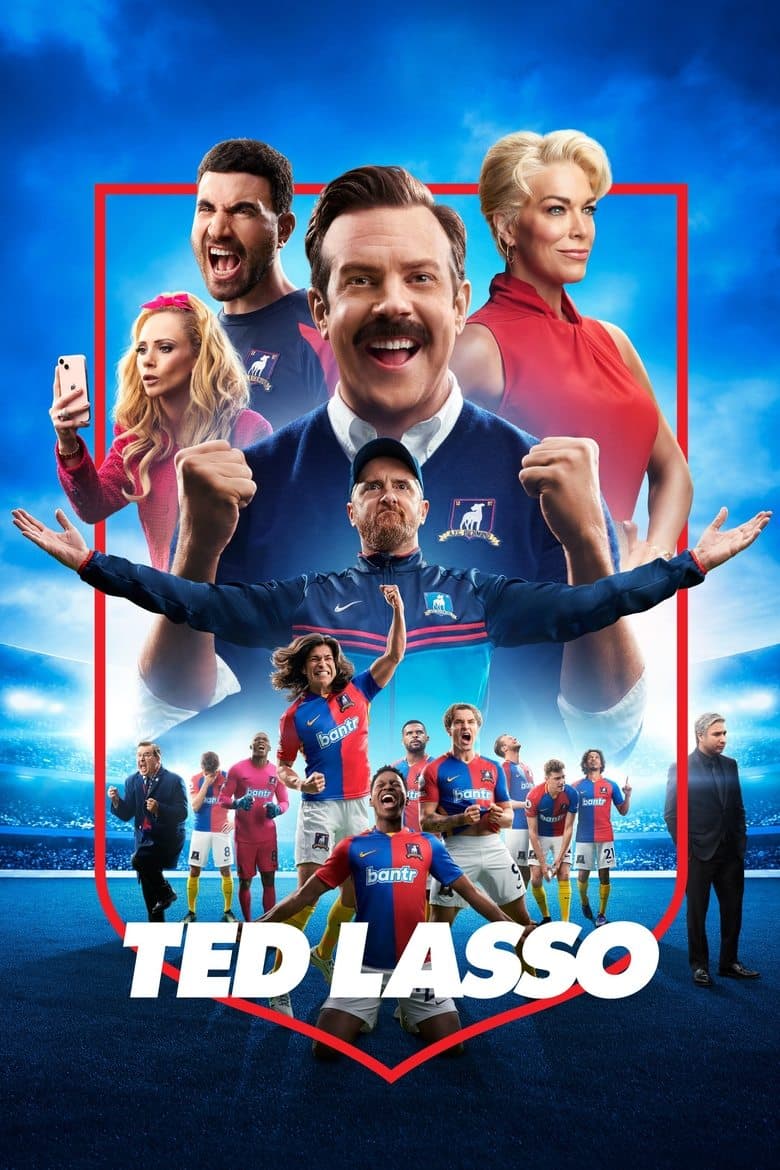
Started August 14, 2020 · Returning Series · Based on 3 seasons, 34 episodes through May 30, 2023 · TV-MA
Ted Lasso is an upbeat American college football coach from Kansas. He moves to London after Rebecca Welton hires him to lead AFC Richmond, a struggling English soccer club. Ted knows almost nothing about soccer, but he wins over angry players, staff, and fans with humor, patience, and constant hope. Across three seasons, the club fights to return to the Premier League while Ted and the people around him face divorce, family pain, anxiety, and hard choices.
Seasons 1 and 2 mostly tell stories about kindness, therapy, friendship, and men learning to show their feelings. Season 3 makes identity themes much more visible. Colin Hughes hides that he is gay before coming out to his team. Trent Crimm reveals that he is gay, and Keeley Jones has a short romance with her female boss, Jack. Sam Obisanya speaks against oil pollution and anti-refugee politics, then faces racist abuse, but the show still centers on personal growth and soccer.
Community feedback
Was our 61% Woke rating accurate?
Breakdown
These are the editorial factors and ratings behind our score for Ted Lasso.
Woke representation / casting
The international team fits a London soccer club, so the mix of nationalities is not a strong signal by itself. Season 3 makes identity part of the prominent cast through gay player Colin, gay reporter Trent, and bisexual Keeley. Colin’s coming out and Keeley’s same-sex relationship are shown clearly to the audience. Rebecca owns the club and Keeley runs a firm, but the show treats these as character arcs rather than a casting campaign. This creates a clear queer representation pattern, though the show is not built only around identity.
38%
Woke political dialogue
Sam rejects Dubai Air after learning about oil pollution in Nigeria. In Season 3, Sam argues with a fictional Home Secretary over refugees and receives the phrase “shut up and dribble.” The show also has characters speak about racism, mental health, and political media. These moments are clear, but they appear in a few storylines rather than driving every episode.
34%
Identity-driven story themes
Season 3 gives a long arc to Colin as he hides that he is gay, talks with Trent, and comes out to the team. The season also shows Trent’s coming out and Keeley’s romance with Jack. Sam faces racist abuse after speaking for refugees, and his restaurant is attacked. Seasons 1 and 2 focus more on kindness, therapy, friendship, and personal pain, so the identity focus is strongest late in the show.
58%
Western institutional / cultural critique
Ted challenges macho behavior by praising therapy, kindness, and open feelings. Roy, Jamie, and Nate must change when anger, bullying, pride, or male power hurts others. Season 3 also treats homophobia, racist abuse, and harsh anti-refugee talk as wrong. The show usually solves these problems through friendship and personal change, not through a broad attack on Western institutions.
41%
Woke character or canon changes
Not relevant. Fully original series.
0%
Anti-woke backlash and complaints
Some right-leaning viewers call Season 3 woke because of the gay characters, Keeley’s same-sex romance, the refugee plot, and social messages. Some high-reach posts describe Ted as a progressive teacher who says women and minorities are always right. Other users defend the show or say it is mild compared with more openly woke shows. No clear boycott, review-bombing drive, or organized campaign was found.
38%
Creator track record context
Jason Sudeikis describes the show as a hopeful project about kindness and compassion. Theo Park has publicly supported more diversity in casting. Brett Goldstein has mild feminism and protest context. Most other listed writers, directors, and producers have little known activist history, so this is a mild creator track record signal.
27%
Production

TV Show · 2019
Tony had a perfect life. But after his wife Lisa suddenly dies, Tony changes. After contemplating taking his own life, he decides instead to live long enough to punish the world…
TV Show · 2016
Set nearly a decade after the finale of the original series, this revival follows Lorelai, Rory and Emily Gilmore through four seasons of change.

TV Show · 2018
When his secretary unexpectedly quits, an arrogant executive will do anything to bring her back.

TV Show · 2016
Rebellious Mickey and good-natured Gus navigate the thrills and agonies of modern relationships.
TV Show · 2021
A seemingly ordinary British couple become the focus of an extraordinary investigation when two dead bodies are discovered in the back garden of a house in Nottingham.
TV Show · 2019
Burned out on life, Miles undergoes a strange procedure at a strip mall spa -- and wakes to find he's been replaced by a better version of himself.
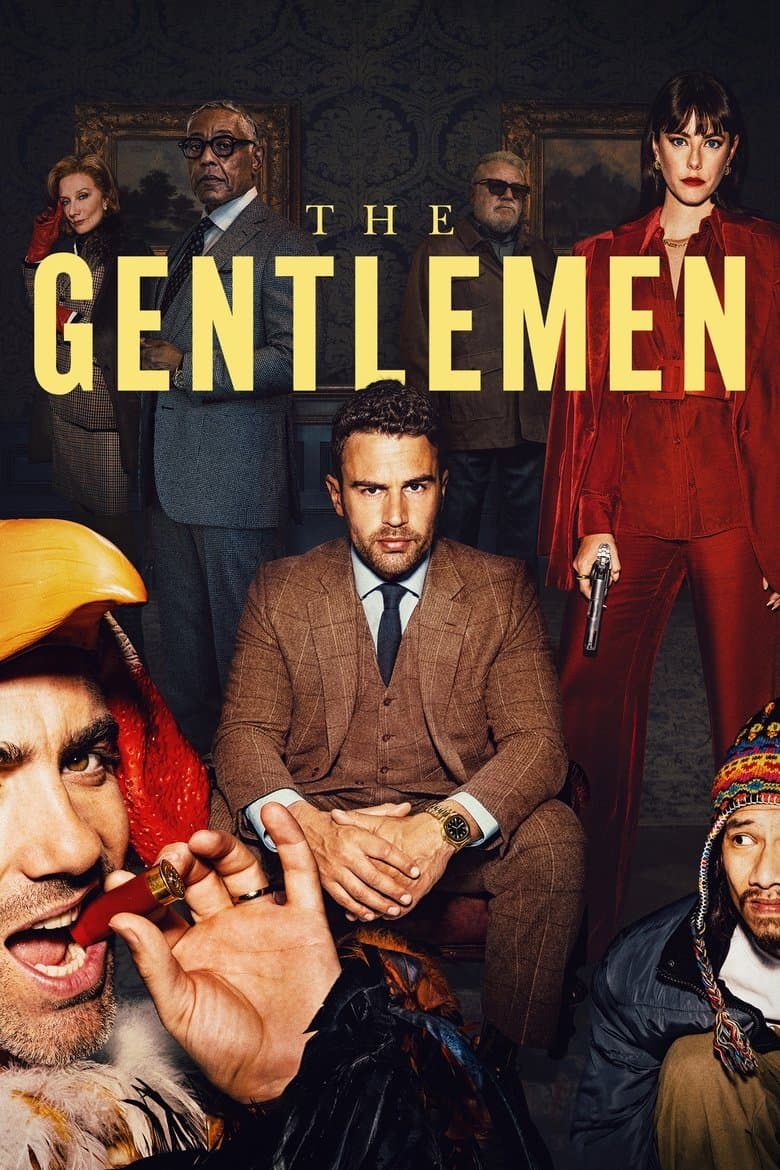
TV Show · 2024
When aristocratic Eddie inherits the family estate, he discovers that it's home to an enormous weed empire — and its proprietors aren't going anywhere.

TV Show · 2019
In a city of coaching centers known to train India’s finest collegiate minds, an earnest but unexceptional student and his friends navigate campus life.
