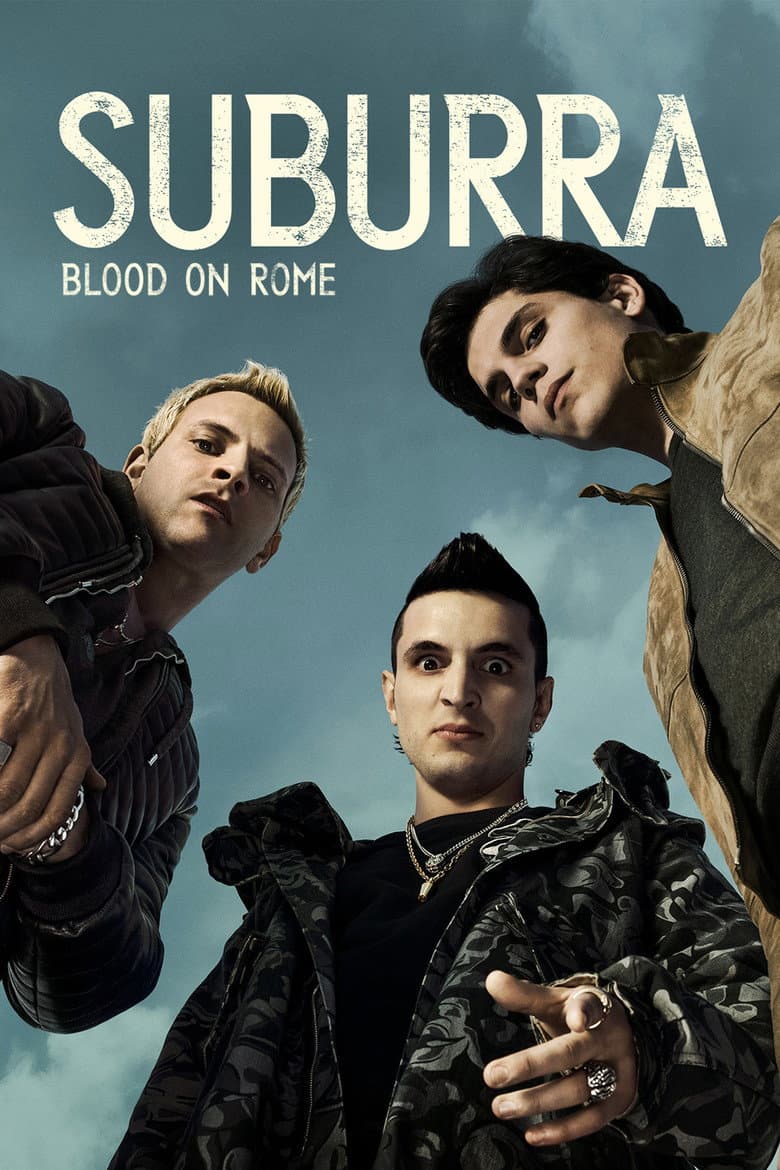
Started October 6, 2017 · Ended · Based on 3 seasons, 24 episodes through October 30, 2020 · TV-MA · Italian
Suburra: Blood on Rome follows Aureliano Adami, a young gang member who wants to turn Ostia into his own criminal empire. A land deal near Rome brings him into a dangerous alliance with Spadino Anacleti, a Sinti gang heir, and Lele Marchilli, a policeman’s son who sells drugs. Politicians, Mafia families, real estate deals, and Vatican officials fight over money and power as the story moves through Rome and Ostia. The tone is dark, violent, tense, and often cynical, with loyalty and family tested by betrayal.
Spadino is gay and hides his sexuality from his conservative family while being forced into a marriage with Angelica. His secret relationship with Teo, his feelings for Aureliano, and his struggle to lead the clan continue across the three seasons. Season two also uses migrants, anti-immigrant unrest, a far-right radio voice, and election fear as tools in a political power struggle. These themes add visible queer and modern political content, but the main story still centers on crime, corruption, revenge, and the fight for control of Rome.
Community feedback
Was our 64% Woke rating accurate?
Breakdown
These are the editorial factors and ratings behind our score for Suburra: Blood on Rome.
Woke representation / casting
Not present. The main cast is mostly Italian, and the Sinti family and immigrant woman fit the story's Rome setting and crime plot. The show does not present its casting as a broad diversity message.
0%
Woke political dialogue
Season two gives Cinaglia repeated lines about security and the good of the city as he moves toward the right. A radio host and other characters turn fear about migrants into election support. The show presents this language as a tool for power rather than a clear call for open borders or another activist cause. This material is limited mainly to the season two election plot.
34%
Identity-driven story themes
Spadino is a major lead whose hidden homosexuality shapes his arranged marriage, family conflict, and rise inside the Anacleti clan. His feelings for Aureliano and his relationship with Teo return across the first two seasons, and Teo's death shadows his later choices. The story makes his family's strict rules a clear source of danger. Season three makes the bond between the two men emotionally central, but crime and power remain the main plot.
50%
Western institutional / cultural critique
All three seasons show politicians, police, business owners, and Vatican officials trading favors and public money with criminals. Season two links migrant unrest and election fear to a right-wing campaign, while season three turns a Vatican Jubilee into another fight over contracts. The story treats the Church and state as deeply corrupt, and it often presents power itself as rotten. The show uses modern political distrust, but it does not focus on capitalism, patriarchy, or a broad attack on Western culture.
43%
Woke character or canon changes
The series makes Spadino's gay identity central even though the source film treats him mainly as a young criminal. The series also expands him from a smaller film role into one of the main leads. His sexuality drives the arranged marriage, secret boyfriend, and danger from his family. This identity change to a known character continues through all three seasons.
66%
Anti-woke backlash and complaints
The separate X pass found one tiny account that said the show had a “woke pill” and stopped watching. Other small right-leaning accounts praised the Italian crime setting for avoiding diversity messaging, and one called it not woke. A low-reach forum post complained that Netflix was pushing tolerance and gay content. No boycott, review bomb, or coordinated campaign appeared. The evidence is fringe and mixed.
15%
Creator track record context
Carlo Bonini and Giancarlo De Cataldo often write about crime, state power, policing, rights, and institutional abuse. Nicola Guaglianone often centers outsiders and prejudice, and Barbara Petronio has spoken about stronger female authorship. Michele Placido and Andrea Molaioli also have records of social injustice and violence against women, but most of the team lacks a strong DEI or identity-politics public profile. The track record supports the show's political and identity themes, but it does not show a strong activist campaign around this title.
35%
Production
TV Show · 2021
The remarkable story of how murderer Charles Sobhraj was captured. As the chief suspect in unsolved murders of young Western travellers across India, Thailand and Nepal’s ‘Hippie…
TV Show · 2019
Within the walls of an interrogation room, London investigators question suspects accused of grievous crimes until the truth comes to light.

TV Show · 2016
17-year-old Joshua "J" Cody moves in with his freewheeling relatives in their Southern California beach town after his mother dies of a heroin overdose.
TV Show · 2022
Bosch is now making a living as a private investigator two years after he quit the LAPD and finds himself working with one time enemy and top-notch attorney Honey “Money”…
TV Show · 2023
Candy and Pat Montgomery and Betty and Allan Gore — two churchgoing couples — enjoy their small town Texas life... until an extramarital affair leads somebody to pick up an axe.
TV Show · 2022
New York mafia capo Dwight "The General" Manfredi is released from prison after 25 years and exiled by his boss to set up shop in Tulsa, Oklahoma.
TV Show · 2018
Ray Shoesmith is a father, ex-husband, boyfriend and best friend: tough roles to juggle in the modern age. Even harder when you’re a criminal for hire.
TV Show · 2016
A 26-year-old woman learns to live again after 13 years in captivity.
