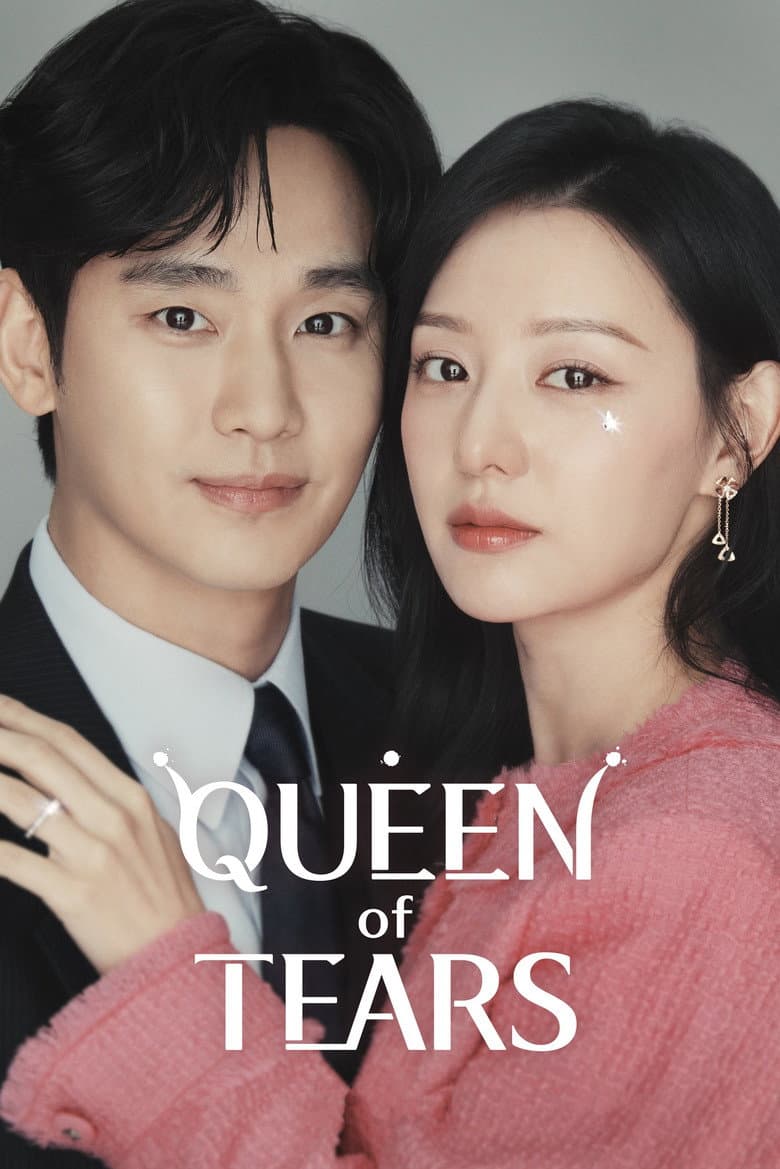
Started March 9, 2024 · Ended · Based on 1 season, 16 episodes through April 28, 2024 · TV-14 · Korean
Queen of Tears follows Hong Hae-in, the powerful head of a Seoul department store, and Baek Hyun-woo, her lawyer husband from a farming town. Three years into their marriage, they live and work under her wealthy family and are close to divorce. Hae-in then learns that a rare brain illness may leave her only months to live. The show mixes romantic comedy, family fights, corporate crime, and heavy tearful drama as the couple slowly finds its way back to love.
The show makes its gender-role reversal easy to see. Hae-in is the family leader and Hyun-woo answers to her at work, lives with her relatives, and joins the other sons-in-law in cooking for family memorials. The story repeatedly questions the idea that a man must lead, earn more, or control the home, while it lets Hae-in be the sharper business fighter and Hyun-woo be the more emotional partner. The later episodes focus more on illness, memory, revenge, and family loyalty, but Hae-in remains a strong leader who later works to make her department store less exclusive. The message is mainly about changing marriage roles and learning to care for each other, not about wider political campaigns.
Community feedback
Was our 38% Woke rating accurate?
Breakdown
These are the editorial factors and ratings behind our score for Queen of Tears.
Woke representation / casting
Hong Hae-in is a prominent female CEO, while her husband works under her. The show also places sons-in-law in charge of family memorial cooking while the family’s sons avoid the work. This is a visible gender-role choice, but the Korean cast has no broader diversity-first pattern.
18%
Woke political dialogue
Episode 1 calls the men’s memorial-service work “progressive” and says it fits the current trend. The same episode makes jokes about Hae-in being the boss and Hyun-woo living under his in-laws’ control. These lines support the show’s gender-role reversal, but they appear in family comedy rather than political speeches.
23%
Identity-driven story themes
The central romance reverses the usual rich-man, poorer-woman setup. Hae-in runs a department store and controls the family business, while Hyun-woo is her employee-husband who joins the other sons-in-law in preparing family memorial food. The plot keeps testing those roles during the marriage crisis, the corporate fight, and the rebuilding of the store. Hyun-woo remains a skilled lawyer and protector, and Hae-in must face her own coldness, so the show presents a troubled couple rather than a simple female victory story.
46%
Western institutional / cultural critique
Queens Group shows a rich family using rank, money, and fear to control relatives and workers. The show also treats old ideas about male leadership and female domestic work as unfair, especially when sons-in-law must cook while the family men avoid the task. The story does not attack Western institutions, Christianity, or capitalism as a whole, so this factor stays mild.
23%
Woke character or canon changes
Not relevant. This is an original story about a modern Korean couple. It does not adapt a known character, real person, or earlier canon.
0%
Anti-woke backlash and complaints
Not present. The reported complaints were about a Starbucks cup, an Africa joke, and the rushed plot, not woke or DEI ideas.
0%
Creator track record context
Park Ji-eun’s cached record centers on commercial romance, family life, and working women, without a public activist persona. Kim Hee-won’s cached record shows more women-centered stories and criticism of unequal power. Jang Young-woo’s cached record is broad and has no clear identity-focused public record. This gives the show mild women-focused context, but not a strong activist profile.
20%
Production

TV Show · 2019
A paragliding mishap drops a South Korean heiress in North Korea -- and into the life of an army officer, who decides he will help her hide.
TV Show · 2022
In disguise as her friend, Ha-ri shows up to a blind date to scare him away. But plans go awry when he turns out to be her CEO — and makes a proposal.

TV Show · 2020
The heartwarming and humorous adventures of a young country vet in the Yorkshire Dales in the 1930s. A remake of the 1978 series.

TV Show · 2016
Rebellious Mickey and good-natured Gus navigate the thrills and agonies of modern relationships.
TV Show · 2019
Burned out on life, Miles undergoes a strange procedure at a strip mall spa -- and wakes to find he's been replaced by a better version of himself.

TV Show · 2020
After being bullied and discriminated because of her ugly looks, a high school girl transforms herself into a gorgeous "goddess" and quickly rises to fame after mastering the art…

TV Show · 2016
After being pulled into the webtoon world created by her father, a surgical resident gets entangled in a murder mystery involving the story's hero.
TV Show · 2021
A secret life is the one thing they have in common. At school, Hori is a prim and perfect social butterfly, but the truth is she's a brash homebody.
