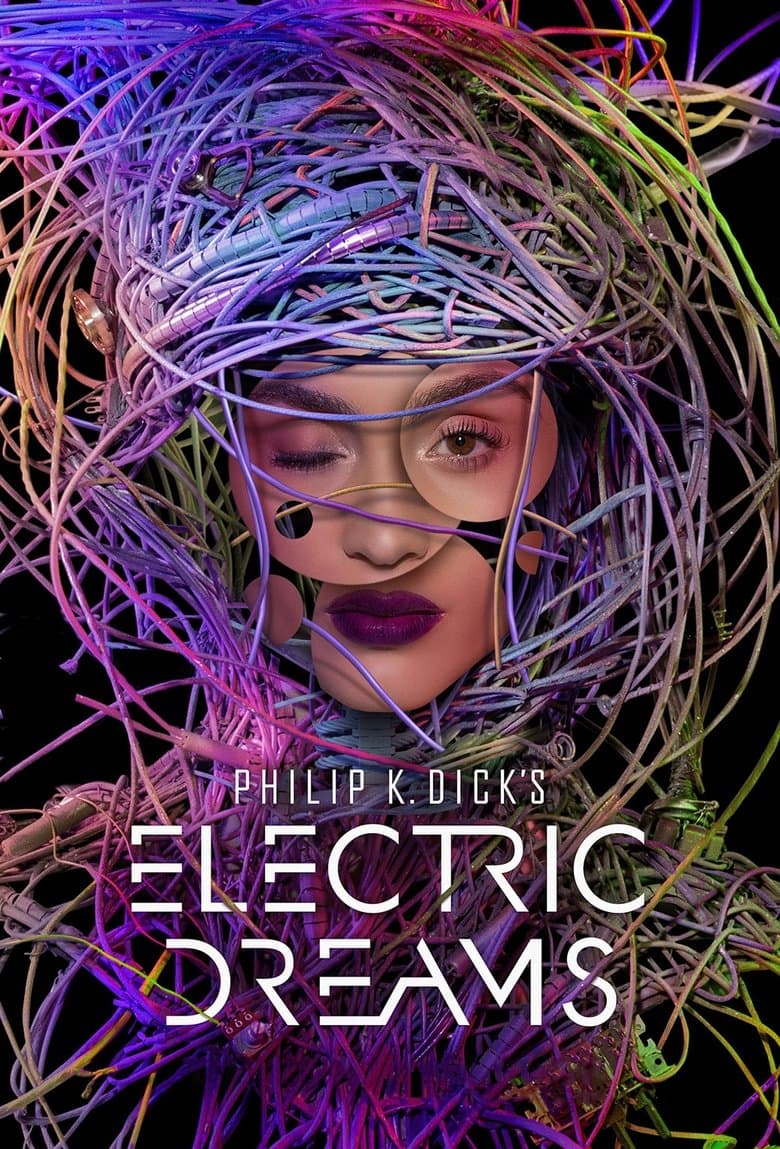
Started September 17, 2017 · Ended · Based on 1 season, 10 episodes through March 19, 2018 · TV-MA
Philip K. Dick's Electric Dreams is a science-fiction series with ten separate stories. Each episode follows a different person who faces a strange future, a broken memory, a powerful machine, or a cruel public system. The settings range from a divided American city and a damaged Earth to a distant planet and a train station with a hidden town. The tone moves from sad family drama to dark political thriller, but most stories ask what makes a person human and whether comfort is worth losing the truth.
The show has clear woke elements in only some episodes. Real Life centers on Sarah, a lesbian police officer, her wife Katie, and a virtual life where Sarah becomes George, a black male technology owner. The Hood Maker presents telepaths as a mistreated minority and treats prejudice, private thoughts, and unequal jobs as major issues. Safe and Sound attacks fear-based security and surveillance, while Kill All Others warns about a media-driven leader who tells people to reject the other. These ideas matter in several episodes, but the anthology also spends much of its time on family pain, grief, consumer fear, and the uncertain line between humans and machines.
Community feedback
Was our 56% Woke rating accurate?
Breakdown
These are the editorial factors and ratings behind our score for Philip K. Dick's Electric Dreams.
Woke representation / casting
The anthology repeatedly places actors such as Janelle Monáe, Benedict Wong, Mel Rodriguez, Noma Dumezweni, and Terrence Howard in important roles. Real Life also makes a lesbian police officer and her wife central to the story. The future settings allow much of this casting, so the show does not show a clear race or gender mismatch. The repeated diversity is still visible across the season.
18%
Woke political dialogue
Safe and Sound repeatedly talks about surveillance, false news, terrorism, and companies that sell fear. The Hood Maker treats government mind-reading and limits on private thought as a political crisis. Kill All Others uses speeches, billboards, news shows, and a television-style leader to warn about mob rule and political apathy. These ideas matter in several episodes, but most stories are personal or philosophical.
42%
Identity-driven story themes
Real Life centers on a lesbian police officer, her wife, and a black male virtual life as the two identities cross over. The Hood Maker treats telepaths as an outcast class and makes prejudice against them a main conflict. Kill All Others uses the idea of “the other” to show how a crowd is taught to reject people who do not fit in. These themes are strong in three episodes, but they do not control the whole anthology.
43%
Western institutional / cultural critique
Safe and Sound attacks private security, state tracking, and news that spreads fear. Kill All Others attacks a media-driven political system and citizens who ignore a leader’s violent words. Autofac and The Hood Maker also question corporations, consumer control, and government power. These are clear anti-institution themes, but they usually fit old science-fiction warnings and are not tied to modern identity politics.
34%
Woke character or canon changes
Real Life changes Dick’s male future historian into Sarah, a lesbian police officer, and gives her a black male identity in the other reality. The episode makes the woman’s marriage and the identity switch central to its story. The other episodes also change plot details, but their changes are mainly normal updates and extensions. This makes the canon change strong in one episode rather than a season-wide pattern.
28%
Anti-woke backlash and complaints
X research found no meaningful anti-woke reaction, campaigns, or boycotts. One right-leaning NewsBusters article called Kill All Others a liberal attack on Donald Trump and objected to its treatment of the candidate as a tyrant. Mainstream coverage mostly discussed the uneven anthology and its Black Mirror comparison, so the complaint evidence is small and fringe.
12%
Creator track record context
Philip K. Dick is mainly linked to anti-war and anti-government views. Jack Thorne has pushed for more disabled talent, and Dee Rees has made work about racial inequality. Shaheen Baig is known for inclusive casting, and Isa Dick Hackett has publicly identified as lesbian and reported workplace abuse. Bryan Cranston and most of the directors have milder or mainly craft-focused records.
47%
Production
TV Show · 2022
The intricate and magical love story of Clare and Henry, and a marriage with a problem… time travel.
TV Show · 2016
Hundreds of years from now, the last surviving humans discover the means of sending consciousness back through time, directly into people in the 21st century.
TV Show · 2024
Jason Dessen is abducted into an alternate version of his life. To get back to his true family, he embarks on a harrowing journey to save them from the most terrifying foe…
TV Show · 2022
Gary is an emotional wreck and struggles to provide for his daughter since the death of his wife. Mary has a secret she can't bring herself to share with anyone.
TV Show · 2023
At the brink of going to hell, Yee-jae must cycle through twelve separate lives and twelve separate deaths in this reincarnation drama.
TV Show · 2018
Two strangers are drawn to a mysterious pharmaceutical trial that will, they're assured, with no complications or side-effects whatsoever, solve all of their problems…
TV Show · 2017
An MIT grad student and a tech superstar bring a low-level Pentagon official a staggering discovery that an asteroid is just six months away from colliding with Earth.
TV Show · 2018
After 250 years on ice, a prisoner returns to life in a new body with one chance to win his freedom: by solving a mind-bending murder.
