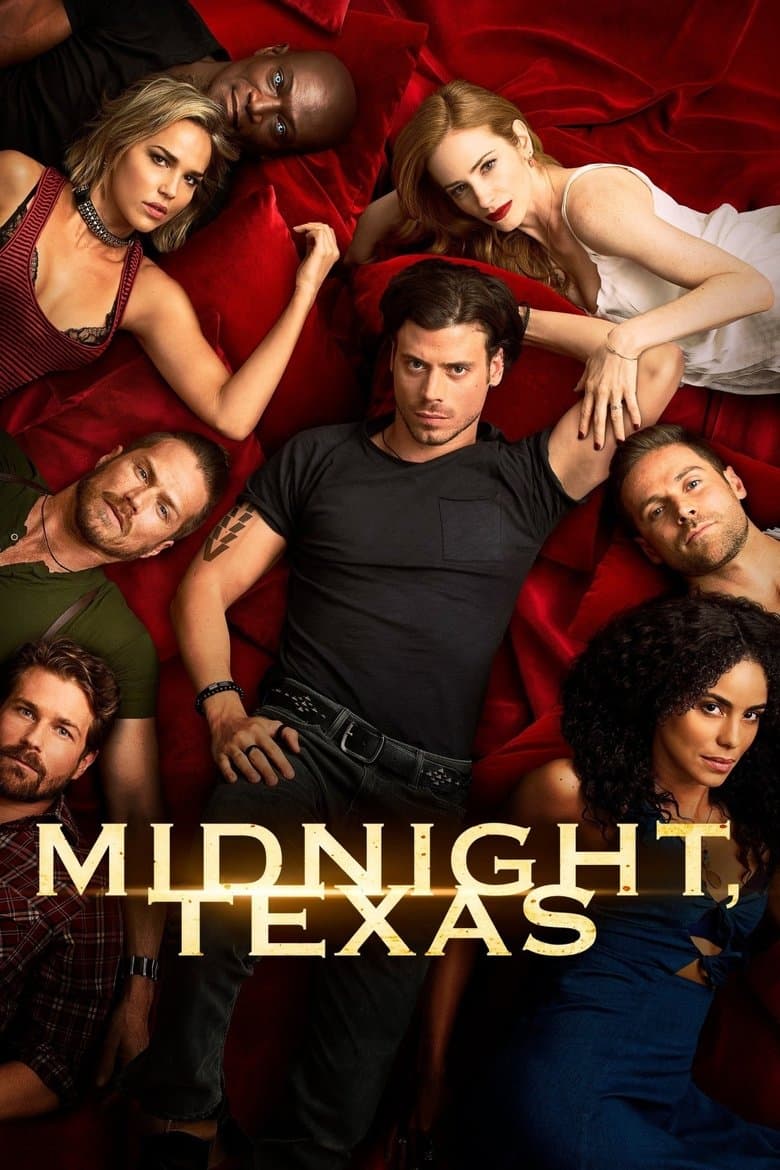
Started July 24, 2017 · Canceled · Based on 2 seasons, 19 episodes through December 28, 2018 · TV-14 · 45 min
Midnight, Texas follows Manfred Bernardo, a young psychic who runs from danger and reaches a small town in West Texas. The town sits near a break between the living world and hell, and its residents include vampires, witches, an angel, a half-demon, a were-tiger, and an assassin. The group becomes a family while it fights killers, demons, curses, and threats from outside. The tone mixes horror, romance, sex, dark humor, and fast supernatural action.
The show presents Midnight as a safe place for people who do not fit in elsewhere, and the residents are told to value each other's differences. Joe is a married gay angel whose husband Chuy is a half-demon, and season 2 adds an openly gay demon hunter named Walker. Their marriage, Joe's attraction to Walker, and the fallout from that affair form a continuing story in the second season. A season 2 episode also calls patriarchy the enemy, but most of the show stays focused on monsters, romance, family, and survival.
Community feedback
Was our 51% Woke rating accurate?
Breakdown
These are the editorial factors and ratings behind our score for Midnight, Texas.
Woke representation / casting
The main cast includes a black actress as Fiji, a black actor as Lem, a Latino actor as Rev, and an interracial gay couple in prominent roles. The creator said the show's heart was a town where gay, straight, Black, and Latino people live together, and she described the casting as open. The fantasy setting makes this mix less jarring than a realistic rural Texas story, but the representation pattern is still audience-visible.
38%
Woke political dialogue
Season 2 gives an episode the title “The Monster of the Week Is Patriarchy.” Olivia also asks whether patriarchy is the real enemy while the town fights female vampires. The finale jokes that Patience wants to “make Midnight great again.” These lines are clear modern political signals, but they appear in short moments rather than driving the whole series.
23%
Identity-driven story themes
The town's central idea is that outsiders who do not fit elsewhere can build a family together. The show repeatedly treats acceptance of unusual people as a good thing. Joe and Chuy are an interracial married gay couple, and season 2 adds Joe's attraction to openly gay demon hunter Walker. That relationship and its fallout shape a continuing season 2 plot, even though most episodes remain monster stories.
41%
Western institutional / cultural critique
Season 2 links a jealous husband's murder-suicide to the word “patriarchy,” and Olivia calls patriarchy the enemy during the same episode. The story also presents male possessiveness as a cause of violence. Most conflicts still involve demons, curses, and abusive individuals rather than a broad attack on Western institutions.
17%
Woke character or canon changes
Fiji is changed from a white character in Charlaine Harris's books to a black actress in the show. Lem changes from an old, bent white man in the books to a black actor in a major role. The creator said the changes kept the characters' spirit while making the town's gay, straight, Black, and Latino mix part of its heart. These are visible identity changes, although the main supernatural plots remain similar.
31%
Anti-woke backlash and complaints
Newsbusters said the show had wedged a gay couple into the plot and objected to gay angel characters. The article also objected to the couple affecting Christian symbols. PinkNews reported Jason Lewis's public reply to that criticism. The X review found no wider anti-woke campaign, so the backlash appears real but small.
18%
Creator track record context
Monica Owusu-Breen has spoken about being a woman of color and made the town's mix of gay, straight, Black, and Latino residents part of its stated heart. Jeffrey Reddick has a stronger LGBTQ and diversity advocacy record, and Charlaine Harris's books include gay and bisexual characters. The other cached writers, directors, and producers show little public activist history, so the creative context supports the show's themes without making them dominant.
30%
Production
TV Show · 2017
An MIT grad student and a tech superstar bring a low-level Pentagon official a staggering discovery that an asteroid is just six months away from colliding with Earth.
TV Show · 2023
Aster Calyx and Halan Kai Nielsen are inextricably drawn to Beacon 23. Navigating one threat after another, they unravel the beacon’s mysteries, just in time to face their most…
TV Show · 2021
On a perilous adventure across a post-apocalyptic world, a lovable boy who's half-human and half-deer searches for a new beginning with a gruff protector.
TV Show · 2016
A disgraced, 75-year-old ex-sheriff, whose life ends at the hands of corrupt cops, is brought back to life and given a second chance by a pair of young tech scientists, as a…
TV Show · 2016
In his quest for a bride to break his immortal curse, a 939-year-old guardian of souls meets a grim reaper and a sprightly student with a tragic past.
TV Show · 2016
Detective Raimy Sullivan is stunned when a voice suddenly crackles through her father’s old, long-broken ham radio – it’s Frank Sullivan, somehow transmitting over the airwaves…
TV Show · 2017
Holden wakes up from a coma after 12 years and discovers new abilities that propel him into the middle of a dangerous conspiracy.
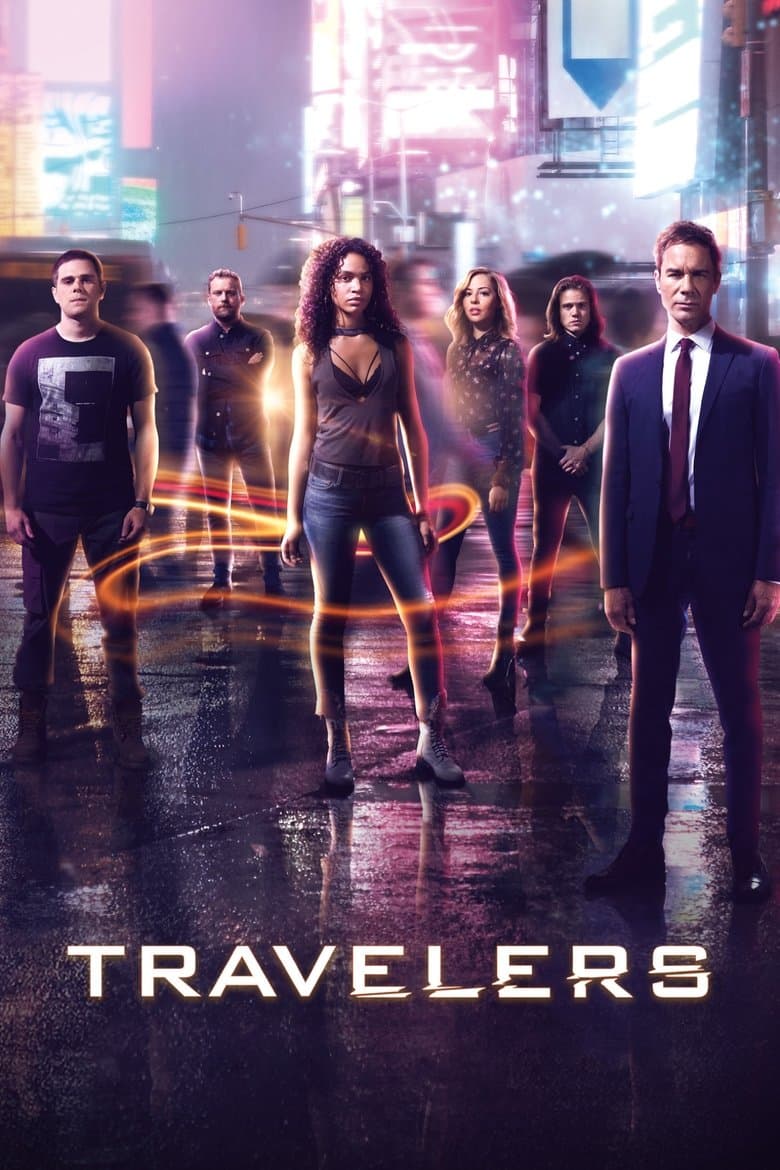
TV Show · 2016
Hundreds of years from now, the last surviving humans discover the means of sending consciousness back through time, directly into people in the 21st century.
