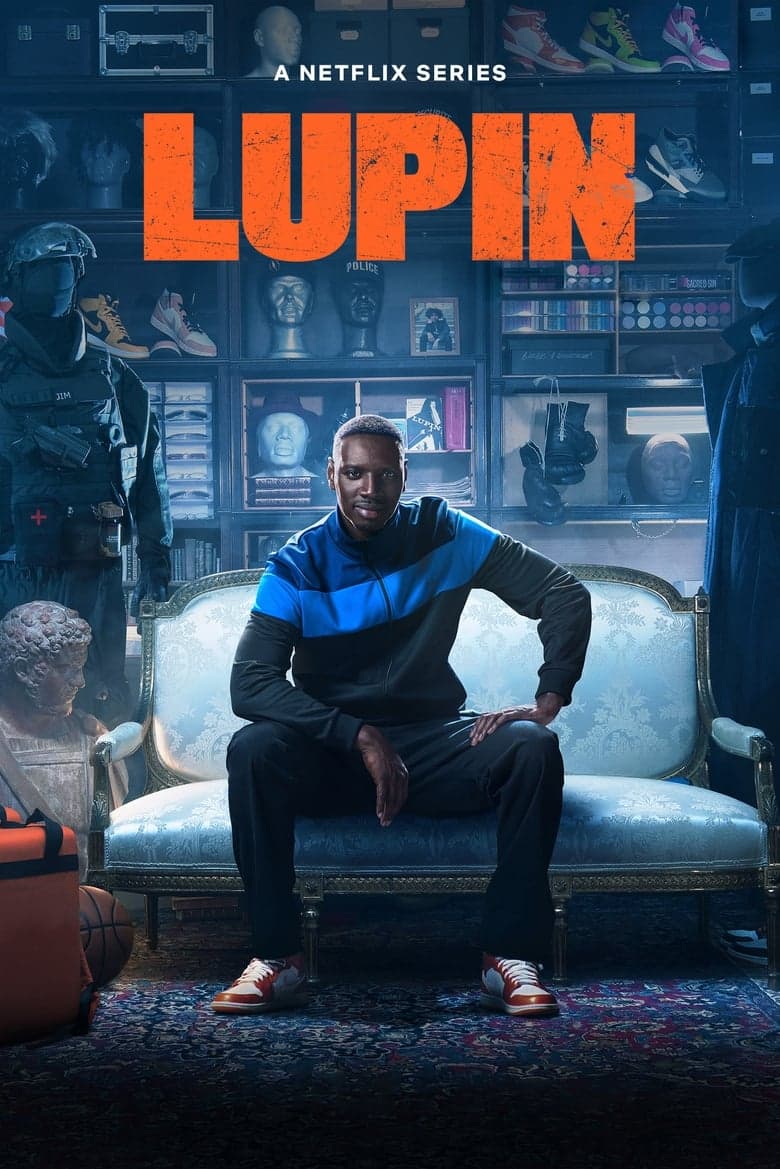
Started January 8, 2021 · Returning Series · Based on 2 seasons, 17 episodes through October 5, 2023 · TV-MA · French
Lupin follows Assane Diop, a clever thief and master of disguise in present-day Paris. Assane steals from rich people while trying to clear the name of his Senegalese father, who died after a wealthy family framed him. He copies the style of Arsène Lupin, the famous French gentleman thief from old books. The show mixes fast heists, police chases, family trouble, romance, and jokes, and the third part gives more space to Assane’s mother and his son.
Race, class, and the treatment of immigrant workers are not side details. Assane often uses the fact that people overlook Black cleaners, guards, drivers, and other workers, while the story shows wealthy people and corrupt officials protecting one another. The first two parts make revenge against the Pellegrini family the main plot, and Part 3 adds his mother’s low-paid work, his family’s fear, and his wish to escape France. The show presents Assane as a charming hero who beats unfair systems through skill, disguise, and crime, but it spends more time on action and family than on direct political speeches.
Community feedback
Was our 81% Woke rating accurate?
Breakdown
These are the editorial factors and ratings behind our score for Lupin.
Woke representation / casting
Assane is a Black Senegalese immigrant in the lead role, and his identity shapes how he moves through Paris. The police team includes North African French characters, while Part 3 adds people from more varied backgrounds. George Kay said Part 3 aimed to diversify the cast and show modern French society. The pattern is visible, but the show does not build every major role around identity.
50%
Woke political dialogue
Assane describes how people notice him as a suspect but ignore him when he works as a cleaner or other low-paid worker. Characters talk about the harm done to his father and to immigrant families by wealthy people and corrupt officials. A bar scene and police scenes show racism through spoken insults and suspicion. Most dialogue still serves the heists and family plot, so the political talk is present but not constant.
34%
Identity-driven story themes
Assane’s revenge begins after a wealthy white family frames his Senegalese father and the justice system lets the damage stand. The show repeatedly links race, class, immigrant life, and being unseen at work to Assane’s crimes. Part 2 widens the conflict to police corruption and the power of wealth. Part 3 adds his mother’s low-paid work, his family’s fear, and the pressure of passing as dead, so identity remains central across all reviewed parts.
68%
Western institutional / cultural critique
The show presents rich families, police leaders, prisons, and the press as systems that can protect powerful people. Assane’s father loses his freedom after a false charge while the wealthy employer keeps his status. The story also shows workers being ignored and police treating North African and black men as suspects. Part 3 keeps the social critique but shifts more time toward family history and new heists.
52%
Woke character or canon changes
The source books center on Arsène Lupin, a white French gentleman thief from the early 1900s. The show makes its lead Assane Diop, a Black Senegalese immigrant in modern Paris, who follows Lupin’s methods instead of being the same man. This changes the hero’s race, class background, family history, and reason for stealing. The change is the main identity-based reinterpretation of the source, even though Assane is a new character.
62%
Anti-woke backlash and complaints
A few French forum posts called the show woke and complained that Netflix gave the Lupin role to a black actor. Other comments described the change as an ideological or affirmative-action choice. These complaints were scattered and often mixed with general dislike of the writing. Mainstream coverage was much larger on race, class, and representation than on anti-woke backlash.
14%
Creator track record context
George Kay and François Uzan mainly have crime and mainstream television records. Marie Roussin has a stronger feminist pattern from Mixte, but that work is separate from Lupin. Omar Sy has spoken often about racism, police violence, class, and Black visibility, and he produces this show. The wider creative team has little public activist history, so the context is mixed but supports the show’s identity themes.
42%
Production

TV Show · 2020
A family's lives are irreparably disrupted when the 14-year-old son is accused of murdering a fellow classmate.
TV Show · 2025
A brash but brilliant cop becomes head of a new police department, where he leads an unlikely team of misfits in solving Edinburgh's cold cases.

TV Show · 2018
A troubled war veteran is assigned to protect a controversial politician who may be the target of a terror plot.
TV Show · 2026
Wrongfully imprisoned for murdering his own son, a father sets out on a desperate rescue mission after learning the boy may still be alive.
TV Show · 2021
When family man Nick Brewer is abducted in a crime with a sinister online twist, those closest to him race to uncover who is behind it and why.
TV Show · 2018
After his daughter goes missing, a widower begins uncovering the dark secrets of the people closest to him.
TV Show · 2022
Determined to protect a young patient who escaped a mysterious cult, a psychiatrist takes the girl in, putting her own family — and life — in danger.

TV Show · 2020
Zoe Walker leaves her quiet life behind to investigate her brother's disappearance in Ibiza, where she quickly heads down a decadent and dangerous path.
