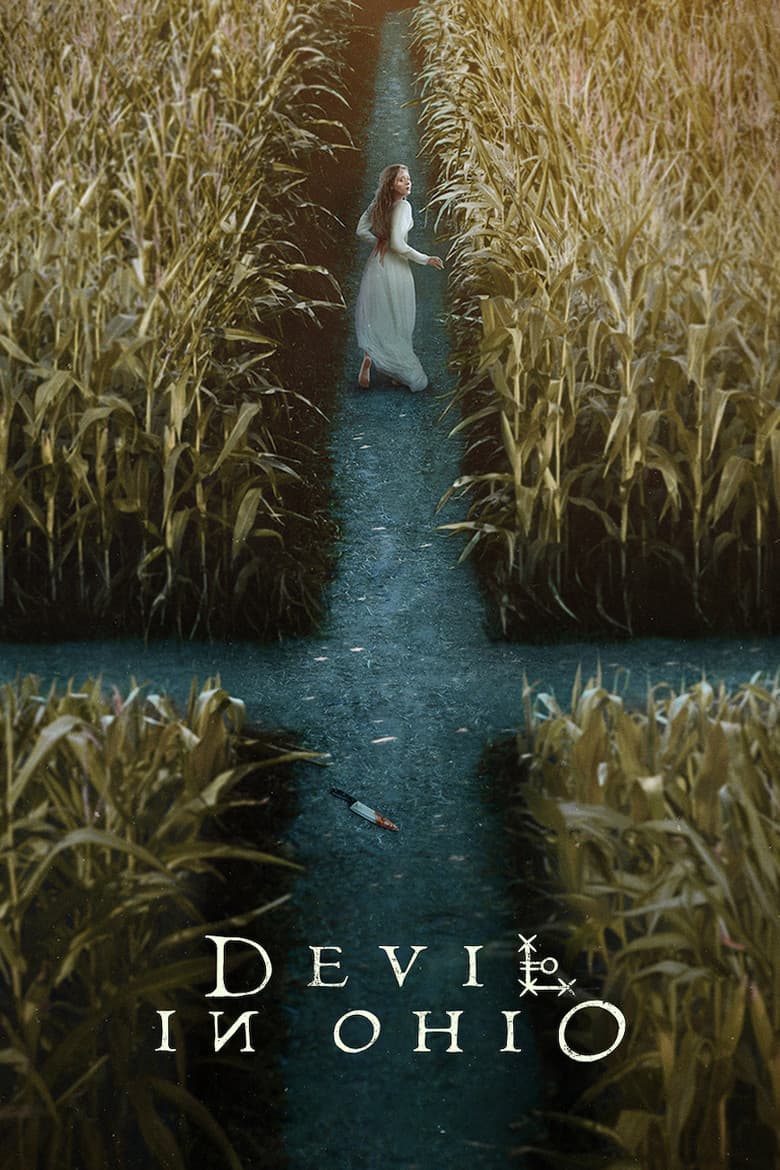
Started September 2, 2022 · Ended · Based on 1 season, 8 episodes through September 2, 2022 · TV-MA
Psychiatrist Suzanne Mathis brings Mae, a silent teenage girl with a pentagram cut into her back, home after Mae escapes a secret cult in rural Ohio. Suzanne wants to protect her, but she hides the decision from her husband and three daughters. The cult sends people to take Mae back, while Detective Lopez tries to learn how the group controls Amon County. The show mixes family drama, police mystery, trauma, and dark cult horror, with a grim but sometimes soap-like tone.
The clearest audience-visible identity element is a short same-sex romance between Helen Mathis and Tatiana, a bisexual girl from school. Helen questions her long relationship with a boy, then moves toward Tatiana near the end of the season. The relationship is shown as caring and normal, but it stays on the edge of the main cult story and does not drive the ending. The cast also includes a Latino detective, an Asian adopted daughter, a gay best friend, and other diverse supporting teens. Most of the season stays focused on trauma, family strain, religious abuse, manipulation, and whether Mae is a victim or a threat.
Community feedback
Was our 23% Woke rating accurate?
Breakdown
These are the editorial factors and ratings behind our score for Devil in Ohio.
Woke representation / casting
The show places a Latino detective in a major supporting role and gives the family an Asian adopted daughter. The school story also includes a black bisexual girl and a gay male friend. The adoption story gives Dani a clear reason for her identity, and no marketing presents the cast as a diversity campaign. The visible pattern is modest and supports a low score.
18%
Woke political dialogue
Not present. The characters do not give recurring speeches about current politics, race, class, or activism. The police and cult conflict stays inside the mystery plot.
0%
Identity-driven story themes
Helen Mathis questions her long relationship with a boy and starts a same-sex relationship with Tatiana. Isaac is also presented as a gay friend at school. The plot treats these identities as ordinary and caring, but these stories remain side plots and do not shape the cult mystery. The season mainly deals with trauma, family loyalty, and cult control.
22%
Western institutional / cultural critique
Not present. The show depicts a male-led cult, a corrupt sheriff, and failed police systems as plot threats. It does not connect them to modern activist claims about men, family life, Christianity, or Western institutions.
0%
Woke character or canon changes
Not relevant. The series changes the novel’s viewpoint and ending, but the changes serve the TV plot. No established character or real historical figure is changed for an identity or DEI message.
0%
Anti-woke backlash and complaints
Not present. Public complaints focused on slow pacing, plot holes, weak scares, the ending, and the treatment of an abused girl. No notable complaint said the show was pushing woke, DEI, or identity politics.
0%
Creator track record context
Daria Polatin has a gender-equality theater background through The Kilroys, and the cached record gives her a 41/100 context score. Rachel Miller runs Film2Future, which promotes racial and gender representation, and the cached record gives her a 65/100 context score. The other listed directors and producers have little documented activist or identity-focused history. The production’s interviews focus on cults, trauma, and motherhood rather than an activist message.
35%
Production
TV Show · 2026
Wrongfully imprisoned for murdering his own son, a father sets out on a desperate rescue mission after learning the boy may still be alive.
TV Show · 2024
A young boy growing up in the suburbs of 1980s Brisbane faces the harsh realities of life — and the looming dangers that threaten his family.
TV Show · 2022
Lucy wakes every night at exactly 3:33am. Nothing in her life has made sense for a long time. But the answers are out there, somewhere, at the end of a trail of brutal murders.
TV Show · 2026
Ben Reilly, an aging and down on his luck private investigator in 1930s New York, is forced to grapple with his past life as the city's one and only superhero.

TV Show · 2026
The dynamic between the two contrasting personalities, a seasoned cop who prefers old-school methods and a tech-savvy cop who relies on modern technology for investigations, as…
TV Show · 2025
A brash but brilliant cop becomes head of a new police department, where he leads an unlikely team of misfits in solving Edinburgh's cold cases.
TV Show · 2017
A war veteran turned private detective operates out of a tiny office in London’s Denmark Street. Although wounded both physically and psychologically, his unique insight and…
TV Show · 2018
In 1994, a toddler disappeared from a small Welsh village, never to be seen again. 23 years later, in London, the mother of rising cello star Matilda Gray commits suicide, without…
