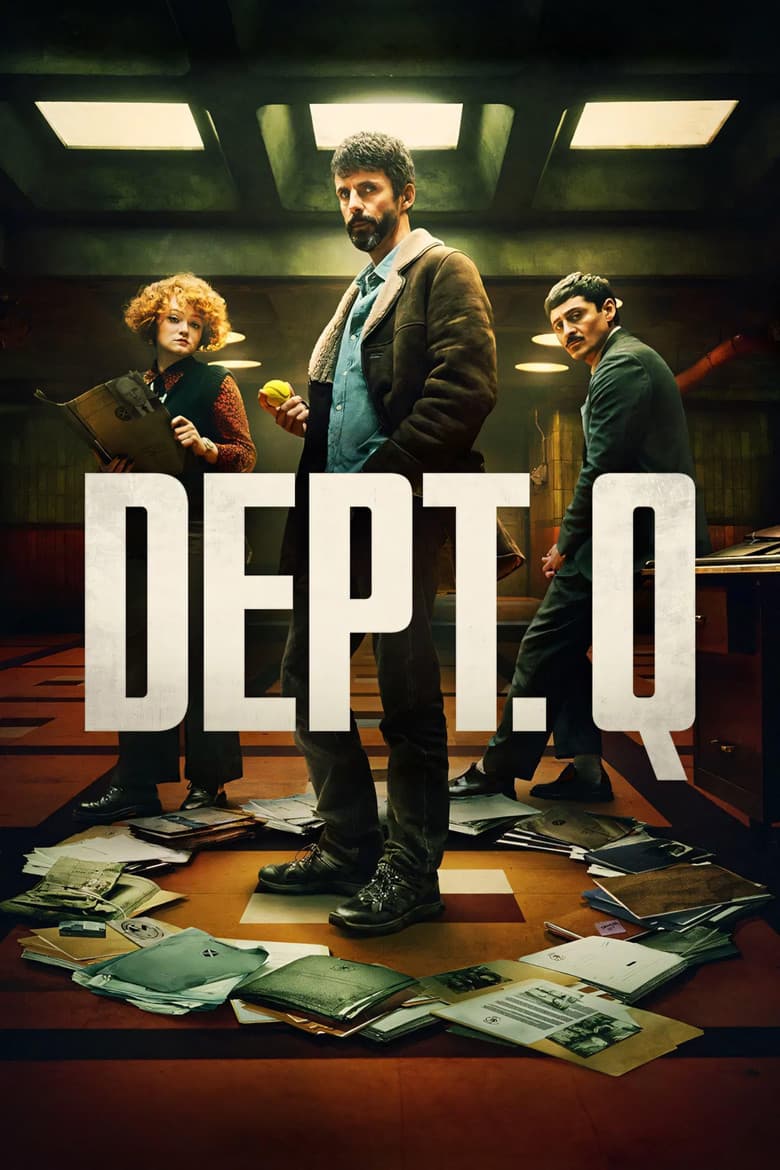
Started May 29, 2025 · Returning Series · Based on 1 season, 9 episodes through May 29, 2025 · TV-MA
Dept. Q is a Scottish cold-case crime drama adapted from Jussi Adler-Olsen's Danish novels. Season 1 follows abrasive DCI Carl Morck after a shooting that kills a young officer and leaves his partner DI James Hardy paralyzed. Morck is exiled to a basement public-relations cold-case unit called Department Q. He works with Syrian ex-policeman Akram Salim, recovering DC Rose Dickson, and later Hardy. Together they take on the four-year disappearance of hard-edged prosecutor Merritt Lingard.
The season centers on trauma, guilt, misfit teamwork, revenge, and ordinary justice-system corruption such as police public relations, buried cases, and a wealthy killer who intimidates officials. It is not driven by race, gender ideology, or queer politics. Visible diversity includes Syrian Muslim refugee Akram as a highly competent co-lead, women in major roles, disability and mental-health presence, and a brief, neutrally portrayed gay police officer. Those notes stay light and secondary to the crime plot. Core themes stay personal damage and cold-case investigation rather than campaigns about systemic racism, patriarchy, or queer liberation.
Community feedback
Was our 19% Woke rating accurate?
Breakdown
These are the editorial factors and ratings behind our score for Dept. Q.
Woke representation / casting
The main cast is mostly White and Scottish or UK-coded. Noticeable diversity is Syrian Muslim refugee Akram as a highly competent co-lead, women in major roles, disability and mental-health presence, and a brief neutral gay officer. Modern Edinburgh makes that mix plausible, and it is not a quota cast or a race or gender swap of the white lead. Some viewers said it avoided forced diversity.
24%
Woke political dialogue
Not present. Dialogue is crime, trauma, Scottish swearing, and workplace sparring with no activist lectures on race, gender, DEI, colonial guilt, or identity politics.
0%
Identity-driven story themes
The core story is a cold-case procedural plus personal damage, not identity politics. Light identity-adjacent notes include Akram’s refugee and Syrian past as mystery, mental-health arcs, and incidental LGBTQ presence. It is not a campaign plot about systemic racism, patriarchy, or queer liberation.
10%
Western institutional / cultural critique
Police brass treat Dept. Q as a publicity and budget shell game, and officials are compromised by a rich industrialist while cold cases get buried. That is classic noir corruption and inept institutions. It is not modern framing of toxic masculinity, whiteness, or anti-Christian culture war.
14%
Woke character or canon changes
Not relevant. The Denmark to Edinburgh move, name tweaks such as Assad to Akram and Merete to Merritt, and UK localization are ordinary adaptation. Akram remains a Syrian immigrant assistant with a dark past matching the novels, not a race or gender-swapped legacy hero.
0%
Anti-woke backlash and complaints
Not present. No meaningful campaign says the show is too woke. Reaction often groups it with non-propaganda crime TV or hopes it does not go woke, and some praise the lack of forced diversity.
0%
Creator track record context
Cached scores are low to mild for Adler-Olsen, Scott Frank, Olivia Scott-Webb, Elisa Amoruso, Chandni Lakhani, and Stephen Greenhorn. No activist or DEI creative pattern is tied to this title. Frank’s public framing is trauma, ensemble, and mystery craft.
10%
Production

TV Show · 2024
A young boy growing up in the suburbs of 1980s Brisbane faces the harsh realities of life — and the looming dangers that threaten his family.
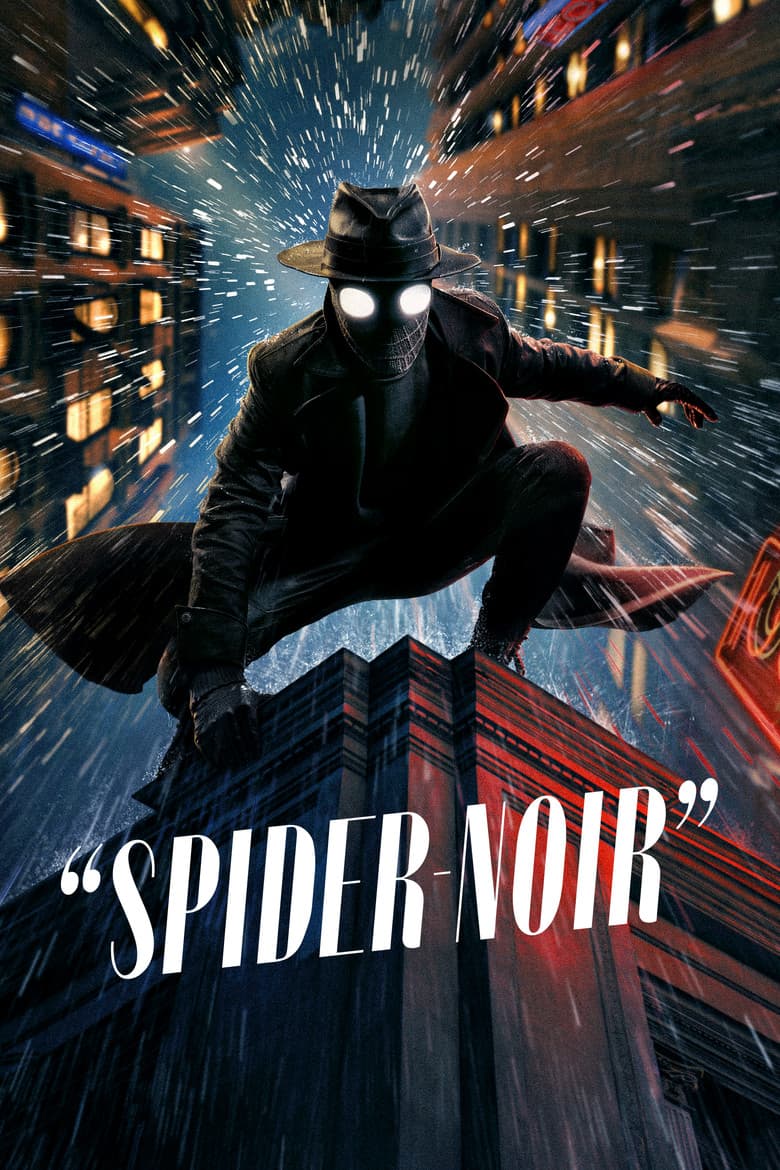
TV Show · 2026
Ben Reilly, an aging and down on his luck private investigator in 1930s New York, is forced to grapple with his past life as the city's one and only superhero.

TV Show · 2026
The dynamic between the two contrasting personalities, a seasoned cop who prefers old-school methods and a tech-savvy cop who relies on modern technology for investigations, as…
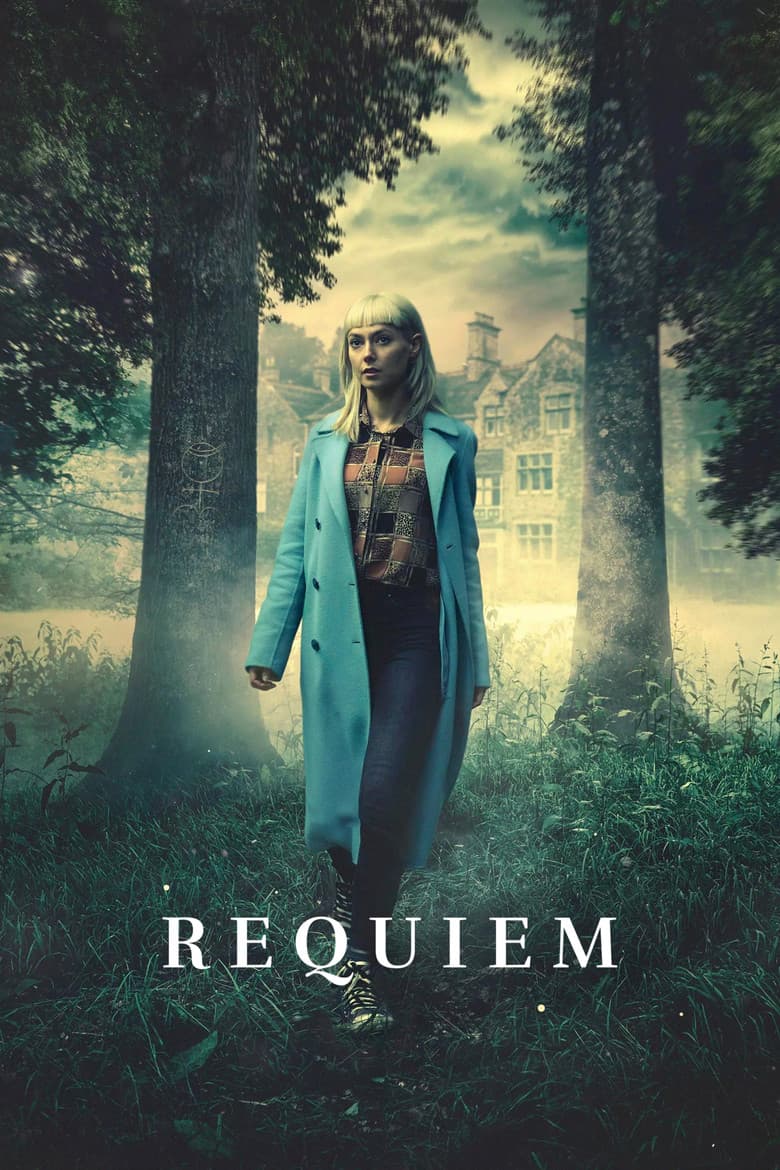
TV Show · 2018
In 1994, a toddler disappeared from a small Welsh village, never to be seen again. 23 years later, in London, the mother of rising cello star Matilda Gray commits suicide, without…
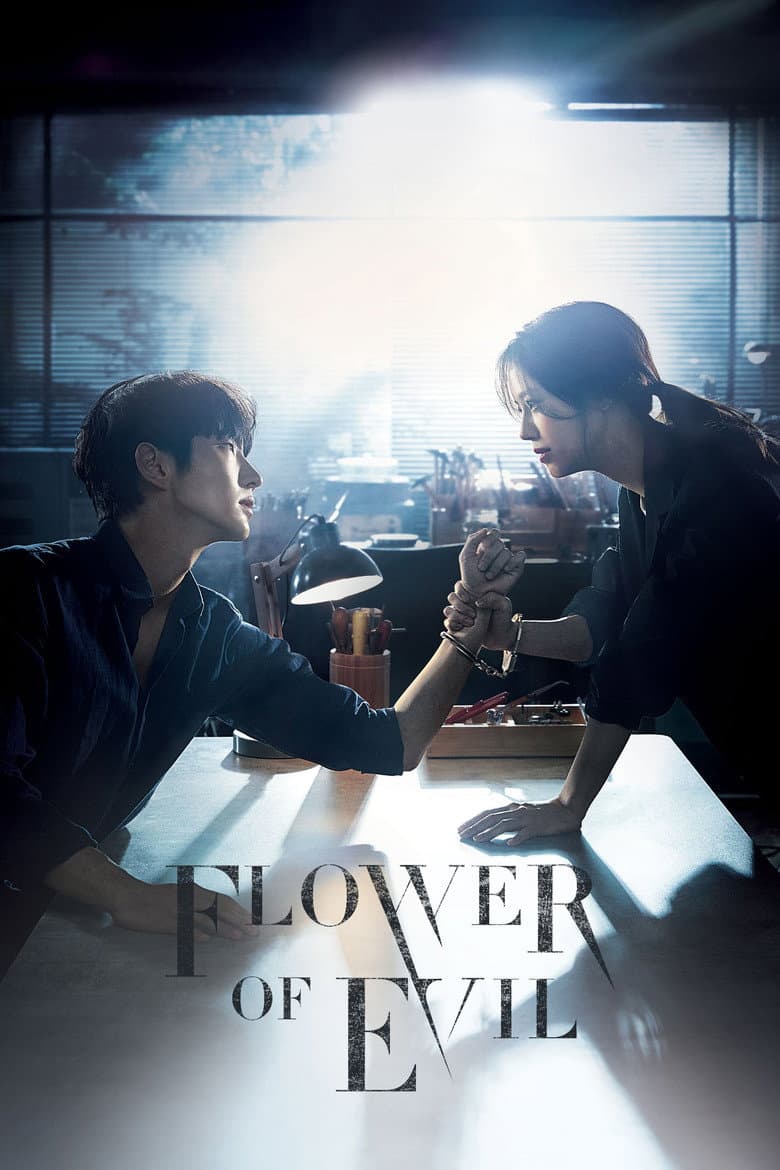
TV Show · 2020
Hiding a twisted past, a man maintains his facade as the perfect husband to his detective wife — until she begins investigating a series of murders.
TV Show · 2026
Wrongfully imprisoned for murdering his own son, a father sets out on a desperate rescue mission after learning the boy may still be alive.
TV Show · 2021
Beneath the sunlit glamour of 1985 L.A. lurks a relentlessly evil serial killer. In this true-crime story, two detectives won't rest until they catch him.
TV Show · 2022
When a man wakes up in the Australian outback with no memory, he must use the few clues he has to discover his identity before his past catches up with him.
