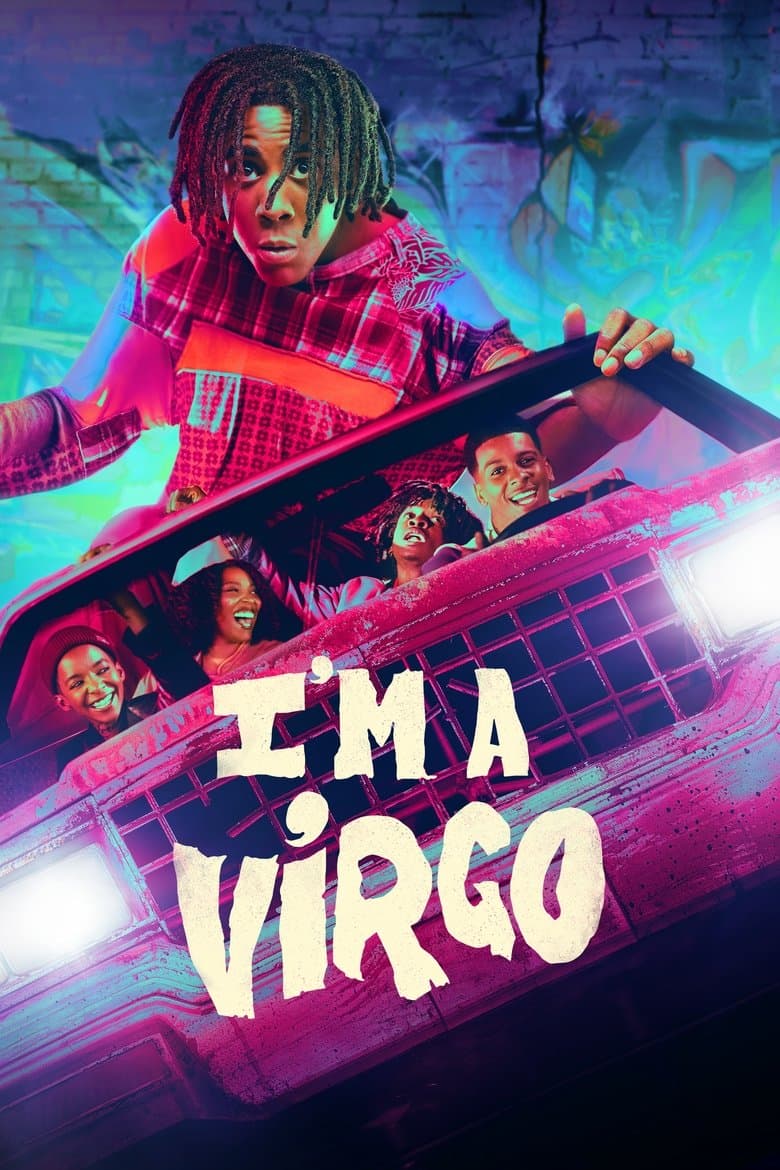
Started June 22, 2023 · Canceled · Based on 1 season, 7 episodes through June 22, 2023 · TV-14
I'm a Virgo follows Cootie, a 13-foot-tall 19-year-old black man who has lived inside a hidden Oakland home since birth. His aunt and uncle fear that police, companies, and the public will hurt or use him, but Cootie wants friends, music, work, sex, and a life outside. He meets Felix, Scat, Jones, and Flora, then becomes tied to The Hero, a rich comic-book owner who acts like a law-and-order superhero. The show mixes wild jokes, romance, cartoons, violence, and body horror with a serious coming-of-age story.
The show makes Cootie's Black body a clear part of its message about how people fear, label, and use black men. Jones is a communist organizer who teaches that capitalism creates low wages, poverty, crime, and unemployment, while the story treats her ideas as useful and leads a protest against a hospital, landlords, and a power company. The Hero stands for private wealth, police power, and superhero stories that defend the law, and the ending changes his mind through Jones's long argument. The main cast is heavily Black, a short scene shows Jones kissing a woman, and the series treats its race and class message as part of the main story.
Community feedback
Was our 91% Woke rating accurate?
Breakdown
These are the editorial factors and ratings behind our score for I'm a Virgo.
Woke representation / casting
The series centers a black hero and gives most major roles to black characters. The main friends, parents, organizers, and love interest form a repeated black-led pattern. The marketing and interviews openly frame Cootie as a black man whose identity changes how the world sees him. Modern Oakland supports the setting, but the strong identity focus is still audience-visible.
68%
Woke political dialogue
Jones calls herself a communist and says workers should control the wealth created by their work. Jones explains that capitalism lowers wages, raises prices, and creates poverty. The show repeats these ideas through protests, rent strikes, and plans to shut down a power company. The finale gives Jones an extended speech that attacks unemployment, police power, and media stories.
77%
Identity-driven story themes
The show links Cootie's giant body to the fear of black men and the way society turns them into threats. The story shows companies, police, hospitals, and media figures using or labeling him. Jones leads the group toward collective action and becomes the clearest voice for the show's social message. The season treats race, class, and unequal treatment as major parts of Cootie's growth.
84%
Western institutional / cultural critique
The story attacks private healthcare after a poor friend is turned away and dies. The story also attacks landlords, power companies, police, and wealthy business owners. The Hero presents law and order as safety, but the show portrays him as protecting a system that creates poverty and crime. The finale directly says superhero stories and news can make workers blame other groups instead of the system.
86%
Woke character or canon changes
Not relevant. The show is an original story with no established characters or real historical figures being changed.
0%
Anti-woke backlash and complaints
A few small X posts linked the show to “woke propaganda” because it has a black cast. Boots Riley said trailer commenters called the show racist and review-bombed IMDb before release. Another reported post described MAGA users calling the series communist in Amazon reviews. No major account or organized campaign appeared.
18%
Creator track record context
Boots Riley has a cached Woke score of 84/100 and a strong history of communist activism and anti-capitalist art. The cached scores for several writers and producers also show repeated race, class, queer, or social-justice work. Some listed creators have low or neutral scores, but the strongest creative voices align closely with the show's content.
76%
Production
TV Show · 2017
Holden wakes up from a coma after 12 years and discovers new abilities that propel him into the middle of a dangerous conspiracy.
TV Show · 2021
On a perilous adventure across a post-apocalyptic world, a lovable boy who's half-human and half-deer searches for a new beginning with a gruff protector.
TV Show · 2016
Hundreds of years from now, the last surviving humans discover the means of sending consciousness back through time, directly into people in the 21st century.
TV Show · 2016
An aging police sheriff who has recently lost his position due to an angry outburst begrudgingly joins an alliance with new sheriff, Evie Barret to battle angry demons haunting…
TV Show · 2018
Two strangers are drawn to a mysterious pharmaceutical trial that will, they're assured, with no complications or side-effects whatsoever, solve all of their problems…

TV Show · 2023
At the brink of going to hell, Yee-jae must cycle through twelve separate lives and twelve separate deaths in this reincarnation drama.

TV Show · 2016
In his quest for a bride to break his immortal curse, a 939-year-old guardian of souls meets a grim reaper and a sprightly student with a tragic past.
TV Show · 2024
Jason Dessen is abducted into an alternate version of his life. To get back to his true family, he embarks on a harrowing journey to save them from the most terrifying foe…
