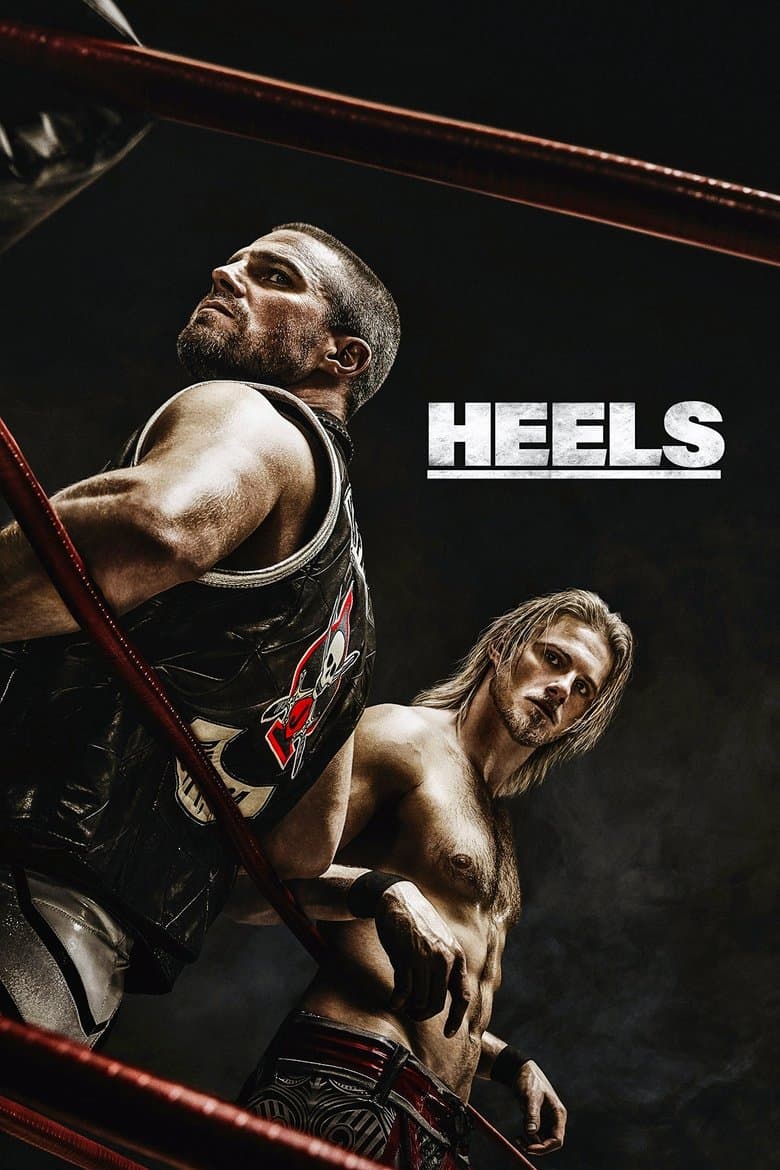
Started August 15, 2021 · Canceled · Based on 2 seasons, 16 episodes through September 15, 2023 · TV-MA
Heels follows Jack and Ace Spade, two brothers who run the Duffy Wrestling League after their father dies. The league operates in a small Georgia town, where the brothers fight over money, control, and their father's legacy. Jack plays the villain, called a heel, while Ace plays the crowd's hero, called a face. Their ring roles slowly mix with real anger, grief, marriage trouble, and hard choices, giving the show a tense and rough family-drama tone.
Crystal Tyler begins as Ace's valet, but she keeps asking to wrestle and proves that she belongs in the ring. She wins the DWL title at the end of season one, and season two makes her the center of a new women's division with another woman wrestler, Elle Dorado. The story clearly supports women getting a fair chance in a male-run wrestling league, and it calls some of the old rules sexist. That message is a repeated subplot, but the main story still follows the brothers, the struggling business, broken father-and-son ties, and the cost of turning private pain into public entertainment.
Community feedback
Was our 35% Woke rating accurate?
Breakdown
These are the editorial factors and ratings behind our score for Heels.
Woke representation / casting
Crystal moves from valet to DWL champion and becomes the lead woman in the league. Season 2 adds Elle Dorado and builds a women’s division around two visible female wrestlers. The show also includes Black and Latino wrestlers, but it does not present the wider cast as a diversity campaign. The gender focus is clear, but most of the casting fits a modern Georgia wrestling setting.
18%
Woke political dialogue
A few scenes use direct gender-politics language. Characters call the old rule about men beating women in the ring sexist, and the promotion discusses fan reaction to that rule. The show does not use repeated speeches about DEI, race, current policy, or party politics.
10%
Identity-driven story themes
Crystal’s fight to stop being a valet and become a wrestler begins in season 1 and continues through season 2. She wins the main title, and her success forces the DWL to create a women’s division. The show presents the change as a fair chance for women and returns to the issue across several episodes. The theme matters, but it remains one major subplot inside a larger family and wrestling story.
34%
Western institutional / cultural critique
The DWL is shown as a male-run workplace that limits Crystal and treats her mainly as a valet. The show calls the old gender rule sexist and shows male pride damaging brothers, marriages, and the wrestling business. Season 2 keeps this conflict alive through the women’s division and Willie’s pressure on Jack. The criticism stays inside wrestling and family drama instead of attacking Western institutions as a whole.
28%
Woke character or canon changes
Not relevant. The series is an original story about the fictional DWL. It does not change an established character, source story, or real historical event.
0%
Anti-woke backlash and complaints
A few small and anonymous X posts called the show more woke over time or blamed its cancellation on being made in woke times. Those posts had little or no engagement and did not lead to a boycott, review campaign, or organized complaint. Fans who posted about a Starz boycott were angry about the cancellation, not about woke content. The evidence is fringe and does not show a broad anti-woke reaction.
10%
Creator track record context
Michael Waldron and Mike O’Malley have low-to-mild available scores and no clear activist record tied to this show. Rodney Barnes, Daria Polatin, and Jessica Lowrey have higher scores because of race, gender, or LGBTQ support work. The other listed writers and producers have low or no recorded activist context. The title’s interviews and story focus on wrestling, family, and character conflict, so the crew history is only supporting context.
26%
Production
TV Show · 2022
Navy SEAL Commander James Reece turns to vengeance as he investigates the mysterious forces behind the murder of his entire platoon.
TV Show · 2016
In 18th-century North America, ruthless trappers and entrepreneurs fight to wrest control of the fur trade from the mighty Hudson's Bay Company.
TV Show · 2022
Dan Chase absconded from the CIA decades ago and now lives off the grid. When an assassin arrives and tries to take Chase out, the old operative learns that to ensure his future…
TV Show · 2022
An MI6 deputy's bright future takes a sharp turn after a reunion with a Russian spy forces him to question his entire life.
TV Show · 2017
Action drama series inspired by the real missions of Navy SEAL Team Six.
TV Show · 2018
When CIA analyst Jack Ryan stumbles upon a suspicious series of bank transfers his search for answers pulls him from the safety of his desk job and catapults him into a deadly…
TV Show · 2022
When a small plane crashes in the middle of the Canadian wilderness, a lone survivor must battle the elements — and her personal demons — to stay alive.
TV Show · 2022
With the aid of unexpected friends, a gifted but introverted student confronts bullies and violent foes — unaware of how dangerous his world will become.
