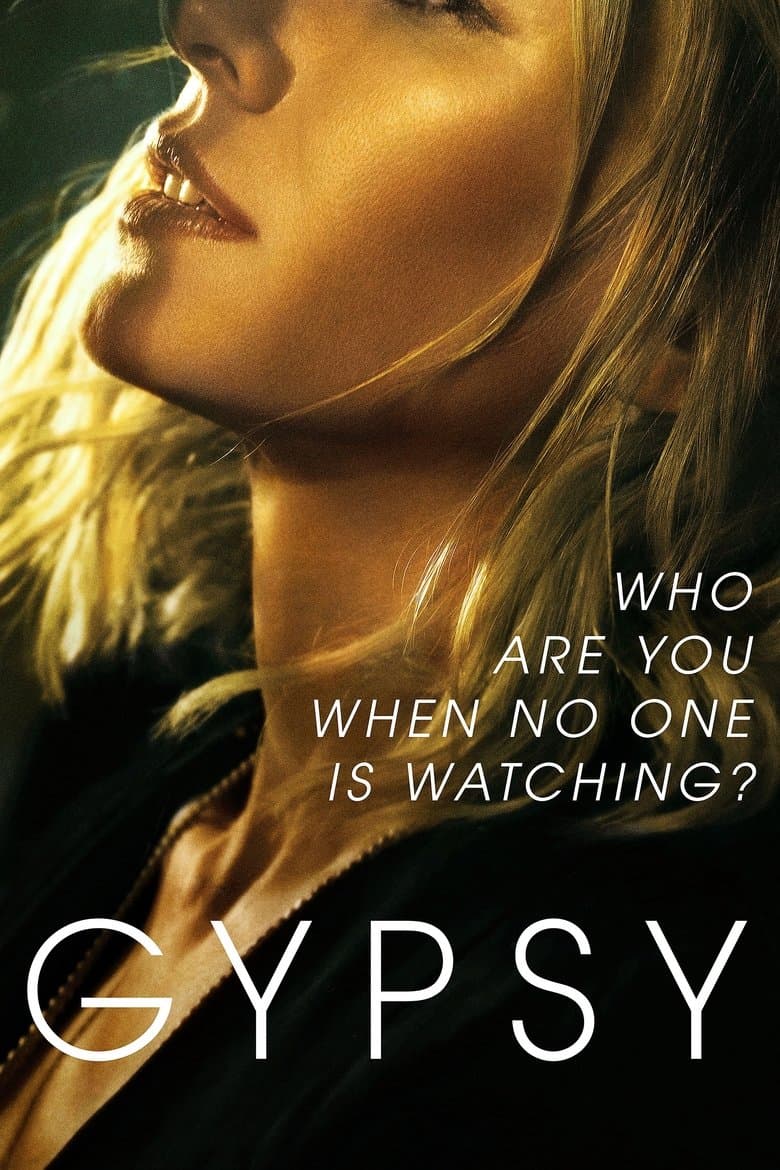
Started June 30, 2017 · Canceled · Based on 1 season, 10 episodes through June 30, 2017 · TV-MA · 51 min
Gypsy follows Jean Holloway, a New York therapist who seems to have a settled life with her husband Michael and their young daughter, Dolly, in a wealthy Connecticut suburb. Jean secretly uses the name Diane to enter the lives of her patients and the people close to them. She becomes obsessed with Sidney, the former girlfriend of one patient, while hiding the affair from her family and bending the rules of her job. The show has a slow, tense, and uneasy tone, with Jean's lies pulling her two lives together.
Jean's affair with Sidney is a major story across the season, and it shows a married woman exploring desire for another woman without choosing a clear label. The show also follows Dolly as she wears boyish clothes, questions normal ideas about being a girl, and kisses a female classmate. Jean often treats family life and the role of a wife and mother as limits that she wants to escape. These identity and gender themes matter to the plot, but the show presents them through a dark story about secrecy, cheating, and control rather than a direct political debate.
Community feedback
Was our 65% Woke rating accurate?
Breakdown
These are the editorial factors and ratings behind our score for Gypsy.
Woke representation / casting
The show puts a woman at the center as a sexually active, morally dark main character. It gives another woman the lead character's main romantic role. Most of the rest of the main cast is white, with Indian and black women in supporting roles. The casting does not show a strong diversity-first pattern, so this is only a weak score.
12%
Woke political dialogue
The school and family scenes directly discuss Dolly's clothing, her kiss with a girl, and whether her behavior says something about gender or sexuality. The adults push against judging or shaming her for those choices. The show does not turn the issue into a wider debate about laws, parties, or activist groups, so the political dialogue is limited.
12%
Identity-driven story themes
The show makes Jean's hidden relationship with Sidney a major plot across the season. Jean is married to a man but uses a false name to pursue a woman, and her refusal to fit one label becomes part of her identity crisis. Jean's daughter Dolly also questions normal ideas about being a girl and shows interest in a girl. These themes drive the season, even though the story presents them through secrecy, cheating, and control rather than a direct rights campaign.
78%
Western institutional / cultural critique
The show repeatedly presents Jean's suburban marriage and role as wife and mother as limits she wants to escape. Other mothers judge Dolly for clothing and behavior that do not fit normal girl roles. The story lets Jean take the selfish sexual freedom that male leads who do bad things often take, while her husband becomes the moral voice. This recurring challenge to traditional gender roles is clear, but the show does not attack Christianity, capitalism, or broad Western institutions.
34%
Woke character or canon changes
Not relevant. Gypsy is an original Netflix drama about Jean Holloway. It does not change an established character, canon, or historical figure.
0%
Anti-woke backlash and complaints
One NewsBusters article called the show a liberal Hollywood product that pushes child sexuality and gender confusion. The writer objected to Dolly kissing a girl, wearing boyish clothes, and Jean's affair with a woman. The supplied X pass found no clear anti-woke reaction, so this appears to be an isolated partisan complaint rather than broad backlash.
24%
Creator track record context
Lisa Rubin has a strong feminist and social-justice record, including support for reproductive rights and help for victims of domestic violence and sexual assault. Rubin's title interviews also stress female desire and a flawed woman at the center. Victoria Mahoney and Coky Giedroyc have strong records around representation, women's rights, and access for marginalized storytellers. The available summaries show little or no matching activist record for Alik Sakharov, Scott Winant, and Sam Taylor-Johnson, so the combined signal is mixed.
48%
Production

TV Show · 2024
Fascinated by cars since childhood, Brazilian racer Ayrton Senna became a sports legend — until tragedy struck, changing Formula 1 forever.
TV Show · 2021
Inspired by the true story of Marty and the therapist who turned his life around...then took it over. When he first meets Dr. Ike, Marty just wants to get better at boundaries.
TV Show · 2019
In the early 1990s in New York, during the height of the crack cocaine epidemic, a visionary musician named Bobby Diggs aka The RZA begins to form a super group of a dozen young…
TV Show · 2022
Oscar-winning producer Al Ruddy’s never before revealed experiences of making the iconic 1972 film The Godfather that Francis Ford Coppola directed and adapted with Mario Puzo.

TV Show · 2026
As the Kargil War erupts between India and Pakistan, the Golden Arrows squadron of the Air Force takes flight on a dangerous mission behind enemy lines.
TV Show · 2021
Follow the Dutton family as they embark on a journey west through the Great Plains toward the last bastion of untamed America.

TV Show · 2026
The Clyburns uproot their comfortable New York City lives to the wild, untamed beauty of Montana's Madison River Valley on a search for connection.
TV Show · 2025
Tells the story of the ascent of the biblical figure, David, who becomes the most celebrated king of Israel. The series follows the once-mighty King Saul as he falls victim to his…
