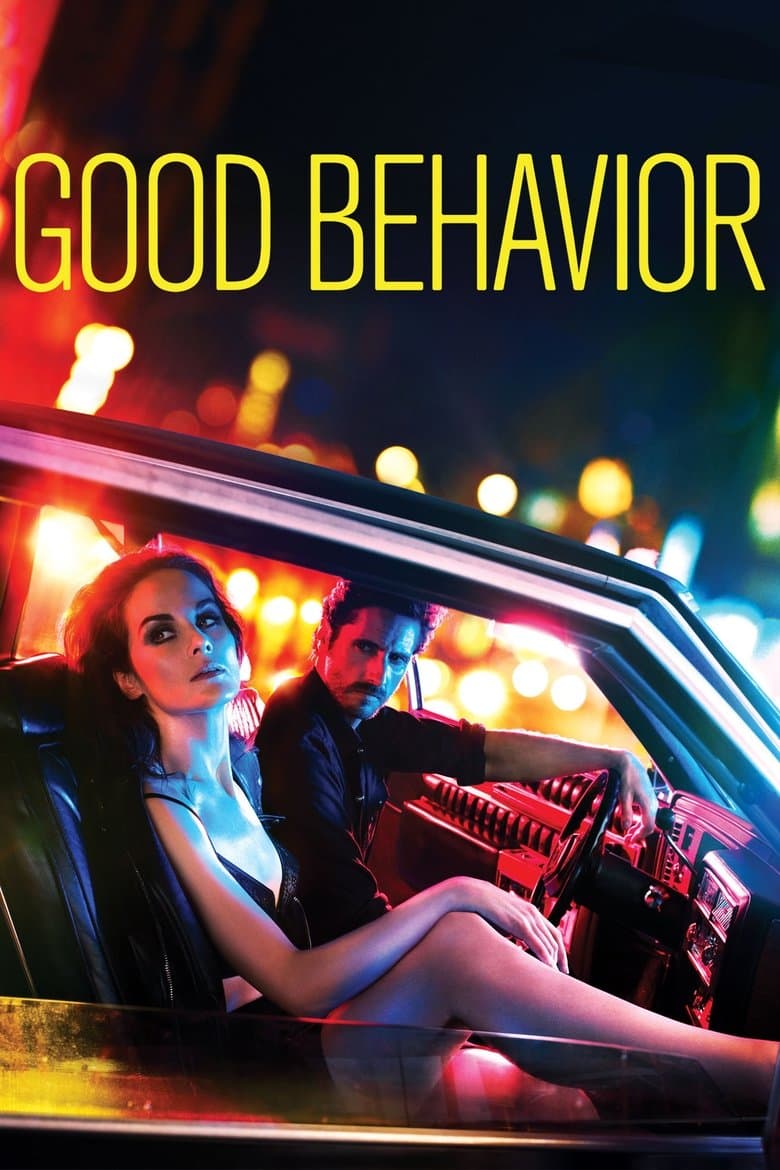
Started November 15, 2016 · Canceled · Based on 2 seasons, 20 episodes through December 17, 2017 · TV-MA · 59 min
Good Behavior follows Letty Raines, a clever thief and con artist who leaves prison early and tries to regain custody of her young son, Jacob. She lives in modern North Carolina and keeps breaking the law while trying to stay sober and build a home. After she overhears a hitman named Javier being hired to kill a woman, she tries to stop the murder and becomes his lover and partner. The show mixes dark crime, sex, family trouble, addiction, sharp humor, and sudden violence.
Letty remains the main driver of the story, and the show gives her a strong female point of view without making her a clean or easy hero. Her continuing struggle is between being a good mother, living by normal family rules, and chasing the danger that makes her feel alive. Season two adds a clear queer and drag-focused story when Letty and Javier rob a gay drag club and spend an episode among drag performers. The story treats that community with respect, but the main plot still centers on crime, addiction, romance, guilt, and family rather than political speeches or a broad campaign about race, class, or institutions.
Community feedback
Was our 35% Woke rating accurate?
Breakdown
These are the editorial factors and ratings behind our score for Good Behavior.
Woke representation / casting
The show centers Letty, a skilled female thief who drives nearly every major choice. Her role is also framed around complex female behavior and a woman’s point of view. Season two gives a full episode to drag performers and a gay club. The wider cast fits a modern crime story and does not form a repeated one-of-each diversity group.
25%
Woke political dialogue
Not present. The dialogue focuses on crime, addiction, family, money, and survival. The show does not use recurring speeches about elections, party politics, or activist causes.
0%
Identity-driven story themes
The show makes Letty’s struggle with being a good woman and mother a continuing thread. Letty pushes against the quiet, normal life expected of her, even as her choices hurt her son and family. Season two adds a full drag-club story that treats queer performers as real people and not just a joke. The identity material is visible, but crime, addiction, romance, and family remain the main story.
40%
Western institutional / cultural critique
The show questions the pressure on Letty to be a clean, quiet, and obedient mother. Letty fights parole rules, custody judgments, and men who try to control her choices. The story also shows rich people and law officers as flawed, but those conflicts mostly serve the crime plot. The series does not build a repeated attack on Christianity, capitalism, or Western institutions.
24%
Woke character or canon changes
Not relevant. The show expands Blake Crouch’s short stories into a longer crime series. No reported identity-based change to the source characters drives the adaptation.
0%
Anti-woke backlash and complaints
Not present. Search results did not show a clear anti-woke campaign against the show. Negative comments focused on adult content, plot logic, and cancellation rather than woke or DEI messaging.
0%
Creator track record context
Chad Hodge has a cached score of 70/100 and an openly gay track record with LGBTQ-focused projects. Blake Crouch has a cached score of 16/100 and little public activist focus. The other cached writers and directors are mostly low or mixed, with a few higher names. The team adds a mild supporting signal led by Hodge rather than a strong group-wide pattern.
27%
Production

TV Show · 2025
When a prison transport plane crashes in the remote Alaskan wilderness—freeing dozens of violent inmates—the region's lone marshal must protect the town he's vowed to keep safe.
TV Show · 2019
The origin story of Bruce Wayne's legendary butler, Alfred Pennyworth, a former British SAS soldier who forms a security company in 1960s London and goes to work with young…

TV Show · 2017
A financial adviser drags his family from Chicago to the Missouri Ozarks, where he must launder $500 million in five years to appease a drug boss.
TV Show · 2022
Bosch is now making a living as a private investigator two years after he quit the LAPD and finds himself working with one time enemy and top-notch attorney Honey “Money”…

TV Show · 2017
Detective John Cardinal attempts to uncover the mystery of what happened to the missing 13-year-old girl whose body is discovered in the shaft-head of an abandoned mine.

TV Show · 2021
The remarkable story of how murderer Charles Sobhraj was captured. As the chief suspect in unsolved murders of young Western travellers across India, Thailand and Nepal’s ‘Hippie…
TV Show · 2019
Within the walls of an interrogation room, London investigators question suspects accused of grievous crimes until the truth comes to light.
TV Show · 2018
A writer gets caught up in a murder investigation involving his mentor, an esteemed American author. Based on the book of the same name, by Joël Dicker.
