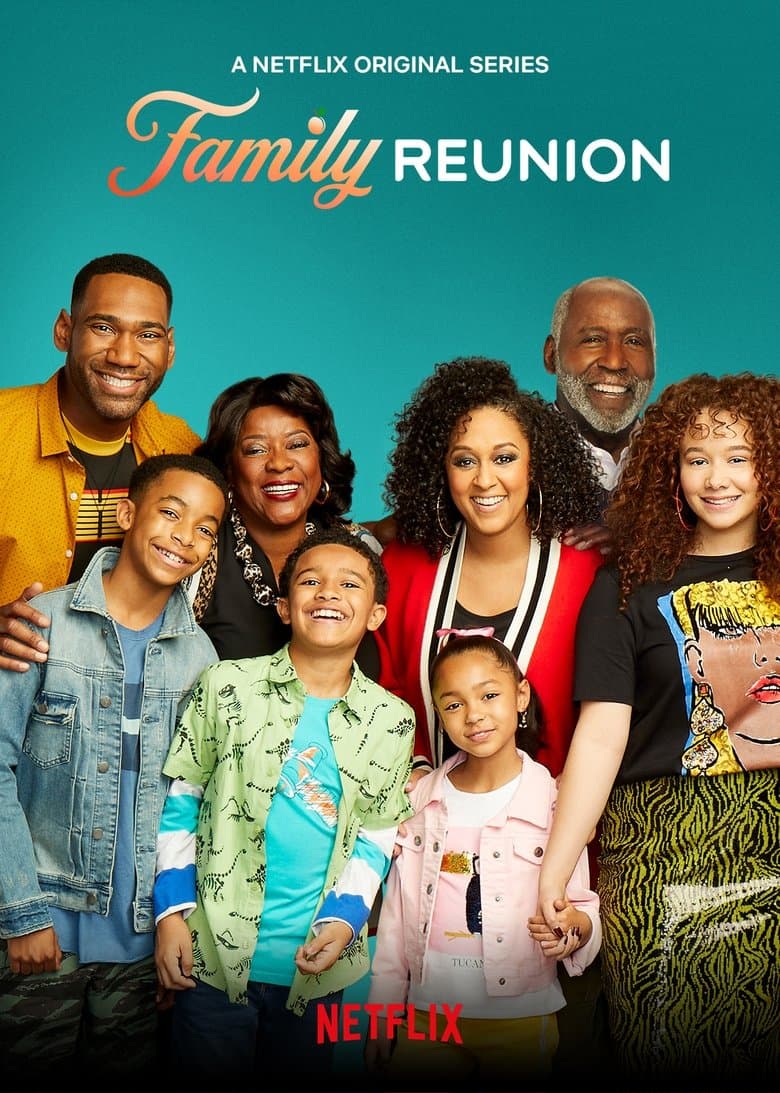
Started July 10, 2019 · Ended · Based on 3 seasons, 44 episodes through October 27, 2022 · TV-PG · 30 min
Family Reunion follows Cocoa and Moz McKellan and their four children after they leave Seattle for Moz’s hometown of Columbus, Georgia. The parents hope that living near Moz’s parents will give the children a stronger family life. Their oldest daughter Jade misses her old life while the younger children adjust to a strict grandmother, a church-centered town, and a large extended family. The show uses a warm, broad sitcom tone, with jokes about parenting, dating, money, school, faith, and growing up.
Across the three released seasons, the family learns about black history, family roots, and life in the South. Jade is pushed to learn about the Black Panthers, a police stop becomes a lesson about how black boys are treated, and later stories cover protest, racist remarks, and land taken from black ancestors. The show also discusses skin-color unfairness and interracial dating, while a gay cousin receives family support after sharing his identity. These subjects return in short stories that teach a lesson, but family love and faith remain the main message.
Community feedback
Was our 54% Woke rating accurate?
Breakdown
These are the editorial factors and ratings behind our score for Family Reunion.
Woke representation / casting
Not present. The central family and its relatives are black because the story is about a black family in Georgia. The cast does not show an engineered mixed group or a clear setting mismatch.
0%
Woke political dialogue
The show has direct talk about black history and present race issues. A first-season story links a police encounter with the fear that black boys may be treated as suspects, and Jade is pushed to learn about the Black Panthers. Later episodes show a protest to save a historic hotel, racist remarks at school, and a fight over land taken from black ancestors. These issues return in separate episodes, but most scenes remain family comedy rather than political debate.
45%
Identity-driven story themes
The show repeatedly makes black identity, history, and family roots part of character growth. Jade moves from feeling out of place in Georgia to embracing black history, while stories discuss light skin, beauty standards, interracial dating, and racial insults. A gay cousin gets a short coming-out story and support from relatives, but he is not a main character. These themes shape several episodes and the final land story, although the main plot stays about family life.
50%
Western institutional / cultural critique
The show often contrasts Cocoa’s talk-first parenting with M’Dear’s older discipline and strict family rules. Some episodes question spanking, old gender roles, and the idea that men must hide fear or weakness. The show also jokes about church people and presents protest as a good way to protect local history. At the same time, church, marriage, parents, and family ties are mostly shown as good and useful, so the critique stays mild.
25%
Woke character or canon changes
Not relevant. The show is an original sitcom and does not adapt a known story, established character, or real historical figure as its main cast.
0%
Anti-woke backlash and complaints
A right-leaning review objected to the first-season police story as a Black Lives Matter narrative and said the episode pushed a race-based message. A few small online posts also called the show propaganda or complained about a gay episode. The separate X pass found only one parent-style complaint with no likes or reach. No boycott, large campaign, or review-bombing was reported.
15%
Creator track record context
Meg DeLoatch has a strong public record of supporting racial representation. She built an all-black writers room for this show and said it should help viewers learn black history and see black family life. The other writers, directors, and producers have mixed public records, and most have little recorded activist work. The creator’s strong role raises this factor, but the wider crew keeps it below the high range.
55%
Production
TV Show · 2016
Maya DiMeo is a mom on a mission who will do anything for her husband, Jimmy, and kids Ray, Dylan, and JJ, her eldest son with special needs.

TV Show · 2018
Lifelong best friends Alexa and Katie are eagerly anticipating the start of their freshman year of high school.

TV Show · 2021
Follow Jeremy Clarkson as he embarks on his latest adventure, farming. The man who on several occasions claims to be allergic to manual labour takes on the most manually labour…

TV Show · 2016
A dad finds out that parenting is harder than he thought after his wife goes back to work and he's left at home to take care of the kids.

TV Show · 2025
As Christmas approaches, a blundering-all-the-way dad juggles housesitting a posh London penthouse with an unexpected pickle: caring for a lost baby.
TV Show · 2016
Being a pro athlete didn't pan out for Colt. Now he's helping his dad and brother keep the ranch afloat, and figuring out how he fits into the family.
TV Show · 2024
John Taylor lives in quiet solitude, designing puzzles for a living, under the nom-de-plume of 'Ludwig'. When his identical twin, James, disappears off the face of the earth, John…
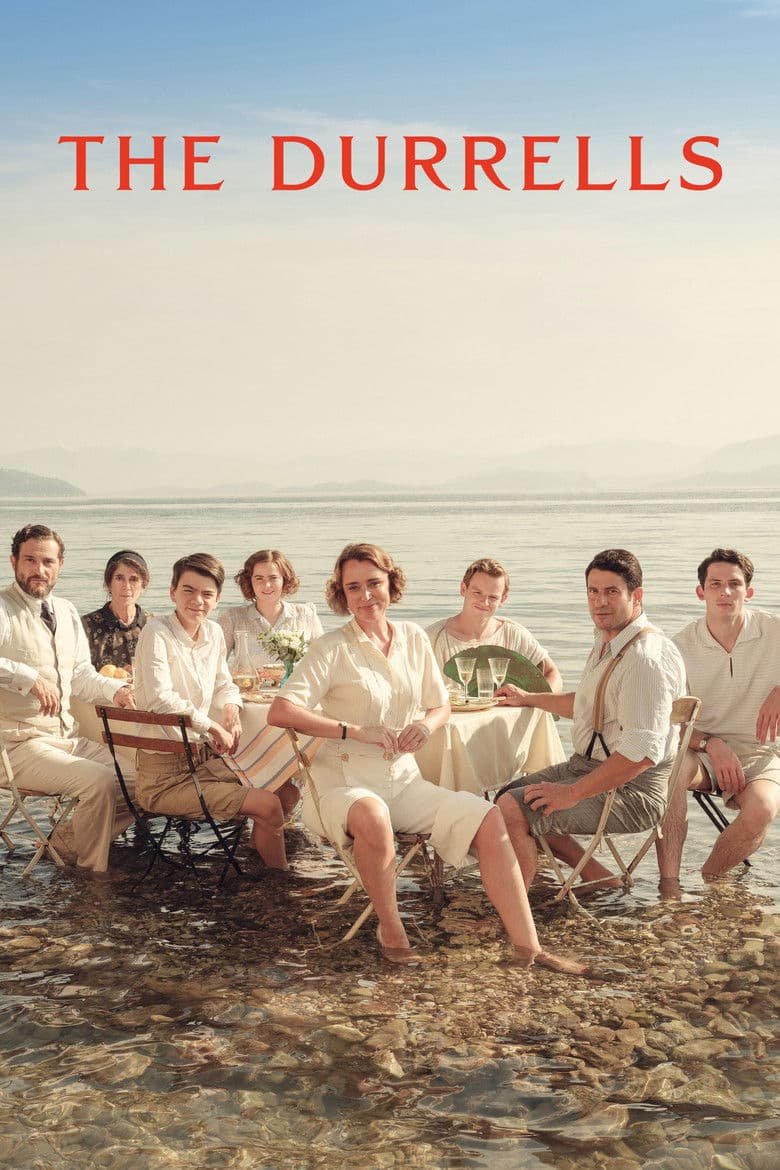
TV Show · 2016
In 1935, financially strapped widow Louisa Durrell, whose life has fallen apart, decides to move from England, with her four children (three sons, one daughter), to the island of…
