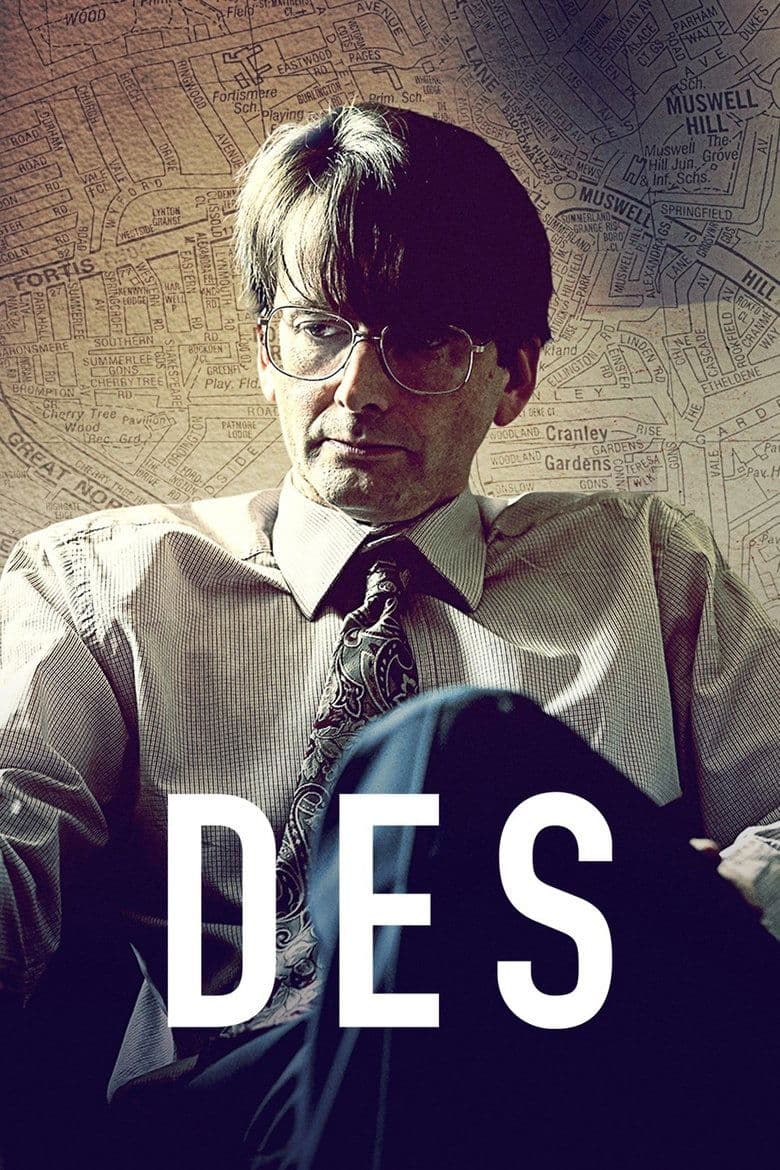
Started September 14, 2020 · Ended · Based on 1 season, 3 episodes through September 16, 2020 · TV-14 · 48 min
Des follows Dennis Nilsen after police find human remains in the drains of his North London flat in 1983. Nilsen calmly admits that he killed many young men, while DCI Peter Jay works to identify the victims and build a case. Writer Brian Masters also visits Nilsen in prison and studies his past for a book. The three episodes move from arrest to investigation to trial, and the tone stays cold, quiet, and deeply disturbing.
The show gives repeated attention to homeless and isolated men who were easy for Nilsen to target. It shows how police dismissed an attempted murder as a lovers' quarrel because it involved two men, and it shows newspapers using gay stereotypes around the case. The opening links the story to unemployment, poverty, and the lack of a shared duty to protect vulnerable people. These ideas shape the whole series, but the main focus remains the killer's crimes, the police work, and the trial rather than a broad identity or activist campaign.
Community feedback
Was our 38% Woke rating accurate?
Breakdown
These are the editorial factors and ratings behind our score for Des.
Woke representation / casting
Not present. The main roles are based on real British men, and the show does not make diversity-first casting part of its message.
0%
Woke political dialogue
The opening uses Margaret Thatcher's words about there being no society over images of unemployment and homelessness. The police later argue about money, reputation, and manpower while victims remain unidentified. The show links those failures to the way vulnerable men were overlooked. The dialogue stays tied to the 1980s case and does not become repeated current political speeches.
24%
Identity-driven story themes
The show repeatedly presents gay and homeless men as vulnerable victims. The press treats the case through harmful ideas about gay men, and the police dismiss one survivor's report as a lovers' quarrel. The series treats the victims as innocent people rather than blaming their identity or lifestyle. These themes recur across the three episodes, but the main story remains the arrest and trial.
34%
Western institutional / cultural critique
The opening links the murders to unemployment, poverty, homelessness, and Margaret Thatcher's view of society. The police later face pressure to limit the investigation because more work would cost money. The press and police fail to protect vulnerable men, especially when gay relationships are involved. This criticism shapes all three episodes, but it stays tied to the real case and period.
39%
Woke character or canon changes
Not relevant. The show dramatizes a real case and keeps the known people and events without an identity-based rewrite.
0%
Anti-woke backlash and complaints
Not present. Public reviews and viewer posts mostly praised Tennant or debated how the show treated victims. No meaningful anti-woke complaints about DEI, identity politics, or representation appeared in the reviewed coverage.
0%
Creator track record context
Lewis Arnold, Luke Neal, Kelly Jones, and Brian Masters have low cached scores and no strong activist record. Most of the other cached producers also have low scores and no identity-first public profile. David Tennant has a high cached score because he is a strong LGBTQ and trans-rights ally. That supporting context raises this factor, but the show itself is a true-crime drama rather than an identity campaign.
32%
Production
TV Show · 2019
Erica Shepherd is a brilliant former CIA operative, now known as the most notorious traitor in American history serving life in a Supermax prison.

TV Show · 2018
Alex Godman, the English-raised son of Russian mafia exiles, has spent his life trying to escape the shadow of their past, building his own legitimate business and forging a life…
TV Show · 2018
The harrowing true story of the 1993 standoff between the FBI, ATF and the Branch Davidians, a spiritual sect led by David Koresh in Waco, TX that resulted in a deadly shootout…
TV Show · 2023
Follows rookie police officers working in Belfast, a city in which being a frontline response cop comes with unique pressures and dangers.
TV Show · 2022
New York mafia capo Dwight "The General" Manfredi is released from prison after 25 years and exiled by his boss to set up shop in Tulsa, Oklahoma.
TV Show · 2018
Ray Shoesmith is a father, ex-husband, boyfriend and best friend: tough roles to juggle in the modern age. Even harder when you’re a criminal for hire.
TV Show · 2022
A prisoner on death row in the US, a vicar in a quiet English town, and a maths teacher trapped in a cellar cross paths in the most unexpected way.
TV Show · 2020
A detailed account of the McDonald's Monopoly game scam during the 1990s as told by the participants in the case, including the prizewinners and the FBI agents who caught the…
