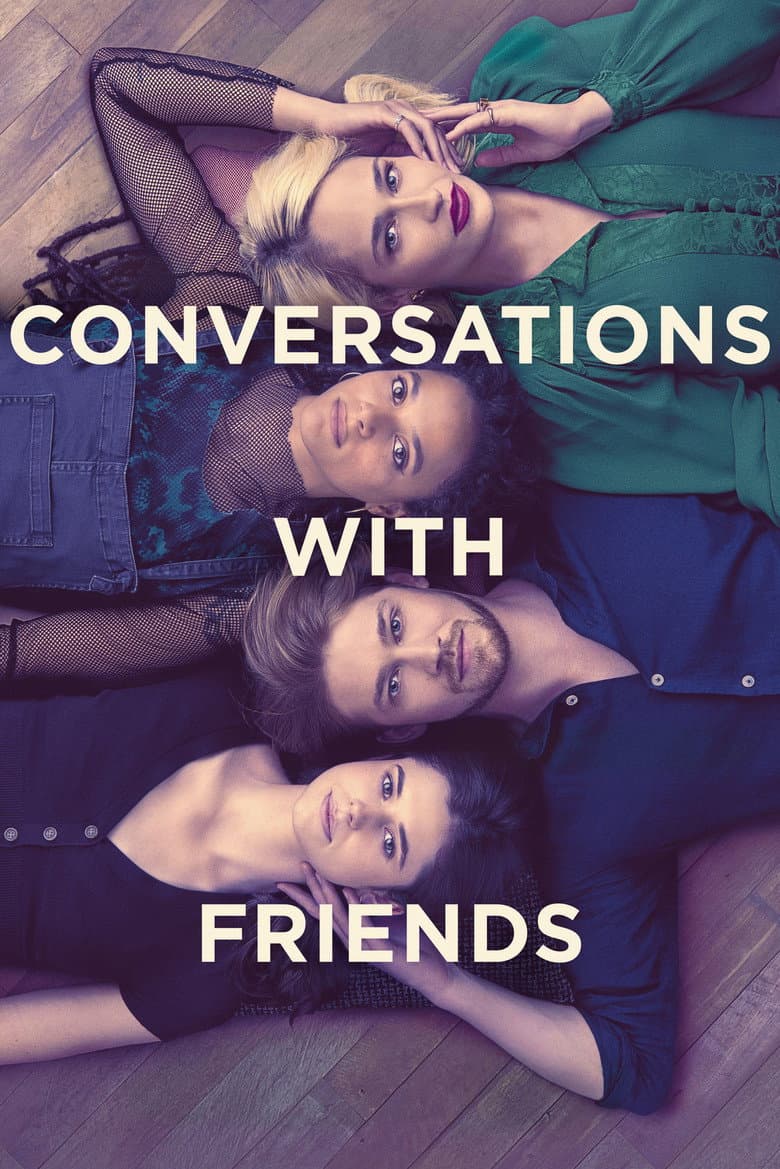
Started May 15, 2022 · Ended · Based on 1 season, 12 episodes through May 15, 2022 · TV-MA · 30 min
Frances is a quiet 21-year-old college student and poet in Dublin. She and Bobbi, her lesbian ex-girlfriend and closest friend, meet writer Melissa and her actor husband Nick. Frances starts a secret affair with Nick, which harms both couples and forces her to face her fear of honest talk. The show has a slow, serious tone and spends most of its time on desire, shame, money, illness, and mixed loyalties.
The main woke element is the show's open focus on bisexual and lesbian love. Frances and Bobbi kiss, sleep together, and reunite near the end, while the final scene leaves open a life with both Bobbi and Nick. The story also questions marriage and one-partner rules, and it lets Melissa consider a three-person arrangement instead of ending her marriage. Political talk includes communism, class, Dublin's whiteness, straight actors in gay roles, and "cis-het" language, but these points appear far less often than the relationship drama.
Community feedback
Was our 88% Woke rating accurate?
Breakdown
These are the editorial factors and ratings behind our score for Conversations with Friends.
Woke representation / casting
The show changes Bobbi from a white woman in the novel to a black American woman in a leading role. Sasha Lane is also queer and was promoted as a lesbian actor playing a lesbian character. Modern Dublin can support a mixed cast, but this visible race change and identity-based framing make representation a clear production choice.
42%
Woke political dialogue
The first episode calls Frances a communist and talks about books as products sold for profit. Bobbi challenges a straight actor for playing a gay part and objects when bisexuality is treated as a step toward being gay. She later calls Nick "cis-het" and frames Frances's jealousy claim as homophobic. The dialogue also remarks on Dublin's whiteness, but most episodes focus on romance.
38%
Identity-driven story themes
Frances is bisexual, Bobbi is lesbian, and their past and renewed romance sit at the heart of the full season. The show treats their kissing, sex, jealousy, and love as normal parts of the main relationship web. Frances's affair with Nick does not erase her bond with Bobbi, and the ending leaves room for love with both. Frances's endometriosis also becomes a major late-season story about female pain and care.
82%
Western institutional / cultural critique
The story repeatedly tests marriage, one-partner relationships, and the idea that one person should meet every need. Melissa accepts Nick continuing his affair with Frances. The finale suggests that Frances may keep both Bobbi and Nick in her life. The show also presents the betrayal and pain caused by cheating, so its challenge to tradition is strong but not one-sided.
58%
Woke character or canon changes
The adaptation changes Bobbi from a white woman in the novel to a black American woman in the series. Bobbi is one of four main characters, so the race change is visible throughout. The story gives no plot reason for her new racial identity, and coverage named it as the biggest character change. The queer relationships and ending largely follow the book.
44%
Anti-woke backlash and complaints
A Washington Examiner review attacked the leads' politics and singled out communism, "cis-het" language, and talk about Dublin's whiteness. A few user reviews also called the story too woke or complained about modern feminism and communism. Most wider viewer anger focused on slow pacing, weak chemistry, and unlikeable characters instead. The anti-woke backlash was real but limited.
30%
Creator track record context
The cached writer scores range from 42 to 70. Stanton, Birch, O'Halloran, Rooney, and McHugh have repeated work on race, feminism, queer identity, class, and left politics. The director scores are mixed at 33 and 8, and most producer scores are low to moderate. Emma Norton is the main producer exception at 57 because of her female representation work.
55%
Production
TV Show · 2022
This sweeping saga chronicles the hopes and dreams of a Korean immigrant family across four generations as they leave their homeland in an indomitable quest to survive and thrive.
TV Show · 2020
A wary CIA officer investigates a charismatic man who sparks a spiritual movement and stirs political unrest. Who exactly is he? And what does he want?
TV Show · 2024
In Japan in the year 1600, at the dawn of a century-defining civil war, Lord Yoshii Toranaga is fighting for his life as his enemies on the Council of Regents unite against him…
TV Show · 2025
Tells the story of the ascent of the biblical figure, David, who becomes the most celebrated king of Israel. The series follows the once-mighty King Saul as he falls victim to his…
TV Show · 2026
As the Kargil War erupts between India and Pakistan, the Golden Arrows squadron of the Air Force takes flight on a dangerous mission behind enemy lines.
TV Show · 2021
Inspired by the true story of Marty and the therapist who turned his life around...then took it over. When he first meets Dr. Ike, Marty just wants to get better at boundaries.
TV Show · 2019
The true story of one of the worst man-made catastrophes in history: the catastrophic nuclear accident at Chernobyl.
TV Show · 2019
In the early 1990s in New York, during the height of the crack cocaine epidemic, a visionary musician named Bobby Diggs aka The RZA begins to form a super group of a dozen young…
