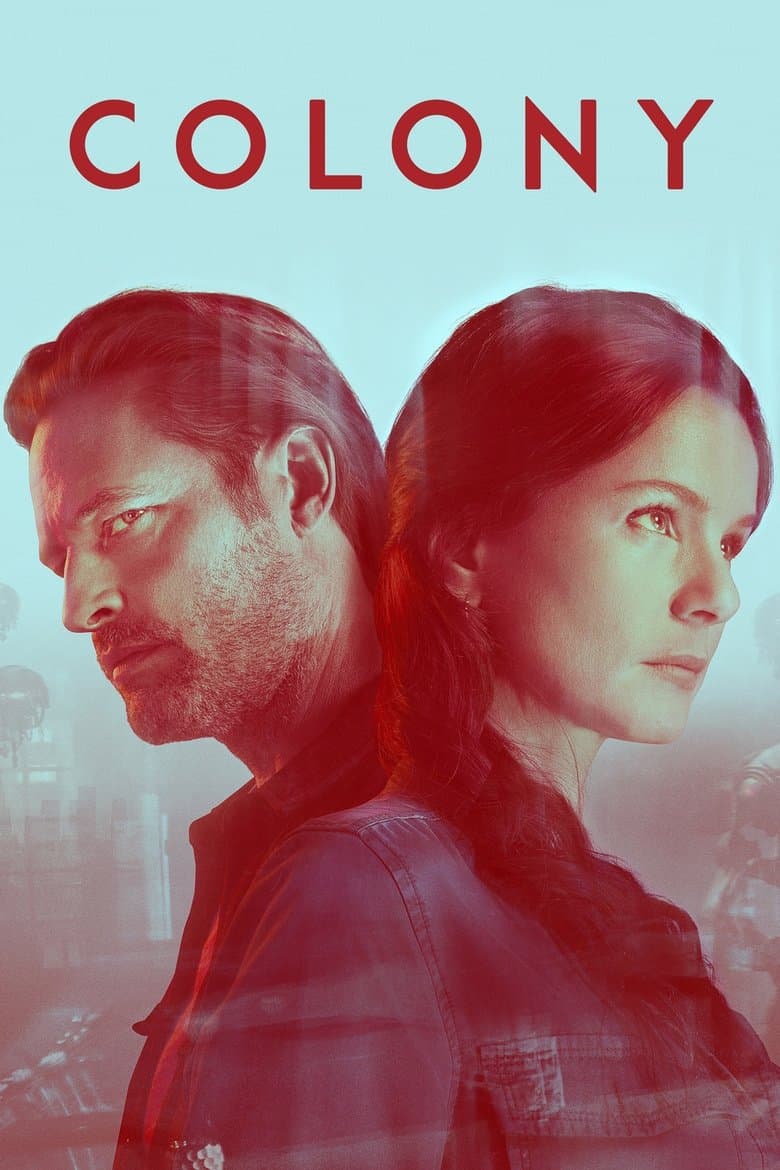
Started January 14, 2016 · Based on 3 seasons, 36 episodes · TV-14 · 43 min
Colony is a TV show about a family living in Los Angeles after aliens take over the city. Will and Katie Bowman try to protect their children while walls, drones, and local police called Redhats control daily life. Will works with the occupation forces so his family can stay safe. Katie secretly helps the Resistance. Across three seasons the story follows survival, trust, and loyalty, later moving into wilderness Resistance work and then Seattle under a tight new system of control.
The show is mainly about life under occupation and the hard cost of working with power or fighting it. Creators framed it like daily life in occupied Paris, and some viewers also saw links to modern wars and security states. The cast includes several strong black male roles in a modern Los Angeles setting, but the dual white leads still drive the plot. There is little identity politics speech, no confirmed LGBTQ storylines, and no rewrite of older characters for diversity goals. Faith language shows up when a Host-backed cult uses it as a tool of control, not as sincere Christian worship at the center of the story.
Community feedback
Was our 18% Woke rating accurate?
Breakdown
These are the editorial factors and ratings behind our score for Colony.
Woke representation / casting
The modern Los Angeles cast includes several highly competent black male roles that fit the setting. Dual white leads still drive the main story. There are no race or gender swaps of legacy figures. The show was not sold as DEI casting.
12%
Woke political dialogue
Talk focuses on occupation, collaboration, resistance, family survival, and security-state tools such as Redhats, drones, and the Factory. Some modern Homeland and surveillance echoes appear. The scripts do not push identity, DEI, race, gender, or queer activist speech.
8%
Identity-driven story themes
The main arcs are family under alien rule and the moral cost of collaboration versus resistance. Katie leads in the Resistance because the plot needs her skill, not as an identity campaign. No confirmed LGBTQ identity plotlines drive the series.
10%
Western institutional / cultural critique
The drama hits hard against tyranny through proxy government, surveillance, and labor camps. Some viewers also read Iraq and Afghanistan occupation parallels and a U.S. security-state parable. That is mild modern institutional resonance, not a campaign against masculinity, patriarchy, whiteness, or colonial guilt. The Greatest Day cult uses faith language as a collaboration tool rather than a long anti-Christian attack.
18%
Woke character or canon changes
Not relevant. This is an original series, not an adaptation rewritten for identity or DEI reasons.
0%
Anti-woke backlash and complaints
Not present. No meaningful anti-woke or DEI backlash was found. Public frustration focused on cancellation and the Season 3 cliffhanger.
0%
Creator track record context
Cached team scores are mostly low for Cuse, Holloway, Tooke, and most writers. Ryan Condal’s higher later score from House of the Dragon diversity framing modestly raises the weighted context. That later persona does not match how Colony itself was written or sold.
20%
Production
TV Show · 2022
Irene and Franklin York, a retired couple, have a secret: a Chamber buried in their backyard that miraculously leads to a strange, deserted planet.

TV Show · 2016
In his quest for a bride to break his immortal curse, a 939-year-old guardian of souls meets a grim reaper and a sprightly student with a tragic past.

TV Show · 2023
At the brink of going to hell, Yee-jae must cycle through twelve separate lives and twelve separate deaths in this reincarnation drama.
TV Show · 2017
Holden wakes up from a coma after 12 years and discovers new abilities that propel him into the middle of a dangerous conspiracy.
TV Show · 2024
Jason Dessen is abducted into an alternate version of his life. To get back to his true family, he embarks on a harrowing journey to save them from the most terrifying foe…
TV Show · 2016
Kyle Barnes has been plagued by possession since he was a child. Now an adult, he embarks on a spiritual journey to find answers, but what he uncovers could mean the end of life…
TV Show · 2016
A disgraced, 75-year-old ex-sheriff, whose life ends at the hands of corrupt cops, is brought back to life and given a second chance by a pair of young tech scientists, as a…
TV Show · 2020
A unique story told over two distinct halves, "Summer" follows Sam, a man drawn to a mysterious island off the British coast where he encounters a group of islanders set on…
