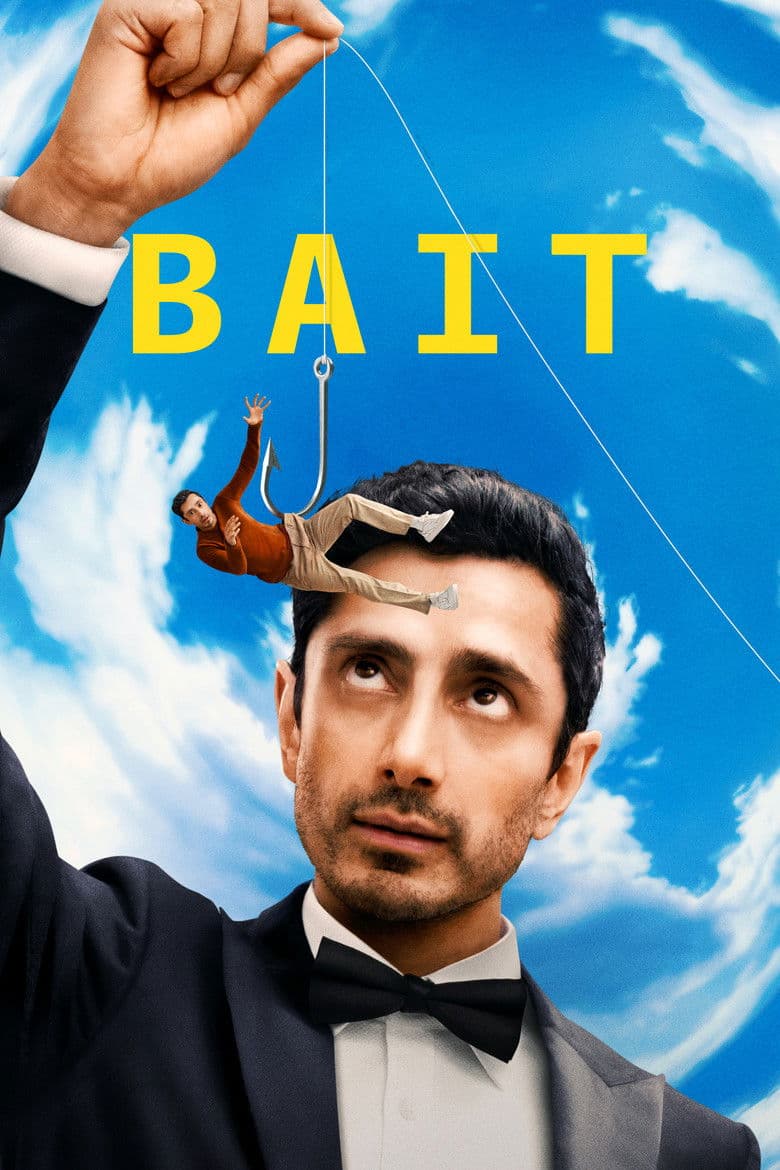
Started March 25, 2026 · Ended · Based on 1 season, 6 episodes through March 25, 2026 · TV-MA
Bait follows Shah Latif, a broke London actor who blows a James Bond audition and then lets a leaked photo make people think he may be the next 007. The rumor brings fame, threats, security guards, family pressure, and a second chance. Shah spends four wild days moving between film sets, a museum gala, Eid gatherings, an ex-girlfriend, and a strange search for his missing family. The show mixes sharp comedy, family drama, spy thrills, and a dark mental crisis.
The main woke element is the show's focus on Shah as a British-Pakistani Muslim actor trying to enter a role tied to white British power. The story returns to racism, anti-Muslim hate, Ramadan, Eid, family pressure, and the demand to prove that a brown man can represent Britain. A museum speech, a debate about a brown Bond, a pig's-head hate crime, and Yasmin's attack on Bond as a white establishment icon make identity politics visible across the season. The show also mocks Shah's hunger for approval, so it is not a simple hero story and often treats his public claims as part of his breakdown.
Community feedback
Was our 82% Woke rating accurate?
Breakdown
These are the editorial factors and ratings behind our score for Bait.
Woke representation / casting
The series builds its main cast around a British-Pakistani Muslim family and a possible brown Bond. The story and marketing repeatedly present the Bond casting as a visible representation issue, not only as a normal acting job. The London setting explains most of the South Asian roles, which keeps the score below a dominant level.
49%
Woke political dialogue
The show includes repeated spoken discussion of race, representation, belonging, and who counts as British. A museum speech follows racist abuse against Shah's family and argues that people of color belong in British spaces. Yasmin's article calls Bond a white establishment symbol, and the characters joke about gender equality and a white neo-colonial MI6 agent. These lines appear in several episodes but share space with comedy and character conflict.
54%
Identity-driven story themes
The series makes Shah's British-Pakistani and Muslim identity the main subject of the Bond story. The rumor turns race, faith, belonging, fitting in, and public acceptance into the continuing conflict. The season shows Ramadan, Eid, racist abuse, a pig's-head hate crime, family pressure, and Shah's fear that success requires him to hide parts of himself. The final episodes tie his mental collapse to that search for identity.
78%
Western institutional / cultural critique
The show treats the Bond role as a symbol of white British power, old ideas of alpha masculinity, and cultural acceptance. A museum gala is linked to colonial history, and a protest outside challenges the institution's past. Yasmin calls Bond a white establishment icon and says Shah may be trying to become the oppressor to free his own people. The entertainment business is also shown as a racist system that gives limited space to British Asian actors.
57%
Woke character or canon changes
Not relevant. The show does not rewrite a Bond film or change an established Bond story. It shows a possible future casting and uses the debate as a story device.
0%
Anti-woke backlash and complaints
Small X replies called the possible brown or Muslim Bond “woke shite,” a “DEI quota,” or “force diversity.” One low-reach viewer called the lead a “victimized Muslim” and called the first Prime episode woke garbage. The posts had almost no likes or reach, and no review-bombing, boycott, or large right-wing campaign was reported.
18%
Creator track record context
Riz Ahmed has a cached score of 79/100 and a long record of work about Muslim identity, racism, migration, and representation. Bassam Tariq has a cached score of 58/100, while writers Dipika Guha and Azam Mahmood have strong records of identity and cultural themes. Nikesh Shukla has a cached score of 82/100, and Ben Karlin and Prashanth Venkataramanujam are linked to left-leaning political satire. Tom George and several producers have little such record, so the team is mixed but its main creative voices lean strongly toward identity-focused work.
64%
Production
TV Show · 2018
Two strangers are drawn to a mysterious pharmaceutical trial that will, they're assured, with no complications or side-effects whatsoever, solve all of their problems…
TV Show · 2026
After accidentally creating a new multiverse, comic book store owner Stuart Bloom must locate a quantum-interference device to restore reality.
TV Show · 2022
The intricate and magical love story of Clare and Henry, and a marriage with a problem… time travel.
TV Show · 2022
Gary is an emotional wreck and struggles to provide for his daughter since the death of his wife. Mary has a secret she can't bring herself to share with anyone.
TV Show · 2017
Set in a near-dystopian future, a former cop is forced to take part in a death race where the cars run on human blood. You lose a leg and you lose your head.
TV Show · 2016
In the near future a family must make difficult decisions as they balance staying together with trying to survive.
TV Show · 2023
Aster Calyx and Halan Kai Nielsen are inextricably drawn to Beacon 23. Navigating one threat after another, they unravel the beacon’s mysteries, just in time to face their most…
TV Show · 2016
An aging police sheriff who has recently lost his position due to an angry outburst begrudgingly joins an alliance with new sheriff, Evie Barret to battle angry demons haunting…
