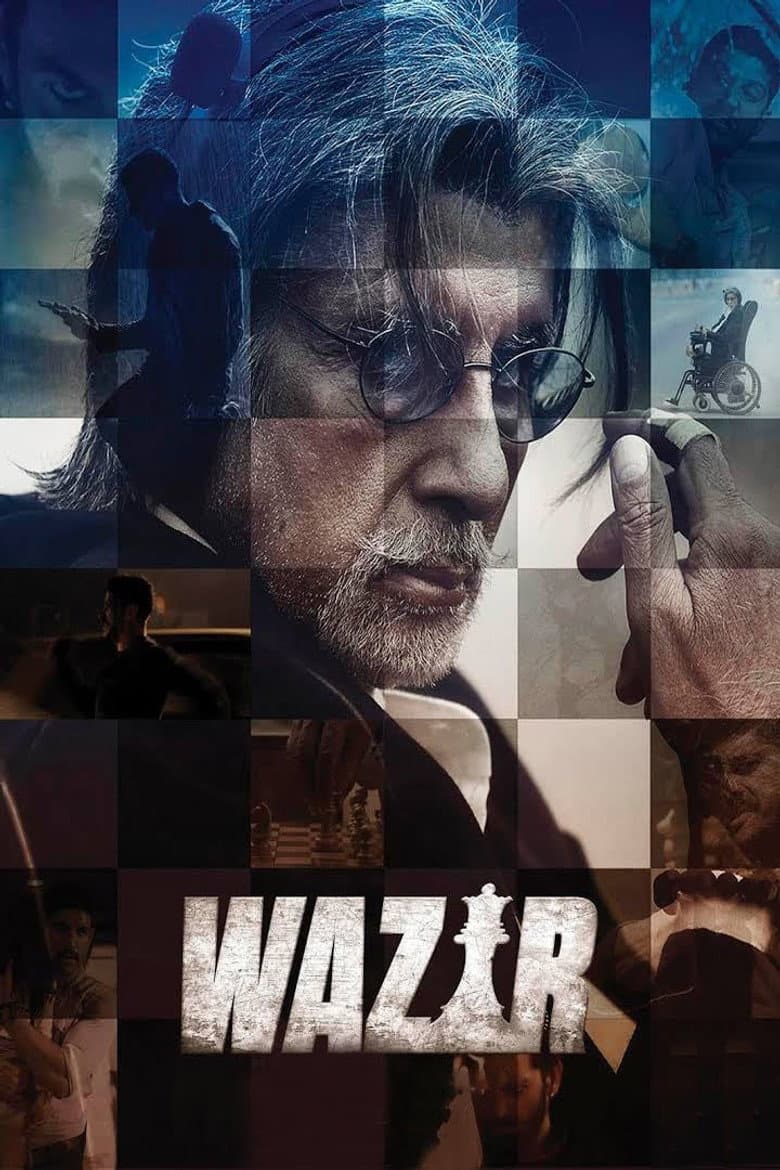
Daanish Ali is an Anti-Terrorism Squad officer in New Delhi whose young daughter dies during a gunfight with a terrorist. His wife blames him, and his bosses suspend him after he kills the terrorist against orders. Daanish then meets Omkar Nath Dhar, a wheelchair-using chess master and a grieving Kashmiri Pandit. Their friendship pulls them into a dangerous hunt involving a murdered girl, a powerful minister, and a killer called Wazir, while the story later moves to Kashmir. The film has a dark, tense thriller tone, with family grief, revenge, chess games, and action driving the plot. The film gives major roles to a Muslim police officer and a Kashmiri Pandit who join forces after personal losses. Dhar’s home, family loss, and memories of violence in Kashmir matter to the mystery, but the film treats them as parts of a revenge story. The story also centers a disabled chess master, although an actor who is not disabled plays the role. Daanish and Dhar’s different backgrounds add weight to their friendship, while grief, loyalty, and revenge remain the main concerns. The film keeps the audience focused on their chess games, family pain, and fight against a powerful terrorist-linked politician.
Community feedback
Was our 21% Woke rating accurate?
Breakdown
These are the editorial factors and ratings behind our score for Wazir.
Woke representation / casting
The central disabled character is played by an actor who is not disabled, making disability representation a visible casting issue. A Muslim ATS officer and a Kashmiri Pandit lead the story, but those choices fit the setting and the plot. The film does not frame its cast as a diversity campaign. The casting signal is limited to that one prominent role.
18%
Woke political dialogue
Not present. The film’s lines discuss terrorism, elections, government pressure, and private revenge. They do not push modern identity, gender-role, DEI, or activist ideas.
0%
Identity-driven story themes
The story uses the friendship between a Muslim ATS officer and a Kashmiri Pandit as a visible part of its central mystery. Dhar’s memories of losing his home and family in Kashmir shape his revenge. The film presents these details as personal grief and a crime plot, not as a current activist campaign. The identity-driven element is clear but limited.
18%
Western institutional / cultural critique
Not present. The film shows a minister, police officers, and security systems protecting power, but it uses them in a crime and revenge plot. It does not attack Western culture, Christianity, family life, men, or traditional gender roles through modern activist ideas.
0%
Woke character or canon changes
Not relevant. Wazir is an original thriller built around new characters, not a remake of a known hero, historical figure, or established fictional world. No identity-based canon change is part of the film.
0%
Anti-woke backlash and complaints
Not present. Research found no sustained anti-woke complaints about Wazir in news coverage or audience discussion. The reported disability-rights dispute objected to the director’s wording about the wheelchair role, not to woke or DEI messaging.
0%
Creator track record context
The director’s work is mainly genre-driven and has no strong public activist persona. Some writers and producers have made reform-minded or representation-focused work about migration, social prejudice, education, and institutions. Other key people have mostly mainstream records, so the creative background is mixed. This adds a mild supporting signal, but it does not define Wazir’s thriller plot.
34%
Production

Movie · 2008
Batman raises the stakes in his war on crime. With the help of Lt. Jim Gordon and District Attorney Harvey Dent, Batman sets out to dismantle the remaining criminal organizations…
Movie · 2020
A bank robber tries to turn himself in because he's falling in love and wants to live an honest life...but when he realizes the Feds are more corrupt than him, he must fight back…

Movie · 2017
After working as a drug courier and getting into a brutal shootout with police, a former boxer finds himself at the mercy of his enemies as they force him to instigate violent…

Movie · 2023
Over many missions and against impossible odds, Dom Toretto and his family have outsmarted, out-nerved and outdriven every foe in their path.

Movie · 2016
In the aftermath of an unspeakable act of terror, Police Sergeant Tommy Saunders joins courageous survivors, first responders and investigators in a race against the clock to hunt…
Movie · 2022
The blood-soaked land of Kolar Gold Fields (KGF) has a new overlord now - Rocky, whose name strikes fear in the heart of his foes.

Movie · 2024
When his family is murdered, a deaf-mute named Boy escapes to the jungle and is trained by a mysterious shaman to repress his childish imagination and become an instrument of…
Movie · 2019
After barely surviving a brutal attack by a sadistic serial killer, crime boss Jang Dong-su is left humiliated.
