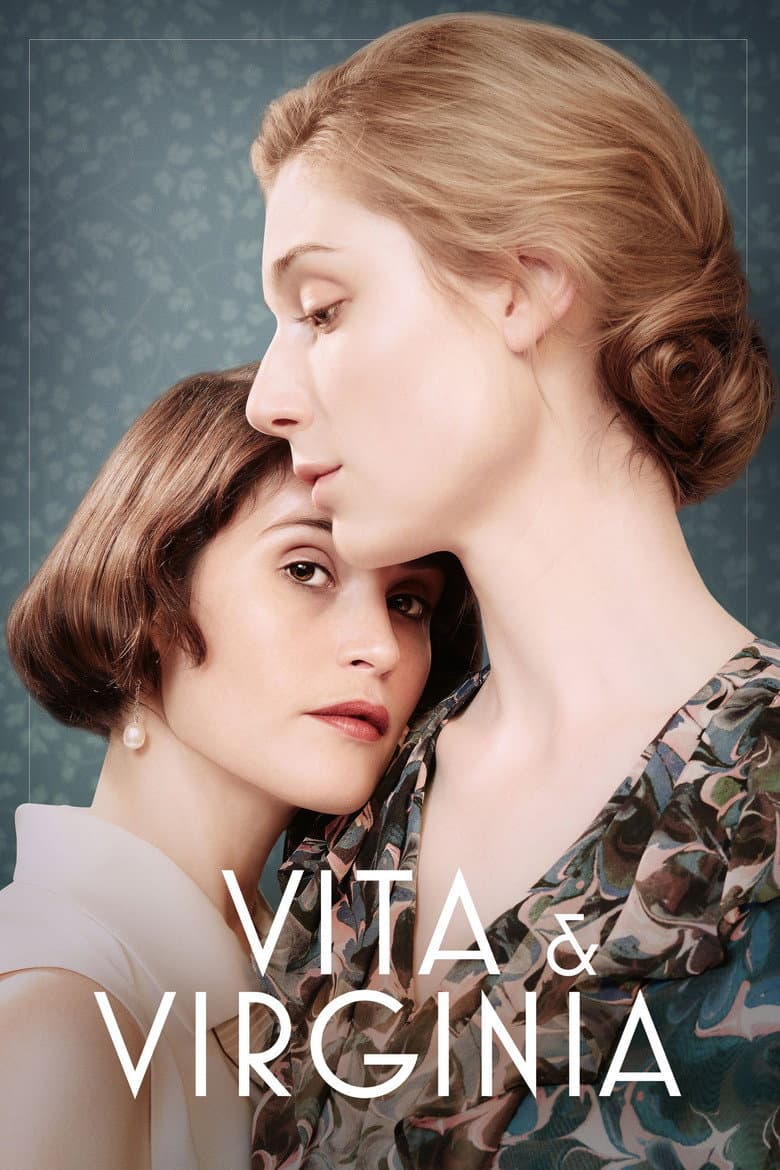
Vita Sackville-West is a wealthy writer and socialite in 1920s London. She becomes fascinated by Virginia Woolf, a famous writer who struggles with her mental health and her need to create. Their affair grows while both women remain married to men, so love, loyalty, family duty, and public gossip pull them in different directions. The film uses letters, direct speeches, dreamlike images, and sharp modern music to tell a lush but troubled romance.
The film puts a same-sex relationship at the center of its story. Vita and Virginia openly question the usual roles of wives, mothers, and husbands, and they treat marriage as something that can be shaped to suit the people inside it. The film presents female desire, career freedom, and refusal to fit fixed gender rules as important parts of the women's lives. Virginia's love for Vita also helps create Orlando, a work built around changing sex and testing the limits of identity.
Community feedback
Was our 77% Woke rating accurate?
Breakdown
These are the editorial factors and ratings behind our score for Vita & Virginia.
Woke representation / casting
Not present. The main roles match the real people and the setting. A brief black supporting role does not create a representation-first casting pattern.
0%
Woke political dialogue
Vita says that independence has no sex. The film rejects the idea that women should give up work for motherhood and shows wives challenging the roles expected of them. The opening marriage broadcast and later home scenes repeat arguments about men leading and women supporting them. The dialogue is clear and recurring, but it stays inside the story of these historical characters.
50%
Identity-driven story themes
The film centers on a sexual relationship between two married women. Vita openly pursues women, and Virginia accepts desire outside her marriage. The story treats open marriage, female career freedom, and refusal to fit fixed gender roles as bold choices. Virginia’s love for Vita also leads to Orlando, whose hero changes sex and challenges fixed ideas about identity.
90%
Western institutional / cultural critique
The film repeatedly questions the idea that women should support men, become mothers first, or serve only as diplomats’ wives. Virginia calls those gender rules damaging, and Vita says independence has no sex. The marriages are shown as flexible arrangements that can be reshaped by the people inside them. The film does not make Christianity, capitalism, or Western society a main target.
46%
Woke character or canon changes
Not relevant. The film keeps the real Vita Sackville-West and Virginia Woolf in their historical roles. It does not swap their race, gender, or sexuality, and Orlando’s gender change belongs to the book within the story.
0%
Anti-woke backlash and complaints
One detailed Letterboxd review called some supportive gender and relationship lines “woke points” and said the film made queer life seem too normal for its period. No major news report or boycott tied the film to woke messaging. The supplied X check found no anti-woke posts, and most audience comments discussed the romance, acting, or weak storytelling.
15%
Creator track record context
Chanya Button framed the film as an LGBTQ romance that could help young people see queer lives in history. Gemma Arterton produced the film and has a strong record of backing female-led stories and gender-equality causes. Eileen Atkins has a milder history of work about women’s lives and some lesbian themes. Most other credited producers have little or no public activist record, so the wider team gives moderate context.
49%
Production
Movie · 2016
Meeting by chance when they return to their tiny California hometown, two former high-school sweethearts reflect on their shared past.
Movie · 2019
Kabir, a highly intelligent but short-tempered medical surgeon spirals into addiction after his intense relationship with his girlfriend turbulently ends.
Movie · 2016
Tough ex-convict Inder and traditional mousy Saraswati fall in love and get married, but a tragedy changes their lives forever.
Movie · 2020
When a young woman meets an aspiring saxophonist in her father’s record shop in 1950s Harlem, their love ignites a sweeping romance that transcends changing times, geography, and…
Movie · 2016
In 1958, in the state of Virginia, the idea of interracial marriage was not only considered to be immoral to many, it was also illegal.
Movie · 2016
Canadian folk artist Maud Lewis falls in love with a fishmonger while working for him as a live-in housekeeper.
Movie · 2018
A man and a woman meet in the ruins of post-war Poland. With vastly different backgrounds and temperaments, they are fatally mismatched and yet drawn to each other.
Movie · 2017
The story of four characters whose lives intertwine amid the hustle and bustle of the Coney Island amusement park in the 1950s: Ginny, an emotionally volatile former actress now…
