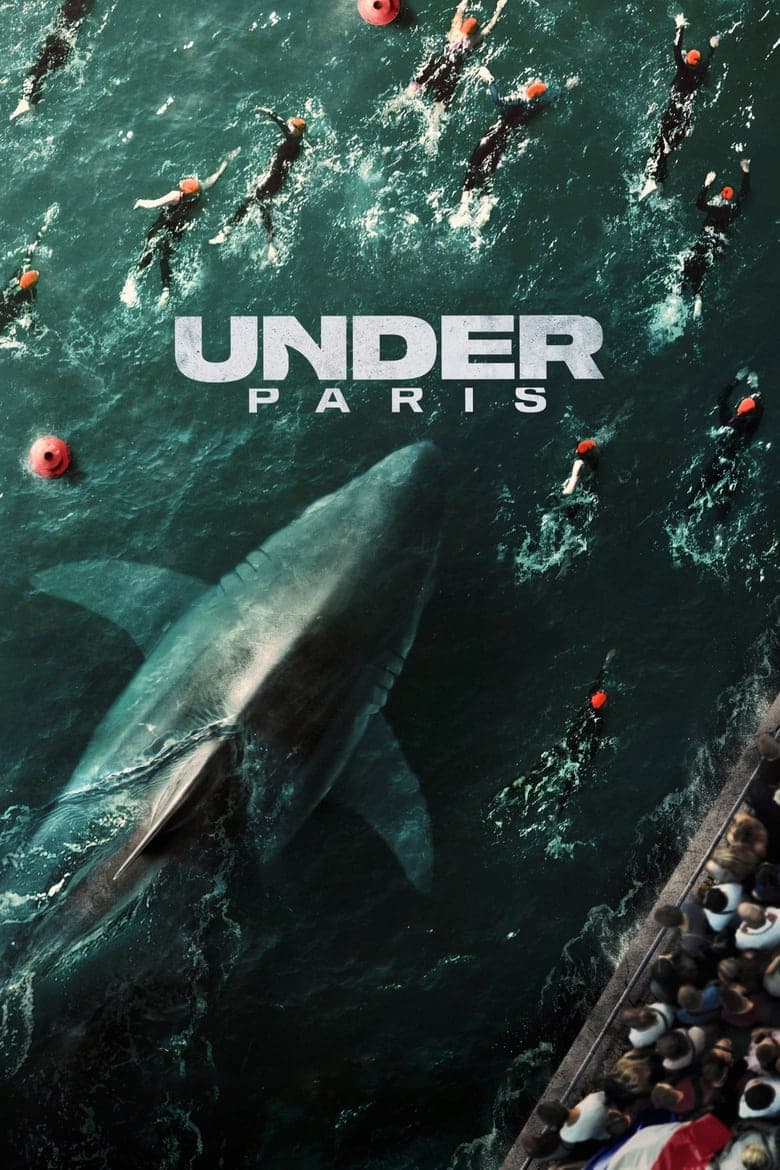
Under Paris follows Sophia Assalas, a marine scientist who has stopped working in the ocean after a shark attack killed her husband and team. Three years later, she learns that the same giant mako shark has reached the Seine in Paris. Sophia joins Adil, a river police commander, while the city prepares for a major triathlon linked to the coming Olympics. The film begins as a tense shark thriller and grows into bloody disaster horror with a wild, darkly comic ending.
The story gives clear space to ocean protection, pollution, overfishing, climate change, and the belief that animal life deserves equal value. Young activist Mika leads a group that wants to save the shark, and her same-sex relationship with Ben is shown on screen. The film also presents a female scientist as the main expert and shows a female mayor hiding danger to protect a major event. These ideas matter to the plot, but the film also mocks reckless activism and leaves the police as the most reliable group.
Community feedback
Was our 46% Woke rating accurate?
Breakdown
These are the editorial factors and ratings behind our score for Under Paris.
Woke representation / casting
The film places a female marine scientist, a young female environmental leader, a female mayor, and a visibly mixed river police unit in major roles. Mika and Ben are a visible same-sex couple in the activist subplot. Modern Paris makes this mix plausible, and no interview or ad frames it as a diversity goal. The repeated use of identity-visible roles is noticeable, but it does not dominate the cast or story.
34%
Woke political dialogue
Sophia tells schoolchildren that ocean life must be protected so humans can survive. Mika gives a direct online speech about overfishing, shark deaths, animal value, and saving the future. The mayor and police also discuss hiding deaths and protecting the triathlon. These ideas appear in several scenes and help drive the plot, but they focus on environmental activism rather than race, gender, or party politics.
37%
Identity-driven story themes
The story makes pollution, overfishing, climate change, and harm to wildlife part of the shark’s origin. Mika’s Save Our Seas group turns those concerns into a public campaign that shapes the central conflict. Mika and Ben are shown as a same-sex couple, but their relationship is brief and is not the main subject. The film also causes reckless activists to die, so its message is mixed rather than a full defense of activism.
43%
Western institutional / cultural critique
The mayor protects the triathlon and the city’s image after people die. She orders officials to hide reports of the shark because money and Olympic attention are at stake. The army later fires into the river and makes the disaster worse. The police are mostly shown as honest and helpful, so the film attacks bad decisions by officials rather than all Western institutions.
39%
Woke character or canon changes
Not relevant. The film uses original characters and a new shark story. It does not change established characters or real historical events.
0%
Anti-woke backlash and complaints
A handful of small X accounts called the film woke programming because it has a female climate scientist, activist women with dyed hair, and what they called DEI casting. Several Reddit comments made similar claims about the environmental message and the same-sex activist couple. The complaints had little reach and did not become a boycott, review-bombing drive, or major news story. Other audience comments mocked Mika and welcomed the film’s treatment of reckless activists.
18%
Creator track record context
Xavier Gens has a low creator score and has spoken about ocean protection. The available records for Yannick Dahan and Maud Heywang show no clear DEI or identity-politics campaign history. The producers have some projects about women, migration, and social inclusion, but no strong activist public profile. This background adds only a small amount of woke context.
14%
Production
Movie · 2024
When a kind of rabies that transforms people into aggressive creatures spreads across the planet, Manel isolates himself at home with his cat, relying on his wits to survive; but…

Movie · 2025
Ten-year-old Aurora asks her hitman neighbor to kill the monster under her bed that she claims ate her family.
Movie · 2020
Rachel is a divorced single mother whose bad day gets even worse. She's running late to drop her son off at school when she honks her horn impatiently at a fellow driver during…

Movie · 2020
As a grisly virus rampages a city, a lone man stays locked inside his apartment, digitally cut off from seeking help and desperate to find a way out.

Movie · 2022
Royal Air Force pilot Lt. Kate Sinclair is on her final flight mission when her jet is shot down over one of the most dangerous rebel strongholds in Afghanistan.

Movie · 2022
Trapped on her family’s isolated farm, Pearl must tend to her ailing father under the bitter and overbearing watch of her devout mother.

Movie · 2024
A live broadcast of a late-night talk show in 1977 goes horribly wrong, unleashing evil into the nation's living rooms.

Movie · 2021
When his car breaks down, a quiet loner agrees to clean an abandoned family fun center in exchange for repairs.
