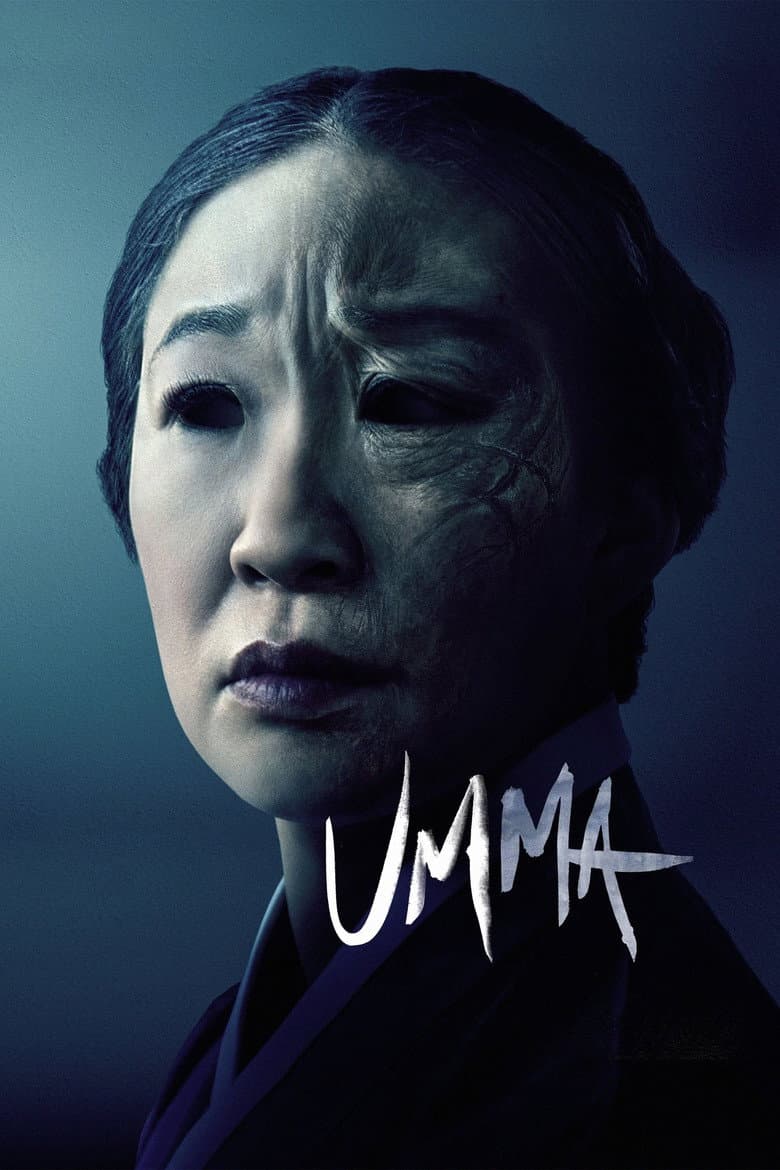
Umma follows Amanda, a Korean American mother who lives with her teenage daughter, Chris, on a quiet farm in the United States. Amanda keeps bees, avoids electricity, and teaches Chris at home, but she becomes upset when Chris wants to leave for college. Amanda’s uncle arrives from Korea with the ashes of Amanda’s cruel and distant mother. The visit awakens painful memories and a ghost that makes Amanda fear she will hurt Chris in the same way. The film uses a slow, uneasy horror style built around family fear, old wounds, and the struggle to break a harmful pattern.
The film makes Korean American identity and women-led family conflict visible to the audience. Amanda has rejected her family name and Korean customs, while the story treats her return to those customs as an important step toward understanding her mother and raising Chris differently. The movie gives repeated attention to immigration, family duty, cultural loss, and the pain passed from one generation to the next. These ideas are central to the story, but the film presents them through family drama and Korean spiritual traditions rather than speeches about current politics, race, or social movements.
Community feedback
Was our 41% Woke rating accurate?
Breakdown
These are the editorial factors and ratings behind our score for Umma.
Woke representation / casting
The film places a Korean American mother and daughter at the center, and Asian performers play the family roles that fit the story. Interviews present the movie as a major Asian American horror project and as a chance to show people who are not often seen. Fivel Stewart describes the film as representing many faces that need to be heard and seen. The casting fits the setting, so the identity message comes mainly from this public framing rather than from a mismatch.
30%
Woke political dialogue
Not present. The characters talk about abuse, family duty, culture, and college. They do not argue about parties, laws, activism, or current political issues.
0%
Identity-driven story themes
The film makes Korean American identity part of the horror from beginning to end. Amanda has cut off her family name and customs after an abusive childhood, while her uncle says she has abandoned her mother and heritage. The haunting pushes Amanda to face immigration pain, family duty, and the fear of passing abuse to Chris. The story values understanding and cultural reconnection, but it stays inside one family and does not become a current political campaign.
52%
Western institutional / cultural critique
Not present. The conflict stays inside a family and a supernatural haunting. The film does not attack churches, capitalism, or Western institutions, and it does not build a message about male power.
0%
Woke character or canon changes
Not relevant. Umma is an original story, so it does not change a known character, canon, or historical figure.
0%
Anti-woke backlash and complaints
Not present. The X search found no anti-woke reaction or specific complaint. Wider reviews and audience threads focused on weak scares, pacing, family trauma, and Korean cultural details rather than woke or DEI messaging.
0%
Creator track record context
Iris K. Shim’s work centers Korean American identity and immigrant family life. Sandra Oh has a strong public record of supporting Asian representation and diversity, and she produced this film. Marcei A. Brubaker Brown has credits on several identity-focused films, while Peter Luo has promoted wider opportunities for Asian filmmakers. Most other cached producers and the casting director have little recorded activist history, so creator context is a supporting signal rather than the movie’s main message.
35%
Production
Movie · 2018
The crew of a horror web series travels to an abandoned asylum for a live broadcast, but they encounter much more than expected as they move deeper inside the nightmarish old…
Movie · 2020
A man providing overnight watch to a deceased member of his former Orthodox Jewish community finds himself opposite a malevolent entity.
Movie · 2017
Twenty years after three teenagers disappeared in the wake of mysterious lights appearing above Phoenix, Arizona, unseen footage from that night has been discovered, chronicling…
Movie · 2023
A group of cold case investigators stay at the Carmichael Manor, site of the grisly and unsolved murders of the Carmichael family back in the eighties.
Movie · 2024
After the brutal murder of her twin sister, Darcy goes after those responsible by using haunted items as her tools for revenge.
Movie · 2026
The host of a popular paranormal podcast becomes haunted by terrifying recordings mysteriously sent her way.
Movie · 2021
A shaman's family learn that their goddess is supposedly controlling one of them. However, their lives take a frightening turn when they realise the goddess has nothing to do with…
Movie · 2023
Between the events of 'Saw' and 'Saw II', a sick and desperate John Kramer travels to Mexico for a risky and experimental medical procedure in hopes of a miracle cure for his…
