Movie review
June 14, 2024 · 117 min · PG · Kids · Sci-Fi · Animation · Action · Family
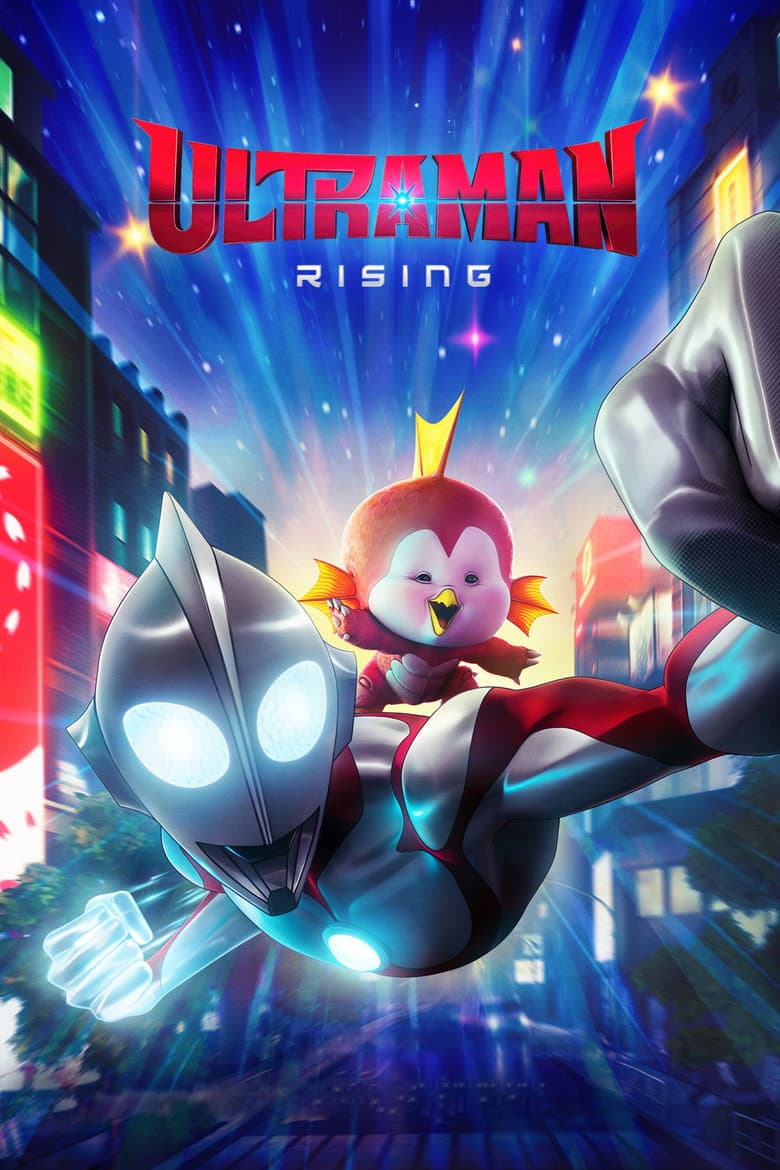
Ken Sato is a famous baseball player who leaves Los Angeles and returns to Tokyo when his father asks him to become Ultraman. Ken must fight giant monsters while caring for Emi, a baby kaiju whose mother he battled. The job forces Ken to face his anger toward his father, his grief over his mother's disappearance, and his own selfish habits. The film uses bright animation, monster battles, jokes, and a warm family story.
Ken's Japanese-American background shapes his return to Japan and his feeling that he does not fully belong there. The story treats that gap as a personal family problem, not as a speech about politics. The main message asks a proud male hero to value care, teamwork, and fatherhood as much as strength and fame. The film also asks viewers to see the kaiju as living creatures with families instead of simple enemies, while the defense force is driven by fear and revenge. These ideas guide Ken's growth, but they remain part of a broad story about empathy, family, and responsibility.
Community feedback
Was our 11% Woke rating accurate?
Breakdown
These are the editorial factors and ratings behind our score for Ultraman: Rising.
Woke representation / casting
Not present. The prominent voice cast is largely Japanese or Japanese American, and the story is set in Tokyo with a Japanese-American hero. The casting matches the setting and franchise instead of using a visible diversity pattern beyond the story.
0%
Woke political dialogue
Not present. The film has no repeated political speeches or activist slogans. Its talk about monsters, family, and defense work stays tied to the action and the characters.
0%
Identity-driven story themes
Ken is a Japanese-American hero who was born in Japan and raised in the United States. Ken feels like an outsider when he returns and struggles with Japanese baseball and his family role. The film treats belonging and ties between two cultures as part of his growth. These ideas support the main fatherhood story but do not become a wider political campaign.
18%
Western institutional / cultural critique
Not present. The Kaiju Defense Force uses weapons against monsters, but that conflict comes from the monster attacks and Dr. Onda’s personal revenge. Ken’s move from selfish star to caring father is a family lesson, not a broad attack on men, religion, family, or Western institutions.
0%
Woke character or canon changes
Not relevant. The film gives Ultraman a new fatherhood plot and makes Ken a baseball star in a new story. Those changes serve the family adventure and are not used to make an identity or political point.
0%
Anti-woke backlash and complaints
A few tiny X accounts called the film a “woke Western” or a “far-left western agenda-driven” product. Other small accounts repeated a question about watching it without “woke garbage,” while fan accounts said “chuds” had dismissed it as Netflix slop. The posts were scarce and often secondhand or mocked. No large right-leaning campaign, boycott, or review-bombing pattern appeared.
12%
Creator track record context
Not present. The cached record for the listed writers, producers, casting staff, and supervisors shows no high-confidence activist or identity-politics advocacy. The title interviews focus on parenting, empathy, craft, and Japanese-American casting rather than a political campaign.
0%
Production
Movie · 2024
Gru and Lucy and their girls—Margo, Edith and Agnes—welcome a new member to the Gru family, Gru Jr., who is intent on tormenting his dad.

Movie · 2024
The untold origin story of Optimus Prime and Megatron, better known as sworn enemies, but once were friends bonded like brothers who changed the fate of Cybertron forever.

Movie · 2020
Powered with incredible speed, Sonic The Hedgehog embraces his new home on Earth. That is, until Sonic sparks the attention of super-uncool evil genius Dr. Robotnik.

Movie · 2018
Earth is peaceful following the Tournament of Power. Realizing that the universes still hold many more strong people yet to see, Goku spends all his days training to reach even…
Movie · 2016
Kubo mesmerizes the people in his village with his magical gift for spinning wild tales with origami. When he accidentally summons an evil spirit seeking vengeance, Kubo is forced…
Movie · 2018
All the major DC superheroes are starring in their own films, all but the Teen Titans, so Robin is determined to remedy this situation by getting over his role as a sidekick and…
Movie · 2025
The world is a perplexing, peaceful mystery to Amélie until a miraculous encounter with chocolate ignites her wild sense of curiosity.
Movie · 2017
Based on the bestselling book series, this outrageous comedy tells the story of George and Harold, two overly imaginative pranksters who hypnotize their principal into thinking…
