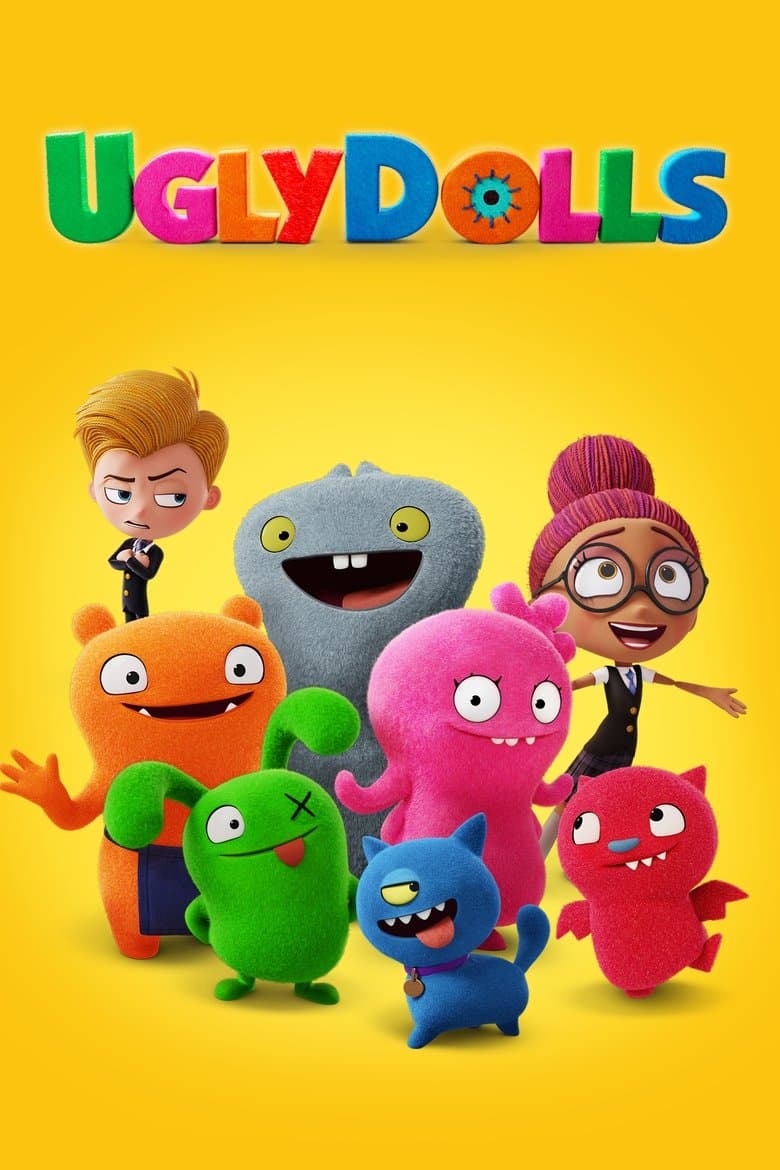
UglyDolls follows Moxy, a hopeful pink doll who lives with other rejected dolls in the bright town of Uglyville. Moxy wants to reach the Big World and find a child who will love her. She and her friends cross a mountain and find the Institute of Perfection, where dolls train to pass a test before meeting children. The musical comedy turns their journey into a colorful fight against shame, fear, and a cruel beauty standard.
The film makes self-acceptance and the rejection of fixed beauty rules central to its story. Moxy and her friends are treated as defective because they look different, while Mandy hides her glasses because Perfection calls them a flaw. The film changes Wage from a male doll in the toy line into a female character, and it gives major roles to women and performers from different backgrounds. The ending joins the two groups in a town called Imperfection, so the identity message remains important from the first song to the final scene.
Community feedback
Was our 49% Woke rating accurate?
Breakdown
These are the editorial factors and ratings behind our score for UglyDolls.
Woke representation / casting
The film gives the lead role to Moxy and the key ally role to Mandy, both female dolls. The supporting cast includes Janelle Monáe, Wanda Sykes, Pitbull, Gabriel Iglesias, and Leehom Wang. Producer Oren Aviv said Wage was changed from male to female to provide representation across sex and ethnicity. The dolls have no fixed human race, so the casting signal is clear but limited.
38%
Woke political dialogue
Not present. The characters do not discuss elections, parties, laws, or current political causes. The story uses simple lessons about kindness and self-worth instead.
0%
Identity-driven story themes
The film makes self-acceptance and rejection of fixed beauty rules the main lesson. UglyDolls are sent away because they have flaws, while the Institute trains dolls to meet a narrow idea of perfection. Mandy hides her glasses and later helps Moxy reject that rule. The two groups join and rename their home Imperfection, so the message drives the ending.
45%
Western institutional / cultural critique
The Institute of Perfection is a central system that sorts dolls into worthy and unworthy groups. Lou uses its rules to shame the UglyDolls and control the Perfect Dolls. The film presents strict beauty culture and obedience to a powerful leader as harmful. It does not connect that system to real Western institutions, capitalism, or current politics.
30%
Woke character or canon changes
The film changes Wage from a male UglyDoll in the original toy line to a female character. Producer Oren Aviv said the change was made to add representation across sex and ethnicity. Wage remains a supporting character, so the change affects one part of the cast rather than the whole story. The film does not rewrite a known historical figure or an established movie plot.
30%
Anti-woke backlash and complaints
One Rotten Tomatoes audience review labels the film a “woke animation” and objects to its body-positive message. One Reddit comment calls the movie brainwashing, but it gives no clear political detail. Main coverage focuses on weak writing, toy marketing, and the film’s poor box office. The anti-woke reaction is isolated rather than a major public controversy.
10%
Creator track record context
Cached notes rate Robert Rodriguez at 30/100, Alison Peck, David Horvath, and Sun-Min Kim at 22/100, and Kelly Asbury at 18/100. Most other listed producers and writers are cached between 0 and 15/100. The strongest shared pattern is celebrating difference and access, not strong political activism. The creator context therefore adds a mild signal.
18%
Production
Movie · 2016
A koala named Buster recruits his best friend to help him drum up business for his theater by hosting a singing competition.
Movie · 2016
A harried prehistoric bird mother entrusts her precious, soon-to-hatch egg to Sid. When she recommends him to her neighbours, business booms at his new egg-sitting service.
Movie · 2023
Jaded 74-year-old lizard Leo has been stuck in the same Florida classroom for decades with his terrarium-mate turtle.
Movie · 2019
Max the terrier must cope with some major life changes when his owner gets married and has a baby. When the family takes a trip to the countryside, nervous Max has numerous…
Movie · 2017
Ferdinand, a little bull, prefers sitting quietly under a cork tree just smelling the flowers versus jumping around, snorting, and butting heads with other bulls.
Movie · 2021
Loki is banished from Asgard once again and must face his toughest opponents yet: the Simpsons and Springfield’s mightiest heroes.
Movie · 2024
Teenager Riley's mind headquarters is undergoing a sudden demolition to make room for something entirely unexpected: new Emotions!
Movie · 2024
Garfield, the world-famous, Monday-hating, lasagna-loving indoor cat, is about to have a wild outdoor adventure!
