Movie review
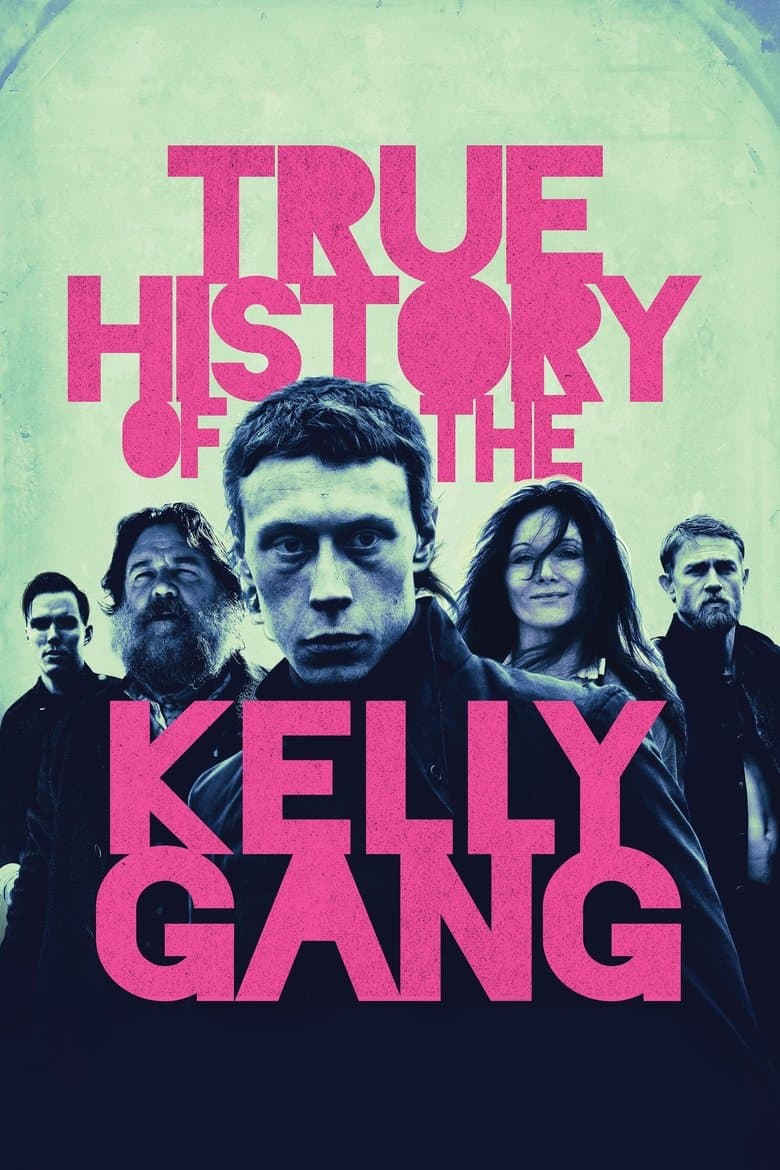
Ned Kelly grows up poor in 1870s Australia, where Irish families face harsh English rule and police power. His mother Ellen pushes him toward a life of crime, while Ned tries to protect his family and escape the fate she gives him. After prison and more abuse from the law, he joins Dan Kelly, Joe Byrne, and Steve Hart and turns the gang into armed rebels. The film is bloody, grim, strange, and full of punk music, rough jokes, and dreamlike images.
The strongest woke element is the film’s repeated use of dresses, close male touching, and sexual talk to challenge the usual tough outlaw image. Ned and his gang wear dresses during raids, and the film gives their friendships a clear queer or sexual edge, even though Ned also has a relationship with Mary. The story also questions macho Australian identity by showing male violence, family control, and police power as damaging forces. Its anti-English and anti-authority ideas are tied to the old colonial setting, so the film feels more like a gender-bending retelling than a modern political lecture.
Community feedback
Was our 73% Woke rating accurate?
Breakdown
These are the editorial factors and ratings behind our score for True History of the Kelly Gang.
Woke representation / casting
Not present. The main cast is mostly white and fits the Irish and English setting. The film does not use a diversity-first cast or identity-framed casting.
0%
Woke political dialogue
Dan explains that dresses scare men, and Fitzpatrick talks about sex in a dress as breaking rules. These lines openly play with gender roles and male sexual behavior. The dialogue appears in a few scenes rather than carrying the whole film. The rest of the speech focuses on crime, family, colonial rule, and revenge.
28%
Identity-driven story themes
The film repeatedly puts Ned and the gang in dresses during raids and other scenes. The gang’s men touch, embrace, and speak about sex in ways that give their bonds a queer or sexual edge. The story uses these choices to question the usual tough outlaw image and Australian male identity. Ned still has a love story with Mary, so the film presents gender and sexuality as a challenge to macho norms rather than making queer romance its only plot.
70%
Western institutional / cultural critique
The film repeatedly shows English police and colonial power as cruel, corrupt, and hostile to Irish settlers. The story links male violence at home and in the gang to a harsh idea of manhood. The film also mocks the macho Kelly legend through dresses, tenderness, and sexual talk between men. These ideas are strong, but the film stays in a fictional 1870s setting and does not build a present-day campaign about capitalism, whiteness, or patriarchy.
42%
Woke character or canon changes
The film gives the real Ned Kelly and his gang a major cross-dressing and queer-coded identity that is not firmly part of Ned Kelly’s known life. The film also adds intimate male bonds and sexual talk that change how the famous outlaw is understood. The dress idea comes from Peter Carey’s fictional novel and has some historical basis for other Irish rebels and Kelly gang members, but the film makes it much more central. Ned still has a female love interest, so the change is a strong reinterpretation rather than a full sexuality swap.
50%
Anti-woke backlash and complaints
A small number of audience comments called the dresses and close male scenes a gay or LGBT agenda. Other comments treated the same material as punk style or a fresh part of the legend. Mainstream coverage called the film queer and gender-bending, but it did not report a large political scandal. The anti-woke reaction appears real but limited and mostly comes from fringe audience posts.
28%
Creator track record context
Justin Kurzel has a moderate record of films about toxic masculinity, social decay, and far-right violence. Peter Carey often writes about colonial power, national identity, and institutions, but he is not known for a strong modern DEI persona. Paul Ranford and Raphaël Perchet add some social-issue and impact-film context among a large producer group, while Shaun Grant and most other listed producers have limited public activist records. The track record supports the film’s anti-authority and identity themes but does not show a single strong DEI campaign.
38%
Production
Movie · 2021
Based on true events, "Nitram" lives with his parents in suburban Australia in the mid-90s. He lives a life of isolation and frustration at never fitting in.
Movie · 2024
Roy Freeman, an ex-homicide detective with a fractured memory, is forced to revisit a case he can't remember.
Movie · 2017
After a botched bank robbery lands his younger brother in prison, Connie Nikas embarks on a twisted odyssey through New York City's underworld to get his brother Nick out of jail.
Movie · 2017
A mother looks to escape her abusive past by moving to a new town where she befriends another mother, who grows suspicious of her.
Movie · 2022
Two strangers strike up a conversation on a long journey. However, neither is who they appear to be, each carry secrets that threaten to ruin them — and in the background, one of…
Movie · 2021
William Tell just wants to play cards. His spartan existence on the casino trail is shattered when he is approached by Cirk, a vulnerable and angry young man seeking help to…
Movie · 2021
The seemingly casual reunion of three old friends at an out-of-the-way repair shop masks a hidden agenda fuelled by the arrival of a privileged young yuppie.
Movie · 2019
In 1934, Frank Hamer and Manny Gault, two former Texas Rangers, are commissioned to put an end to the wave of vicious crimes perpetrated by Bonnie Parker and Clyde Barrow, a…
