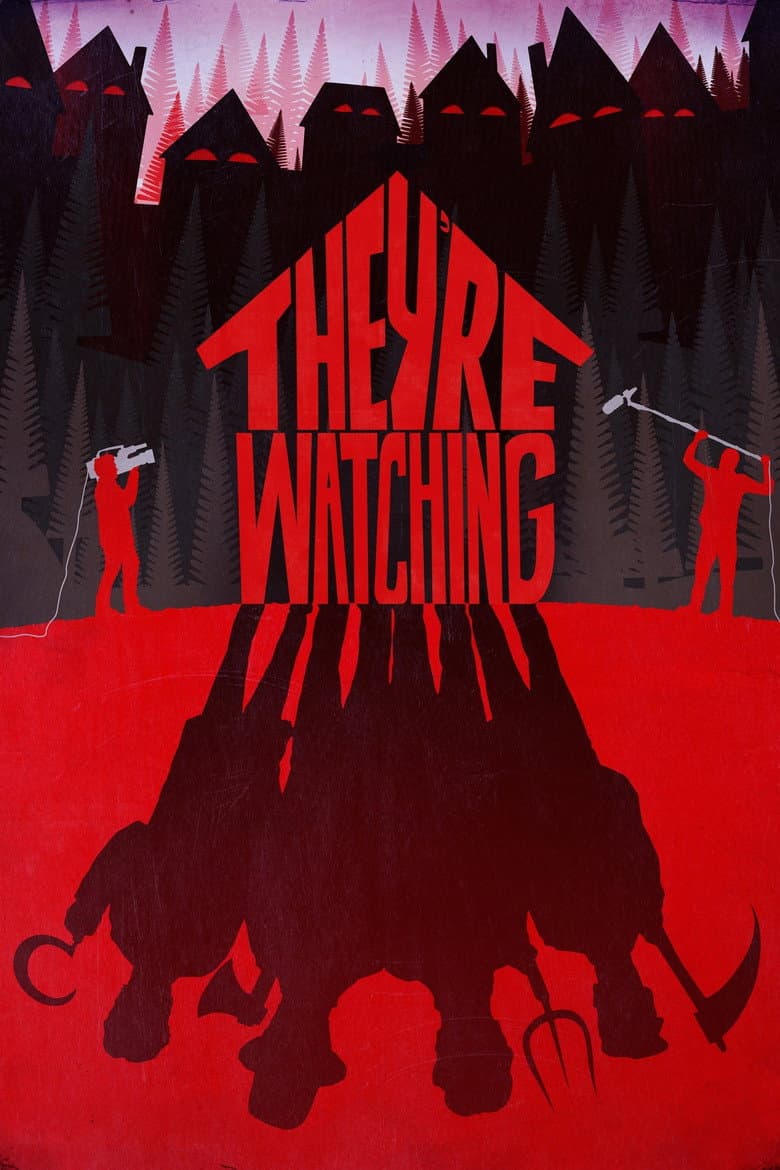
They’re Watching follows an American home-improvement TV crew that returns to a remote village in Moldova. The crew came to film Becky Westlake, an artist who bought and rebuilt an old house with her soccer-player boyfriend, Goran. The crew includes new film-school graduate Sarah, cameraman Greg, loud sound worker Alex, and their harsh boss Kate. The crew insults locals, films a funeral and a sacred ritual, and slowly turns a strange work trip into a bloody fight for survival. The movie starts as a workplace comedy and changes into a dark supernatural horror story.
The story links the crew’s trouble to careless American behavior and foreign-tourist arrogance. The crew treats the village as a backdrop, ignores local customs, and keeps filming after people warn them to stop. The film also makes reality TV, camera spying, and tourist arrogance look selfish and foolish. Becky’s witch revenge, Greg’s war trauma, and the crew’s lies drive the plot, while the social message stays secondary to the blood, jokes, and sudden horror.
Community feedback
Was our 27% Woke rating accurate?
Breakdown
These are the editorial factors and ratings behind our score for They're Watching.
Woke representation / casting
Not present. The American and Eastern European roles fit the story world. The film does not show a diversity-first casting message.
0%
Woke political dialogue
Greg tells Sarah about filming an Afghan girls’ school when Taliban fighters arrived and killed students for the camera. The story makes him feel guilty for recording the attack. The film uses this as a brief anti-war and media-ethics point, then returns to the horror plot.
10%
Identity-driven story themes
Not present. The main story follows a TV crew, a witch legend, and revenge in a Moldovan village. The film does not build its plot around representation, queer identity, or modern identity politics.
0%
Western institutional / cultural critique
The story repeatedly mocks an American TV crew for treating a Moldovan village as a backdrop. The crew films a funeral, records a religious ritual, insults locals, and keeps working after people object. The movie also attacks reality-TV voyeurism and tourist arrogance. The critique is clear but stays tied to the horror setup instead of becoming a long current-politics speech.
35%
Woke character or canon changes
Not relevant. The film is an original horror story built around a parody of home-improvement TV. It does not change an established character, canon, or historical figure.
0%
Anti-woke backlash and complaints
Not present. Reviews and audience posts focus on pacing, crude humor, sudden gore, and cheap effects. No meaningful anti-woke or DEI backlash appears in the coverage reviewed.
0%
Creator track record context
Jay Lender has a cached score of 0/100 and a career centered on mainstream animation and genre work. Micah Wright has a cached score of 72/100 because of anti-war art, native representation work, and media activism. Those records add some activist context around the film. The film itself uses that context only mildly through its criticism of American cultural arrogance.
36%
Production
Movie · 2022
A college reunion goes awry when Pete suspects his friends may be out to get him... As their weekend getaway grows more and more uncomfortable, should Pete be worried about his…
Movie · 2024
A family's vacation to a remote getaway takes an unexpected turn when they discover the present-day implications of the island's cannibalistic past.
Movie · 2022
Legendary rock band Foo Fighters move into an Encino mansion steeped in grisly rock and roll history to record their much anticipated 10th album.

Movie · 2019
When a huge hurricane hits her hometown in Florida, Haley ignores evacuation orders to look for her father. After finding him badly wounded, both are trapped by the flood.
Movie · 2026
Moments after surviving an all-out attack from the Le Domas family, Grace discovers she’s reached the next level of the nightmarish game — and this time with her estranged sister…
Movie · 2023
Recently fired and desperate for work, a troubled young man named Mike agrees to take a position as a night security guard at an abandoned theme restaurant: Freddy Fazbear's…
Movie · 2016
A deaf woman is stalked by a psychotic killer in her secluded home.
Movie · 2025
Four years after defeating The Grabber, Finney Blake is struggling with life after captivity. When his younger sister Gwen begins receiving calls in her dreams from the Black…
